Argentine Mothers’ Memory March Faces Power Age and Official Amnesia Again
Fifty years after the coup, Argentina continues to wrestle with its lost loved ones, stolen children, and what justice really means. With state support fading and denial growing louder, the Mothers’ weekly march in Buenos Aires feels less like a ritual and more like a warning.
Where the Missing Still Govern the Living
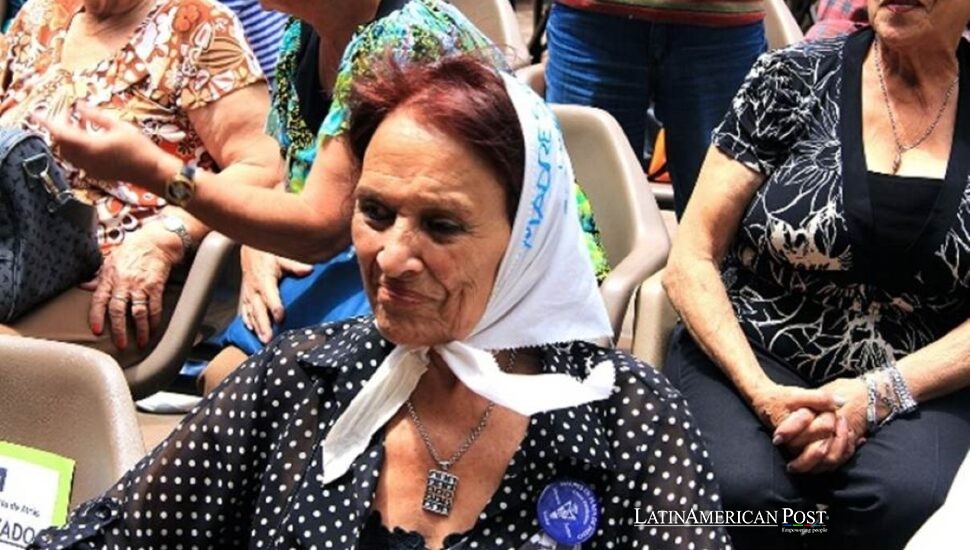
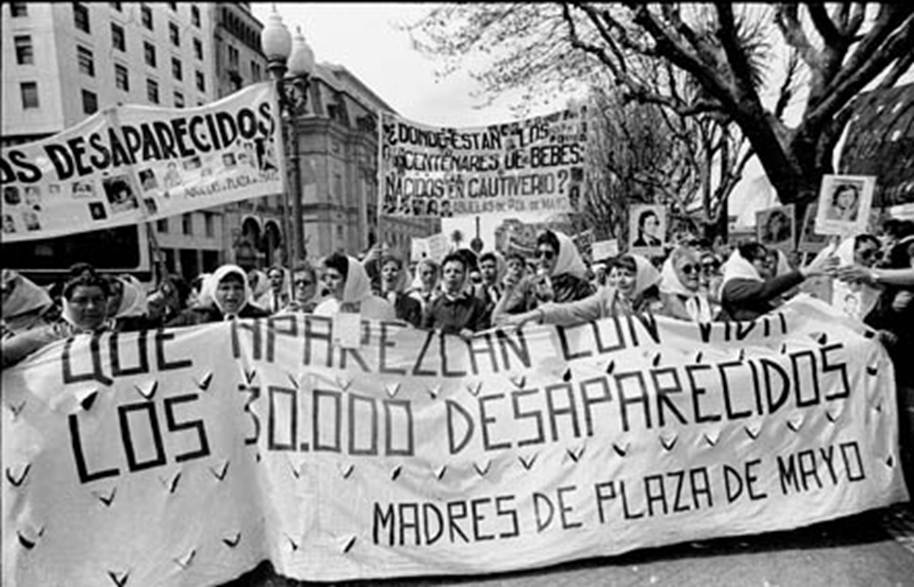
For Taty Almeida, it started with the feeling that she had no more doors left to knock on. Her son, Alejandro, a young medical student and political activist, disappeared in Buenos Aires in 1977. She believed government-backed paramilitary forces had taken him. But back then, suspicion wasn’t enough to get answers, let alone recognition. So she went to the central square near the presidential palace and joined other women asking the simplest and most painful question: Where are they?
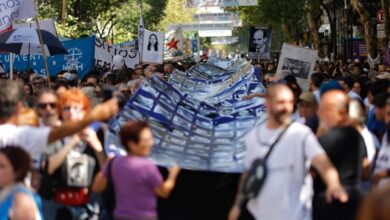
That gesture became one of the most powerful moral acts. That act became one of the most powerful moral statements in modern Argentina. The Mothers of the Plaza de Mayo started without any institutional power or protection. They began by turning their grief into a public protest. Week after week, they walked around the plaza holding photos of their children, rejecting the state’s language of disappearance, silence, and erasure. This refusal is just as important now, on the fiftieth anniversary of the military coup, because Argentina is once again facing the choice of whether memory is a foundation of democracy or just a nuisance to those in power. Right of a lifetime spent resisting disappearance. She says she does not want to die without at least touching Alejandro’s bones. The sentence is devastating because it strips away abstraction. Transitional justice can sound like the vocabulary of reports, tribunals, and public policy. But at its core, it is this: a mother who still cannot bury her son, a family that still cannot end a sentence because the state once made the body itself part of the crime.
For years, Argentina stood out for refusing to forget fully. Human rights experts at the United Nations saw it as a global example of how a country can face a violent past. This mattered not just for Argentines but for all of Latin America. In a region where many states chose amnesty, distortion, or gave up, Argentina offered a different path: the belief that memory could be part of institutions, that truth could live beyond grief, and that democracy could grow stronger by confronting the dictatorship’s actions instead of hiding them behind patriotic stories.
That’s why the current moment feels so serious. What’s at risk isn’t just budgets or programs. It’s the moral foundation carefully built after years of terror.

The State Is Retreating While Denial Advances
The facts clearly show what has changed under President Javier Milei. Government resources have been pulled away from efforts to hold people accountable. Funding for investigating dictatorship-era crimes has been cut. The Navy was allowed to destroy archival documents before a court stopped them. Reports say some former military personnel accused of human rights abuses might even get pardons. Milei himself called the atrocities “excesses.” In Argentina, that’s not just casual downplaying. It’s a political message.
When a president calls systematic terror just an excess, he encourages the country to take less responsibility. Words matter because democracies aren’t only protected by courts and budgets. They’re protected by how a society talks about its own crimes. Calling the dictatorship’s abuses excesses softens the harsh reality of a system built on disappearance, torture, stealing babies, and fear. It suggests it was not a system of repression but just an unfortunate overflow. That’s exactly what the Mothers and Grandmothers have fought against for decades.
United Nations experts were clear before the anniversary, warning of serious setbacks that could undo four decades of progress. Their statement matters because it shows that what’s happening in Argentina isn’t just a local political fight. It’s seen from outside as a decline in a country once seen as a model. This reversal affects more than just reputation. It threatens the delicate bond between democracy and truth.
The attack isn’t just symbolic. Since Milei took office, state funding for the Mothers has been cut off, and the public TV show they hosted was cancelled. This might seem small compared to the original crimes, but it follows a familiar pattern. First, memory is mocked. Then the institutions that keep it alive lose funding. Then archives start to feel like they can be changed. Finally, the public comes to think that justice is costly, that memory is biased, and that the past is a burden better managed than faced.
But the dead don’t follow that script. Bodies are still being found. Just last week, forensic experts identified the remains of twelve people buried at a former detention center in Cordoba Province. The dictatorship isn’t a closed chapter because evidence keeps coming up from the ground.
So are its children. Around five hundred babies are believed to have been born in detention centers, taken from their parents, and given to families loyal to the dictatorship. Their real origins were kept secret. The Grandmothers have already found 140 of these stolen children. Each time a child’s identity is recovered, it reveals the lie at the core of authoritarian rule: that a state can forcefully rewrite blood, memory, and family ties and move on.
The Young Are Inheriting More Than a Slogan
This is where the story shifts from survival to passing the torch. Guillermo Amarilla Molfino, born in 1980, was one of those stolen children. As an adult, after seeing a documentary about another man born in detention and taken from his family, he started to question his own past. DNA tests confirmed the truth. He changed his first name from Martin to Guillermo to honor his father, who was missing. Now, he works with the Grandmothers and leads tours at the former Navy School of Mechanics, one of the dictatorship’s secret detention and torture centers.
His role is deeply political. He’s not just preserving memory. He shows that the dictatorship still exists within today’s identities, families, and institutions. Argentina isn’t just looking back at an old wound for study. It’s living with the ongoing effects of state violence right now.
Carlos Enrique Pisoni’s story is similar. His parents were kidnapped in 1977 and are still missing. Through HIJOS, he helped shape a generation that inherited not closure but responsibility. His message is clear and true: enforced disappearance keeps hurting people as long as there’s no closure. This should concern any government that thinks memory work is outdated. There’s no end to disappearance as long as it remains alive in law, family life, and public truth.
This is why Argentina’s struggle matters beyond its borders. Latin America knows well how security forces can change without fully abandoning old habits. Pisoni warns that the past isn’t really past while abuses still happen in prisons or during protests. That’s the link between remembering the dictatorship and today’s democracy. Human rights aren’t just history lessons. They’re a real test of whether the state has truly changed.
Almeida seems to understand this deeply. She says the fight will never end and that they haven’t been defeated. There’s strength in her words, but also realism. The surviving Mothers are old now. Canes and wheelchairs join the white handkerchiefs that made them global symbols of resistance. But younger people are marching too, and for Almeida, that’s enough reason to hope.
In Argentina, hope has rarely been gentle. It’s usually been stubborn, careful, and public. It looks like a mother in a square, a name recovered, a bone identified decades later, a child learning the truth about their birth. That’s why this anniversary matters. The fight is no longer just about what happened between 1976 and 1983. It’s about whether Argentina will remain a country that sees memory as part of democracy or become one that forces the wounded to prove again that the past deserves to be remembered.
Also Read: Mexico Reopens Ayotzinapa and Latin America Hears the Old Silence