Latin American Migrants Gain Protection as Neighbors Watch ICE Before Dawn
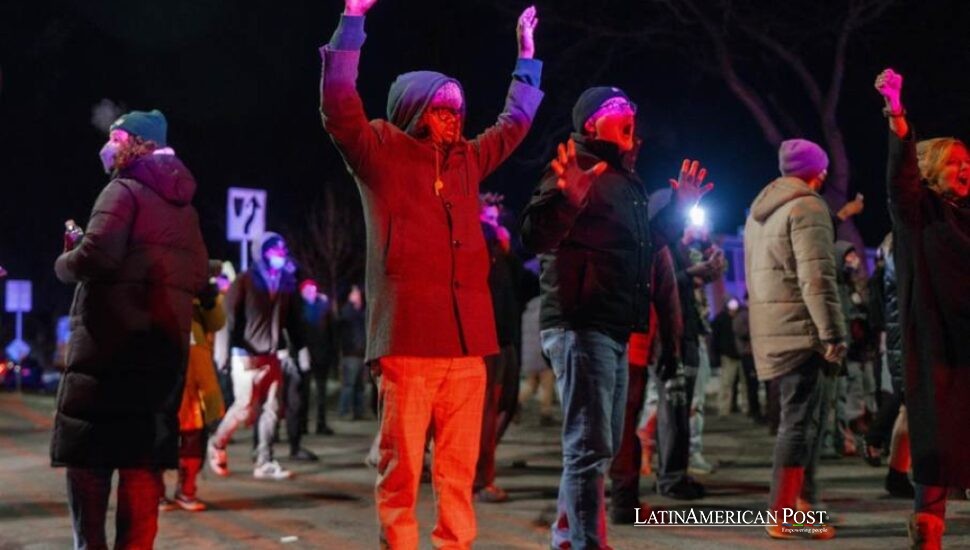
Before sunrise in Minneapolis, ordinary residents trail unmarked SUVs and sound alarms, not to target migrants but to protect them. As federal immigration enforcement surges, these quiet patrols have become a shield, buying time, visibility, and dignity for Latin American Migrants.
Watching the Street So Others Can Sleep
Just before dawn, Elle Neubauer eased her car along Lake Street in Minneapolis, passing storefronts that define the city’s immigrant economy even when their lights are off. Ecuadorean groceries, Somali cafés, Mexican taco shops, businesses built from migration stories that stretch from the Andes to the Horn of Africa, sat quietly as the cold pressed down on the pavement. In the passenger seat, her friend Patty O’Keefe lifted binoculars and scanned the road, not for criminals, but for the subtle signs of Immigration and Customs Enforcement vehicles moving through the neighborhood.
They were not alone. As the sun edged up, more volunteer patrollers arrived, spreading out along Lake Street, their presence meant to be noticed. The goal was simple and openly stated: if ICE was nearby, neighbors wanted to know. If agents were watched, filmed, and followed, they might move on. In communities where deportation can begin with a knock before breakfast, minutes matter.
With many eyes already on Lake Street and fewer agents visible that morning, Neubauer and O’Keefe drove south toward Bloomington, where O’Keefe said she had encountered ICE the day before. Their purpose, she explained, was not confrontation but delay. “Distract them, occupy their time,” she said. “The more time they’re trying to get away from us, the less time they’re spending searching for people to abduct.” The language is blunt, but for families shaped by Latin American histories of state violence and sudden disappearance, it feels precise.
Following the Signs of Power
They spotted a white Ford Explorer they suspected was ICE’s and slipped in behind it. Almost immediately, the driver began weaving through parking lots, a telltale move patrollers have come to recognize. “They do and will say anything to intimidate and scare people,” Neubauer said later. “One of their favorite lines recently is, ‘This is your only warning.'”
In a hotel parking lot, the Explorer came to a stop. Neubauer parked nearby. Then the Explorer pulled behind her, blocking her exit. A man stepped out wearing a black face covering, a tactical vest visible beneath a flannel shirt, and gestured for O’Keefe to roll down the window.
“No, thank you,” Neubauer replied, smiling and waving through the glass.
“Stop following us,” the man said through the closed window. “This is your first warning.” There was no explanation, no badge offered for inspection, just a warning delivered like a command.
Scenes like this have become more common as the Trump administration has intensified immigration enforcement in Minnesota, sending in thousands of ICE and Border Patrol agents, with more expected. Over the past year, thousands of Twin Cities residents have mobilized to protest ICE operations and divert agents away from immigrant neighborhoods, sometimes resulting in tense standoffs.
Minnesota has been a particular focus since December, when a right-wing media outlet published unsubstantiated claims that Somali Minnesotans were funneling stolen government funds to terrorism. That same month, Homeland Security Secretary Kristi Noem announced “Operation Metro Surge,” publicly framing it as a crackdown on Somali immigrants, even though most are U.S. citizens or legal permanent residents. For many residents, the announcement sounded less like policy than collective suspicion aimed at an entire community.
When Protection Turns Dangerous
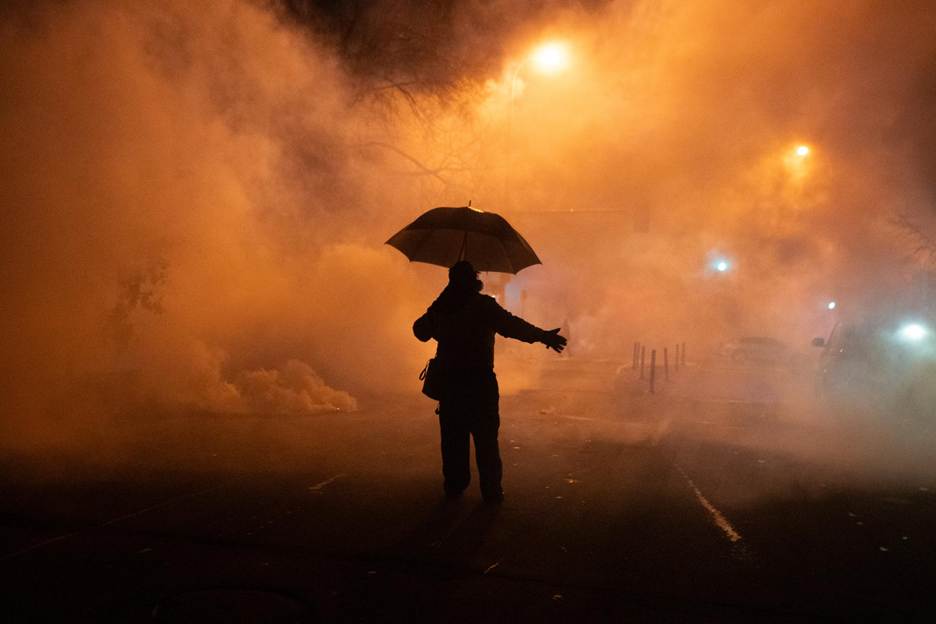
The stakes rose sharply after ICE agent Jonathan Ross fatally shot Renee Good in her car in south Minneapolis. The killing sent shockwaves through the city and transformed ICE patrols from a controversial tactic into, for many, a moral necessity. According to the Minnesota Reformer, there are now at least four times as many immigration agents in the state as there are Minneapolis police officers. This ratio feeds the sense of an outside force operating beyond local consent.
Citizen observers began clustering on corners, sharing locations online, and crowding into “know your rights” trainings hosted by immigrant advocacy groups. ICE did not respond to the Reformer’s requests for comment.
Appearing on Fox News, Noem described Good’s killing as an act of “domestic terrorism,” alleging she attempted to run over an agent. She also claimed nonprofit groups were training activists to “distract them, assault them,” and provoke violence. Those assertions are sharply disputed by local activists, who describe their work as lawful observation and warning.
Back in Bloomington, after the masked agent returned to the Explorer, a second vehicle, a black GMC Yukon, pulled in behind Neubauer, boxing her in while the Explorer drove away, Neubauer and O’Keefe followed the SUV as it left.
“I wonder how many first warnings we can get today,” O’Keefe joked.
Two days later, the warnings became action. Federal agents smashed O’Keefe’s car window, dragged her and her co-pilot out, and held them for eight hours inside the Whipple Federal Building.
A Network Built on Presence
When Donald Trump assumed the presidency for a second time, immigrant rights groups anticipated an enforcement surge and expanded rapid response networks. Organized by neighborhood, volunteers aim to arrive quickly at ICE activity, warn residents, inform detainees of their rights, and pressure agents to leave. A central message repeated in training is that ICE cannot enter private property without consent or a judicial warrant.
Across the country, similar tactics, honking horns, and blowing whistles have spread in cities like Chicago and Los Angeles. In the Twin Cities, they have become routine since Operation Metro Surge began. According to Tracy Roy of the Immigrant Law Center of Minnesota, following vehicles, filming officers, and making noise are legal. Physically blocking arrests is not.
As ICE tactics shifted toward faster, smaller operations, rapid responders adapted. Instead of waiting for alerts, patrollers began actively searching for ICE vehicles, following them to discourage stops and documenting interactions. “If they know somebody is watching, they’re significantly less likely to stop somebody,” Neubauer said.
The system is deliberately decentralized. Volunteers use code names in group chats. No one assigns shifts. People step in when they can, share information, then fade back into daily life. It is, in many ways, a civilian version of mutual aid long practiced in Latin American neighborhoods where trust in the state has historically been fragile.
Fear, Resolve, and the Cost of Watching
That fragility became personal on January 12, 2026, when Neubauer followed what appeared to be a convoy of federal vehicles. Agents stopped, surrounded her car, and addressed her using her wife’s legal name, information taken from the vehicle registration. “If you keep following us… We’ll have to pull you out and arrest you,” one agent warned.
The convoy led Neubauer directly to her home, idled outside, then drove on. According to a lawsuit filed by the American Civil Liberties Union, ICE has repeatedly used license-plate databases to identify and intimidate observers by showing up at their homes.
That same day, while Neubauer continued following another vehicle, agents returned to her house and pounded on the door. Her wife, fearing ICE, stayed silent until neighbors emerged and began blowing whistles. “I feel changed, and afraid,” she later said. “Not for me, but for what could have happened to you.” That afternoon, they went back out on patrol together.
For O’Keefe and Brandon Sigüenza, the cost was physical. During a Sunday patrol, they said ICE agents pepper-sprayed their car, smashed the windows, dragged them into unmarked vehicles, and detained them for hours. O’Keefe recalled an agent mocking her in custody and referring to Renee Good with a slur. The U.S. Department of Homeland Security did not respond to requests for comment.
Both were released without charges. Sigüenza said agents suggested they could help his relatives’ immigration cases if he provided the names of undocumented people or organizers. He plans to take a short break for his family’s sake, then return.
O’Keefe says the experience hardened her fear, but also her resolve. “They don’t realize this comes from a deep place of love and empathy and care for my community,” she said. “That feeling is stronger than fear.”
In Minneapolis, watching ICE has become an act of solidarity rooted in a long Latin American understanding. When institutions feel distant or hostile, survival often begins with neighbors choosing to see each other and refusing to look away.
Reporting and interviews originally published by the Minnesota Reformer, by Madison McVan
Also Read: Colombian Petro Faces Trump Storm as Sovereignty Becomes Election Currency