Brazil Lets Rio Drift While Politics Outsource the Basics
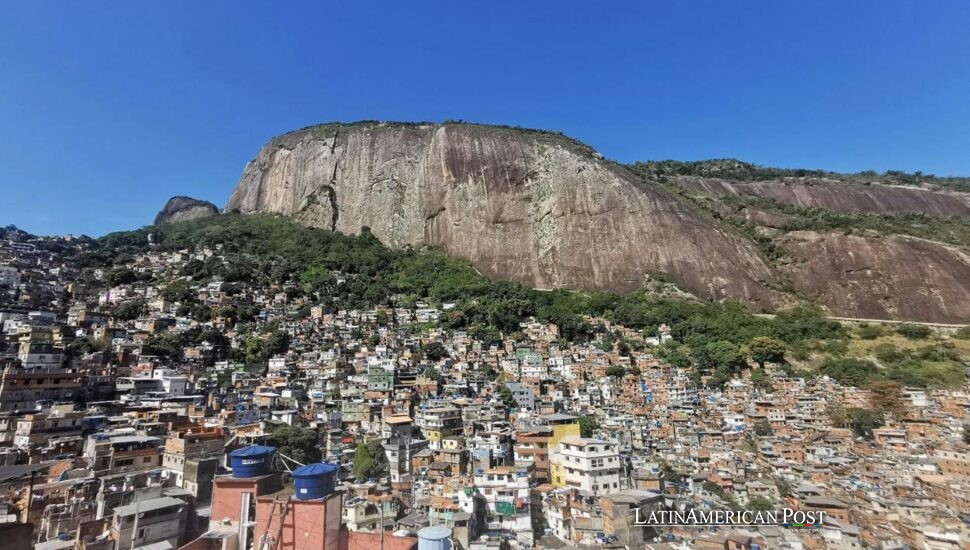
Rio de Janeiro has been without a governor for weeks, and the crisis is no longer just constitutional theater. It is exposing how fragile Brazilian state power can look when crime, fuel prices, elections, and elite maneuvering all pile onto the same empty chair.
A State Without a Hand on the Wheel
There are political crises that remain in court files and on television panels. Then there are the ones that begin to leak into the street, into the fuel tank, into the question of who exactly gives an order when something goes wrong at sunrise. Rio de Janeiro has entered the second kind.
Brazil's Supreme Court postponed its decision on who should govern the state, extending a crisis that has already lasted three weeks in one of the country's most symbolically loaded regions. Rio has had no governor since March 23, when Cláudio Castro resigned to run for senator in October, as required by law. That resignation was supposed to mark the start of a transition. Instead, it opened a vacuum.
The succession line, on paper, existed. In practice, it collapsed. Thiago Pampolha could have taken over, but he had already resigned as deputy governor in 2025 to accept a seat in a state watchdog body. The next in line, Rodrigo Bacellar, the speaker of the state legislature, was recently jailed and removed from office. So the state arrived at a strange and revealing endpoint. The head of the judiciary in Rio, Ricardo Couto de Castro, is now serving as governor, not because that was anyone's political plan, but because the rest of the structure had already broken around him.
This is the institutional scene that sounds almost too theatrical to be real. A judge operating as caretaker while questions of policing, mobility, and fuel policy accumulate on his desk. Local media reports that other executives are reluctant to work with him because he was never expected to remain for long. The courts themselves are reportedly worried their own functioning may begin to suffer because their head now has to manage the state government with no clear end in sight.
That is where the embarrassment turns into something harder. Brazil is not dealing with a mere procedural inconvenience here. It is confronting the possibility that one of its most visible states can slide into administrative half-light while political actors argue over method, succession, and advantage. In Rio, delay has weight. It sits atop public security, transport, state authority, and the ordinary expectation that someone is in charge.
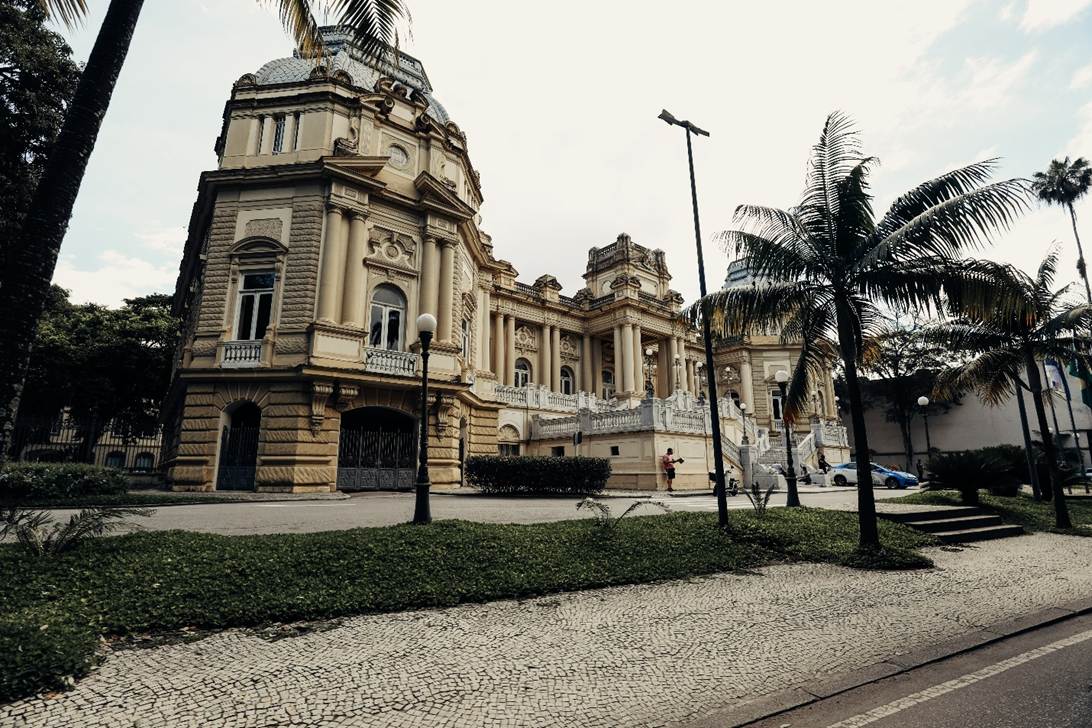
The Vacancy Is Also a Political Strategy
The Supreme Court case is supposed to resolve one central question. Should Castro's successor until January be chosen by voters in an early election, or by the members of Rio's scandal-prone legislature? So far, the score in the 10-member court is 4-1 in favor of a legislative vote. Then Justice Flávio Dino asked for a review, which gives him up to 90 days to return with his ruling.
That delay matters because time itself is now part of the politics. A newly elected governor might take office only in January anyway, since Rio residents were already scheduled to choose one in the October general elections. So the argument over procedure is not only legal. It is strategic. If the state legislature gets to choose, the succession stays in elite hands. If voters go to the polls, the crisis becomes a broader democratic event, with all the noise, unpredictability, and legitimacy that entails.
This is why the fight has quickly attached itself to the national electoral mood. Sen. Flávio Bolsonaro has pushed for Douglas Ruas to be elected governor through the legislature. Supporters of Luiz Inácio Lula da Silva and his preferred candidate for Rio governor, Eduardo Paes, argue that voters should decide. Beneath the legal language, the camps are already behaving as if this were a rehearsal for October, or at least a chance to shape the political terrain before then.
Rio has always had a way of compressing Brazilian contradictions into one landscape. It is the postcard region, yes, but also a place where spectacle and dysfunction often live too close together. A state that is globally legible, nationally central, and institutionally brittle. That is why this crisis feels so revealing. It is not simply that the succession chain failed. It is that the failure immediately exposed how much of public life still depends on political presence being direct, continuous, and recognizable.
A judge can sign papers. A caretaker can hold an office. But political authority, especially in a place marked by security tension and high symbolic visibility, is not only about occupying the room. It is about whether other actors believe the person in the room will still matter tomorrow. That seems to be the real problem haunting Ricardo Couto de Castro's temporary administration. He may hold the post, but the surrounding machinery appears hesitant to treat his mandate as fully alive.
Crime, Diesel, and the Price of Drift
Thomas Traumann, a political consultant and former government minister, put the danger in plainer terms than most institutions are willing to. He said the extension of political chaos in Rio is not only embarrassing but also dangerous. His example was immediate and concrete. Brazil's government has offered a deal to lower diesel prices, which remain high due to the conflict in the Middle East. Rio is one of the few states that did not agree because, as Traumann put it, there is no one to authorize it. The consequence, he warned, is that Rio will now have Brazil's most expensive diesel.
That detail should keep anyone from dismissing this as palace intrigue. A power vacuum has material consequences. The crisis reaches the pump. It reaches freight costs. It reaches families already living in the fatigue of inflation. Then Traumann posed the more disturbing question. What happens if gang violence erupts tomorrow morning? Who tells the police to react?
That is the line that turns the whole story. Rio is not a state that can casually experiment with the absence of authority. In any Brazilian setting, executive drift is serious. In Rio, where questions of policing and criminal power are never far from the day's first headlines, it becomes something else. It becomes a test of whether the state can still perform the most basic promise of government, which is not perfection, but command.
And command, right now, seems suspended between institutions that do not fully trust one another. The Supreme Court delays. The legislature waits. National camps maneuver. The caretaker governs without the weight of a real mandate. Meanwhile, the calendar keeps moving toward October, when Rio citizens are already meant to choose a governor in the general elections. That looming election gives everyone an incentive to calculate rather than resolve.
This is what makes the crisis feel so Brazilian in the most uncomfortable sense. Not because it is normal, but because it reveals a familiar pattern. Institutions formally exist. Rules formally exist. Successions formally exist. Yet the actual exercise of power still depends heavily on tactical convenience, electoral timing, and whether the relevant actors see advantage in clearing the fog. When they do not, a state can remain half-governed while everyone insists the system is still working.
Rio's current condition is therefore more than a local anomaly. It is a portrait of how democratic machinery can remain intact on paper while public authority grows uncertain in practice. The office is occupied. The state is functioning, in some reduced sense. But the vacancy remains, not only in the governor's chair, but in the confidence that government itself is acting with one voice. In a calmer place, that might be survivable for a while. In Rio, it looks like something closer to risk left unattended.
Also Read: Argentina Rewrites Glacier Rules as Water and Mining Finally Collide