Colombia Sinú Flood Turns Homes Into Shelters and Questions Into Routine
In Montería’s low neighborhoods and Tierralta’s rural riverbanks, the Sinú has risen and stayed. Seven days in, families count centimeters, not forecasts. In a classroom shelter, a father watches his phone and asks what recovery means after water takes work.
Boards Over Brown Water in Montería’s Low Neighborhoods
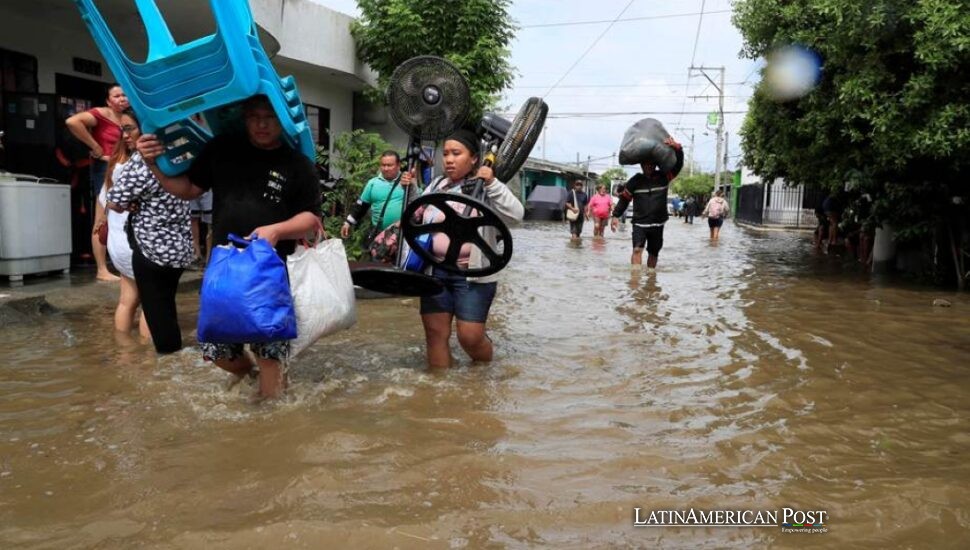
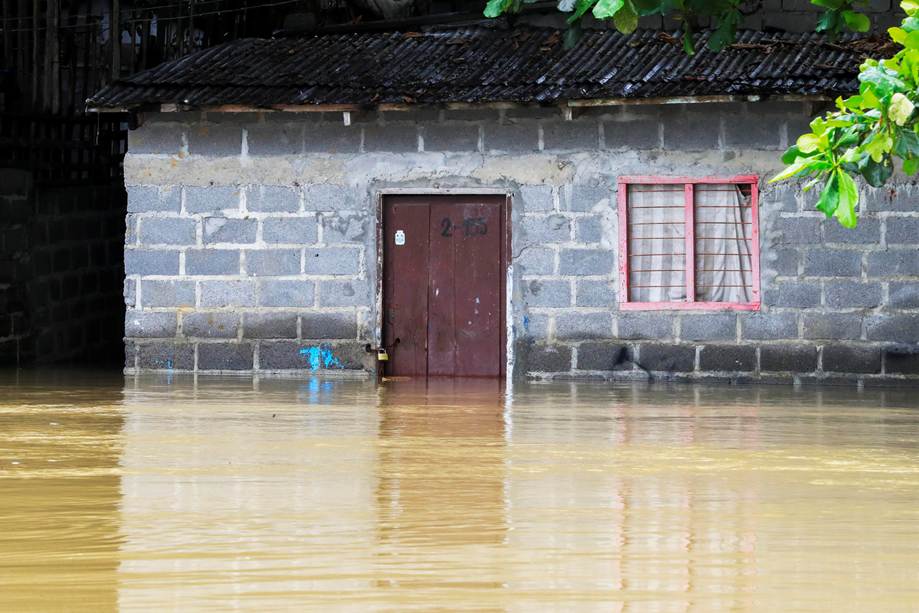
Inside Yela Contreras’s house, the floor is no longer a floor. It is a shallow, still sheet of water, the color of thick coffee left to cool. She walks across a few boards laid as a bridge, careful with each step, because the alternative is mud that grabs at her ankles and makes her body work harder than it should. In this corner of Montería, the capital of Colombia’s Córdoba department, the flood does not feel like a sudden event. It feels like something that has settled in.
“This takes time,” residents say with resignation, emphasizing the ongoing struggle and helping readers connect emotionally to their persistent hope and frustration.
“Other times the water has taken almost a month to go down,” Yela says, remembering that here the emergency is not novelty but repetition. That is why no one talks in hours or days. They talk in weeks. The trouble is, the longer a neighborhood measures time that way, the more the flood becomes the norm, and the less space remains for prevention.
Outside, the streets look like channels that have forgotten how to flow. The water stays. Houses sit at its mercy, some made of unplastered block, others of zinc sheets and wood. The silence breaks only with slow footsteps, calculated to avoid sinking. The mood is not panic. It is worn. Not a headline-level fear, but a daily grind.
In floods like this, household routines are disrupted, raising questions about cooking, sleeping, and working, which highlights daily struggles and fosters empathy.
Living Off the River Until the River Takes Work
For seven days, Yela has been unable to cook in her home. At night, she sleeps outside, waiting for the water level to fall enough to return. Life is suspended, and suspension has its own rules. “My husband works on the river, and he has not been able to work,” she says.
Her husband, Alberto Contreras, is an arenero, one of many informal workers who depend directly on the minerals they extract from the riverbed for Montería’s construction. The work is manual and rudimentary, performed using a metal tank, a rope, and a body submerged. It is work that assumes the river is stable enough to be a workplace. Right now, it is not.
“We live off the river, but now the river left us with nothing,” he says. The flooding has not only entered their house. It has frozen their income. This collapses the distance between natural disasters and household economies. The damage is immediate because it is not only material loss. It is daily uncertainty.
He says they are desperate and do not know where to go. Then he describes how they measure the water now, not by days but by hours. “Yesterday it was lower, last night it went up, and this morning it went up again. Every so often, it rises a few centimeters,” he says. The phrase “a few centimeters” sounds harmless until you live inside it. A few centimeters is the difference between stepping in and staying out between sleeping indoors and sleeping somewhere else.
A few meters ahead, Enrique Oviedo, an older resident, points to how far the water reached inside his home. He says he stayed there until the day before, but it became impossible because of the mud. “Until yesterday we were inside, but now you can’t,” he repeats, while water reaches above his knees. He has moved the few belongings he had, lifting some to the roof, as if height itself were a kind of insurance.
With the flooding came other fears. Enrique speaks of black snakes that entered the house, carried by the rising water, so that the home ceased to be a refuge. This time, unlike other floods, the water crossed known limits. “Before it reached over there,” he says, pointing toward a neighboring house, then adds with resignation: “Now it got into us.” One memorable line comes to mind while watching this scene: in Montería, the river does not announce itself; it occupies.
Aid arrives intermittently in a city where the mayor’s office reports that about 32,000 people are being assisted. Foundations, merchants, and neighbors bring prepared food at night. The pattern is uneven because demand is uneven and the city’s capacity is finite. Even the help, in other words, comes in pulses, like the river level itself.
The wager here is not that people can endure forever. It is that something will begin to drop first, the water or the patience forced to rise with it.
A Classroom Shelter in Tierralta and the Cost of No Warning
In a classroom turned into a temporary shelter, desks are stacked against the walls. Mattresses lean in corners. Clothes hang in the windows, turning a schoolroom into a place of drying and waiting. José Julián Castaño sits, looking at his phone, as if news might arrive with a signal bar.
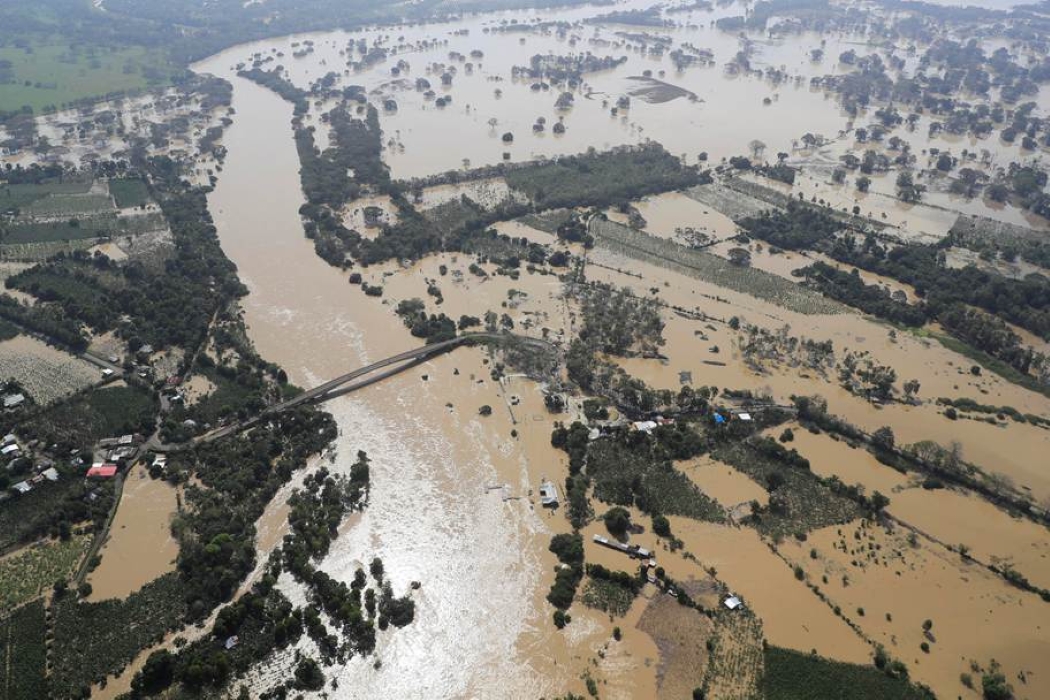
He is a farmer, a father of five, and one of the many affected by the Sinú’s recent rise in the rural zone of Tierralta, also in Córdoba. “Everything was lost except life,” Castaño says, summarizing what happened to him and what happens to many families when water comes into a house with no time to negotiate. He is from Puertas Negras, a village on the riverbank. A week ago, the river left its channel and flooded everything in its path from the upper part of the region.
He says the emergency arrived without warning. The water started to rise, and he decided, as he had before, to wait and see if the swelling would stop. This time it did not. Four days ago, water entered his house and reached nearly a meter in height. He lost chickens, pigs, and the crops that supported his family. “The only thing that didn’t get lost was our lives,” he insists.
Evacuation came later, when there was no way to remain in the house. Castaño and his family were moved with a group of twenty-one people to improvised shelters organized by the mayor’s office, in schools and churches. Humanitarian aid began to arrive in recent days, but he says it has been insufficient. When he went to look for food to cook, he says he was given five pounds of rice and three small bags of spaghetti. It is the kind of reason that keeps you alive for a moment and leaves you thinking about the next moment.
He says there was no alert to evacuate. “No, nothing, nothing. There was no alert for anything,” he says. He acknowledges that river rises are frequent in the zone, but says the fear now is different. Before, he says, there were three or four rises a year, and people knew where the water would pass. Now he lives with “the fear that that wall will fall,” referring to the Urrá hydroelectric dam, the only one in northern Colombia, with four turbines and an installed capacity of 340 megawatts.
The reservoir sits two hundred seventy-six kilometers from the river’s mouth. It covers 7,988 hectares and holds 1,616 million cubic meters of water. The spillway, which the company says also regulates flow, has a maximum discharge capacity of nearly 9,000 cubic meters per second into the Sinú’s channel. For farmers downstream, those figures are not abstract. They are the scale of what they imagine could happen to them.
They say the dam’s operations intensify conditions downstream in an emergency that began with atypical rains for this time of year, linked in the notes to an Arctic cold front that reached the southern Caribbean. The story is layered. Water from the sky, water from the infrastructure, and water from a river that already knows the low points in the landscape.
As those affected wait for answers, national and local authorities try to respond. The director of Colombia’s National Unit for Disaster Risk Management, Carlos Carrillo, arrived on Thursday last week. A short distance from where Castaño described his losses, Carrillo spoke about a Colombian Air Force flight arriving with more than ten tons of aid brought from Bogotá. He said the assistance includes food, cooking, and personal hygiene kits, along with hammocks and sheets, and that distribution depends on families being registered in the official census of those affected carried out by municipal authorities.
In Tierralta, Mayor Jesús David Contreras says the situation remains critical in rural areas along the rivers. A preliminary balance shows that about 60 villages remain flooded, with more than 5,100 families affected and around 8,000 hectares of crops lost. The mayor says 36 temporary shelters are operating in the municipality, where communities receive daily food as the waters begin to recede.
For Castaño, though, the central question sits beyond the immediate deliveries. “Now what do we do?” he asks. He lists what sustained his family, the plots and the crops, and says it all fell. “They come, they take a census, they give you a little food, and that’s it,” he says, seated at a student desk that is no longer for school but for refuge, waiting for the river to drop and for a response that allows him to start again, away from the water that this time gave no warning.
Also Read: Paraguay Reckons with Stroessner as Memory Refuses to Fade