Latin America Divided Over U.S. Maritime Drug Strikes
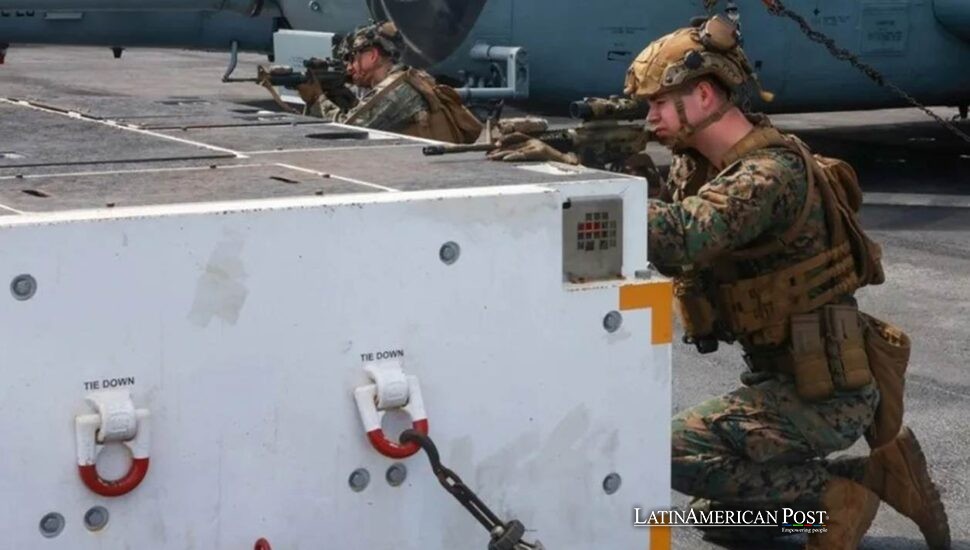
As U.S. warships patrol near Venezuela and alleged drug boats erupt in violence at sea, Latin America and the Caribbean are torn between fear, muted support, and outright outrage. This split highlights profound regional fractures over security, sovereignty, and the erosion of a rules-based global order.
A Fractured Region Confronts a Familiar Force of U.S. Power
Given the long, tangled history of U.S. involvement in Latin America and the Caribbean, the complex regional responses to U.S. maritime operations should make the audience appreciate the intricacies of regional geopolitics and the importance of nuanced analysis.
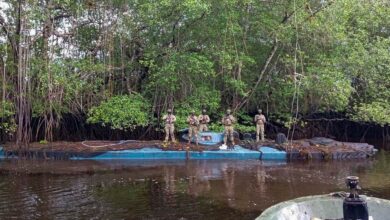
The region's response to this maritime crackdown—and the prospect of a broader U.S. operation targeting President Nicolás Maduro—has been inconsistent, despite the obvious geopolitical and human stakes. Since early September, the U.S. has launched at least 19 strikes in surrounding waters—first in the Caribbean, later in the Pacific—resulting in at least 76 deaths. Though the United Nations human rights chief has condemned the strikes as "unacceptable" and in breach of international law, no coordinated response has emerged from Latin America or the Caribbean.
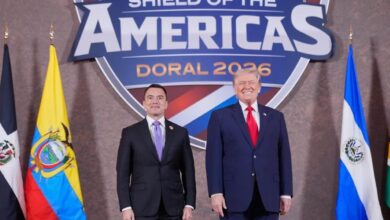
Ideological leanings influence regional responses. Left-wing leaders in Colombia, Mexico, and Brazil oppose, while right-leaning governments in Paraguay, Argentina, and Ecuador broadly support Washington's framing, highlighting regional ideological divides.
Even among U.S.-friendly governments, support is often muted. El Salvador's populist president Nayib Bukele, who has cooperated closely with Washington on security, has offered no public endorsement of the strikes. Still, reports suggest U.S. aircraft involved in the operation may be using Salvadoran territory. Where backing exists, it tends to be conditional and carefully restrained.
"A Historic Low" In Regional Unity
Juan Gabriel Tokatlian describes this moment as a historic low in Latin American cooperation, with fragmentation at its peak since the 1980s, when nations like Mexico and Venezuela formed the Contadora Group to oppose U.S. policy.
Tokatlian argues that the Union of South American Nations has been "destroyed," that CELAC is "useless," and that the Organization of American States remains too fearful of economic retaliation from Trump to speak plainly. The president's use of tariffs, sanctions, and foreign aid as a "diplomatic sledgehammer," particularly on immigration, weighs heavily on regional leaders' decisions.
Firebrands vs. Pragmatists
Despite those risks, some leaders have opted for confrontation. Colombian President Gustavo Petro has taken the hardest line, calling the U.S. strikes "murder" and condemning them as unilateral executions at sea. Mexican President Claudia Sheinbaum and Brazil's Luiz Inácio Lula da Silva have also criticized the campaign, though in more measured tones.
Unlike Sheinbaum and Lula—who govern major economies deeply intertwined with the U.S. and are entangled in ongoing trade disputes—Petro has little interest in maintaining goodwill with Washington. After his denouncement, Trump slashed U.S. aid to Colombia and publicly branded Petro an "illegal drug leader." Petro, however, hasn't wavered.
Will Freeman, a Latin America expert at the Council on Foreign Relations, told The Wall Street Journal, "This kind of fight is Petro's bread and butter." He's built his reputation by "saying very unpopular but often true things," Freeman said. Picking a fight with the U.S. may be impractical, but it helps Petro craft a domestic image of resistance.
Sheinbaum and Lula, on the other hand, are described as "more cautious, pragmatic people." They're attuned to public anxiety about crime, corruption, and economic stagnation, and know that open conflict with Trump could carry severe financial consequences. Their challenge: criticize the U.S. just enough to appease their people without provoking trade or investment fallout.
Security Fears Trump Ideology
That public fear helps explain why even leaders wary of U.S. interventions have echoed Washington's anti-drug narrative. "At the forefront of people's minds today are crime, corruption, low growth, the failures of their own domestic elites," Freeman said. "That's what people are angry about." In this climate, he added, "it's extremely toxic for any government right now in the region to be perceived as on the side of organized crime."
This contradiction is stark in Brazil. After a deadly police raid in Rio—the most lethal in the country's history—Lula condemned it as a "massacre." Yet polling shows most Brazilians support it, driven by fear of violent crime. The tension between human rights and hardline security demands shapes regional responses to U.S. operations framed as anti-cartel efforts.
Caribbean Alignments And Popular Disdain For Maduro
At the opposite end stands Trinidad and Tobago's Prime Minister Kamla Persad-Bissessar, a vocal supporter of the U.S. campaign. When CARICOM issued a declaration affirming the Caribbean as a "Zone of Peace" and calling for cooperation under international law, Persad-Bissessar refused to sign. Instead, she welcomed the U.S. military buildup and declared that drug smugglers should be "killed violently"—a stark reflection of public anger toward traffickers.
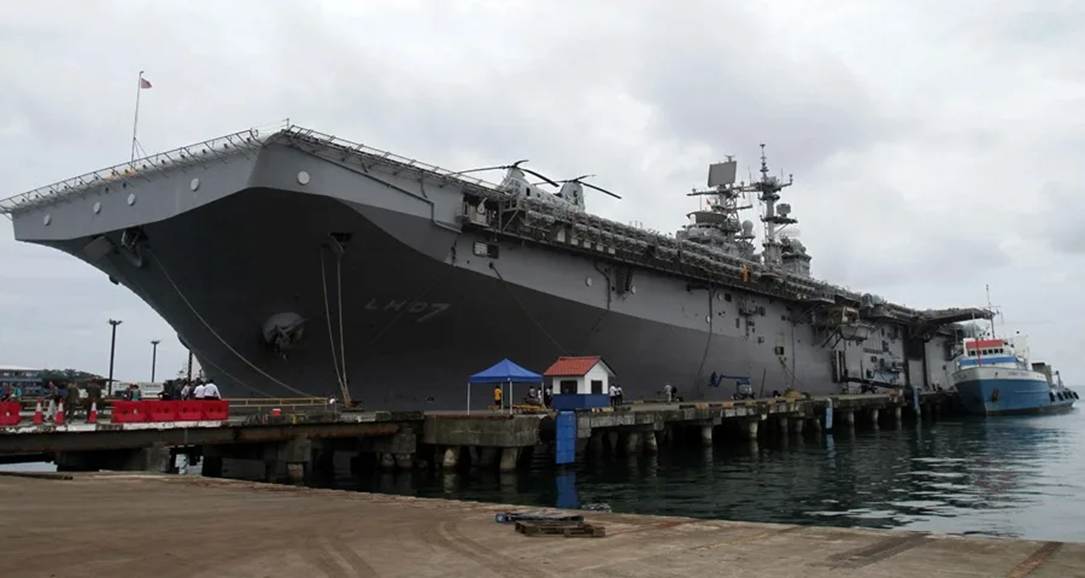
She even allowed a U.S. warship to dock in Port of Spain amid protests. Caracas responded by canceling energy deals with Trinidad and Tobago, accusing her of turning her country into an "aircraft carrier for the U.S. empire." Still, she appears to be betting that alignment with Washington will pay off—especially if Maduro falls and new energy deals become available.
Underlying these decisions is a political reality: Maduro is deeply unpopular across the region. According to polling cited by The Wall Street Journal, support for a hypothetical U.S. intervention to oust him is higher in Latin America than in the U.S. itself. Millions of Venezuelan migrants have strained services and labor markets across the region, and many citizens blame their government.
"Many people in Latin America view Nicolás Maduro as a dictator. They would be thrilled to see him gone," said James Bosworth, head of political risk firm Hxagon. There's "widespread understanding that the U.S. military is probably one of the few organizations that could ensure that he is pushed from power."
For most Latin Americans, he added, past U.S. interventions are distant history. "The last U.S. intervention in Latin America or the Caribbean was over two decades ago. It's not something that the average citizen in Latin America has experienced in their lifetime." While history still shapes elite views, younger generations are focused on immediate crises.
Tourism, Tensions, And A Crumbling Order
Even leaders hoping to gain political advantage from a tough stance on crime or on Maduro face significant risks by staying silent on U.S. military action. The economic impact is already surfacing. The Dominican Republic recently postponed the 2025 Summit of the Americas, citing "profound divisions that hinder productive dialogue." Meanwhile, EU leaders pulled out of a major summit in Colombia amid the spat between Petro and Trump.
Tourism is another concern. Christopher Hernandez-Roy, of the Center for Strategic and International Studies, warned that heightened naval activity could hurt destinations like Aruba and Curaçao—Dutch territories just off Venezuela's coast. Cruise ships that regularly visit Port of Spain may now think twice, and fishing—"a way of life" for many—is also under threat.
The Trump administration insists it is targeting "narco-terrorists," yet it has not provided evidence that the dead were high-level traffickers or that the strikes reduce drug flows. Legal experts and human rights advocates argue the operations are likely illegal and largely ineffective.
Whether Trump ultimately plans to topple Maduro remains unclear. But with a large U.S. force still deployed, skepticism remains. Maduro has called for a unified regional response, but it has gone unanswered.
Tokatlian expressed concern at the lack of diplomatic or legal preparation by Latin American governments. "We do not have constraints today vis-à-vis the question of the use of force," he warned. A U.S. strike on Venezuela, he said, would mark yet another step toward a world where international norms are eroding.
In that world, the region's fractured response to Trump's maritime campaign may not look like indecision—but rather like a dress rehearsal for a future in which the old rules about sovereignty, intervention, and legality no longer apply.
Also Read: Honduras On The Brink As Election Fraud Fears Boil Over