Latin American Cartels Ride New Silk Road of Global Crime
Across Latin America, Chinese criminal networks quietly braid cartel cash, fentanyl chemicals, and illicit trade into a shadowy “Silk Road of crime” that stretches from jungle gold pits to U.S. banks, reshaping hemispheric security, sovereignty, and everyday life for millions.
A New Criminal Silk Road
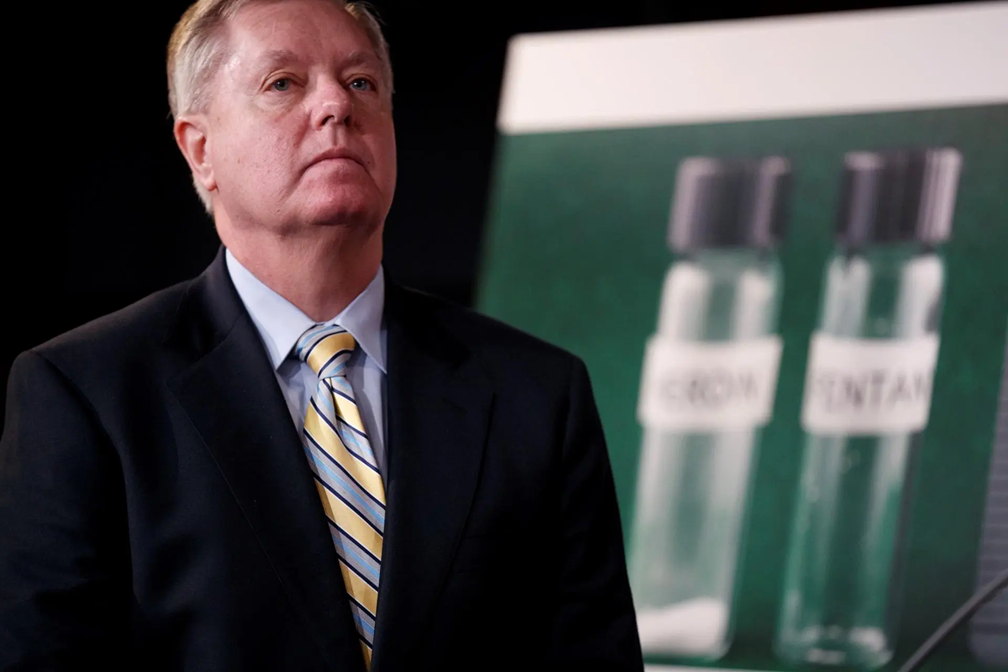
From the Pacific docks of Peru to the money houses of California, lawmakers in Washington, D.C. are tracing a new kind of trade route—one that runs not on soy, copper, or lithium, but on fentanyl precursors, laundered cartel profits, and smuggled human beings. In a recent hearing of the U.S. Senate Caucus on International Narcotics Control, senators from both parties warned that Chinese criminal brokers and Latin American cartels are no longer separate worlds. They are now partners in what former U.S. diplomat Leland Lazarus described, in testimony reported by the South China Morning Post, as a “Silk Road of crime” stretching across the Americas.
The picture sketched in that hearing, and relayed through the South China Morning Post’s interviews and reporting, feels uncomfortably familiar in this region. For decades, Latin America has exported commodities while importing both foreign capital and foreign meddling. Now, instead of Cold War intrigue or structural adjustment, the region finds itself at the center of a transnational criminal economy where Chinese underground bankers and Mexican cartels merge logistics, finance, and corruption.
According to U.S. Justice Department cases cited in the hearing, executives at Hubei Amarvel Biotech in 2023 allegedly disguised shipments of fentanyl precursor chemicals as dog food and other mundane products, marketing them directly to Mexican cartels and offering “stealth shipping” and advice on how to evade customs checks. For residents of border cities from Tijuana to El Paso, those “precursors” are not abstractions. They materialize as counterfeit pills, overdoses, and morgues under strain.
Another case, Operation Fortune Runner by the Drug Enforcement Administration (DEA), uncovered a California-based network accused of laundering tens of millions of dollars in cartel profits through Chinese underground banks. Investigators described a “mirror swap” system that shifted money among accounts in the United States, Mexico, and China, keeping funds one step ahead of regulators. Scholars of illicit finance, writing in journals such as Latin American Politics and Society and the Journal of Illicit Economies and Development, have long argued that such offshore and shadow-banking circuits are no side show; they are the backbone that allows drug markets to survive crackdowns on street-level dealing.
Regional police operations mirror the same pattern. Earlier this year, Operation Green Shield led to 94 arrests across Brazil, Peru, and Colombia, where authorities say Chinese nationals were implicated in illegal gold mining, wildlife trafficking, and the smuggling of Chinese migrants through Central America. For communities along the Amazon or in Andean mining belts, this is experienced not as “globalization,” but as rivers poisoned by mercury, forests stripped bare, and local leaders threatened when they resist.
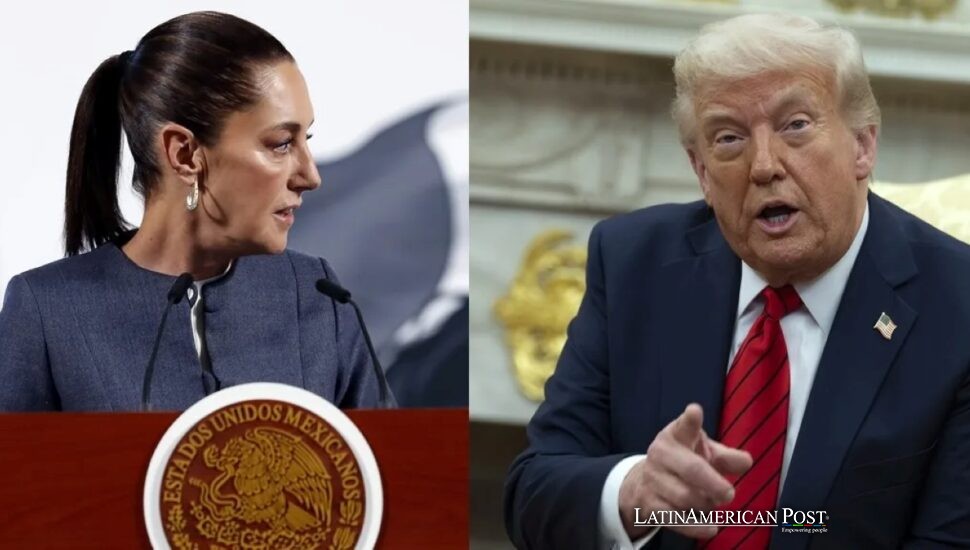
Senator John Cornyn, a Republican from Texas who chairs the panel, distilled the emerging alliance in blunt terms during testimony reported by the South China Morning Post. “Chinese criminal organisations have become the go-to money launderers for the Mexican drug cartels,” he said. “They haven’t stopped there. They’ve also brokered the sale of fentanyl precursors, facilitated illegal immigration and even used poached wildlife as currency.”
For Latin America, this is more than a crime story; it is a new political economy. Illegal gold, trafficked jaguar fangs, and migrant routes now sit on the same balance sheet as synthetic opioids bound for the United States. As research in the Journal of Latin American Studies has noted, such illicit markets often fuse with formal trade, exploiting free-trade zones, logistics corridors, and the very infrastructure built to bring the region “closer” to the world.
Ports, Precursors and the Underground Yuan
The senators also flagged a strategic layer that speaks directly to the anxieties of Latin American governments. Cornyn noted that Chinese-backed firms now operate or control dozens of ports in the region, including Peru’s new Chancay megaport on the Pacific. On paper, these investments promise development and access to Asian markets. In practice, every new container terminal can become another logistical blind spot where chemical shipments and contraband are hidden among legitimate goods.
In that same hearing, Senator Sheldon Whitehouse, a Democrat from Rhode Island, emphasized that cartels depend on outside networks to move and spend their money. “That’s where Chinese credit organisations come in,” he said. “They wash cartel cash quicker and cheaper than competitors, often with a money-back guarantee.” His call for robust enforcement of the Corporate Transparency Act—a law requiring companies to disclose their real owners—was a reminder that the weakest link in this hemispheric chain might not be Bogotá or Lima, but shell companies and trust structures in the United States itself.
Whitehouse even cited former Treasury Secretary Janet Yellen’s 2021 remark that “there’s a good argument that the best place to hide and launder ill-gotten gains is actually the United States.” For Latin Americans long accustomed to being portrayed as the source of global drug problems, it is striking to hear a senior U.S. official acknowledge that the world’s premier financial hub doubles as a laundromat. Academic work in journals such as International Security and Crime, Law and Social Change has repeatedly noted this asymmetry: drugs and raw materials flow north and east, but dirty money often ends up in respectable postal codes in New York, Miami, or London.
Lazarus, drawing on U.S. Treasury data, told lawmakers that Chinese money-laundering networks moved about US$312 billion through the U.S. financial system from 2020 to 2024. “These networks are involved in a whole host of crimes,” he said, as quoted by the South China Morning Post. “They traffic fentanyl, launder billions of dollars, mine gold illegally, trade in wildlife and sex, and run digital ‘pig-butchering’ scams.” Many of the actors, he added, hail from China’s Fujian province, often leading local chambers of commerce or hometown associations that straddle the line between legitimate trade and organized crime, sometimes keeping contact with Chinese embassies or the Communist Party’s United Front Work Department.
Lazarus stressed that there is no direct proof that the Chinese Communist Party commands these networks, but he argued that Beijing has not used its surveillance machinery to stop them. “The CCP has the surveillance tools to crack down,” he said. “It just hasn’t done so.”
Caught Between Markets and Geopolitics
If Lazarus mapped the networks, former DEA operations chief Ray Donovan focused on the incentives. He pointed to congressional findings that China subsidises most fentanyl precursor exports to Mexico and that some Communist Party officials hold stakes in companies that receive tax rebates for those shipments. “What these findings prove is that the Chinese government’s lack of enforcement is intentional,” he said.
At the same time, strict Chinese controls on moving money abroad have created a hungry underground dollar market. Wealthy Chinese citizens seeking to skirt capital controls now meet the surplus dollars of Latin American drug cartels. “This relationship is simple economics,” Donovan said. “The policies create demand, and Chinese criminal groups meet it.” For families in Sinaloa, Vallé del Cauca, or the favelas of Rio de Janeiro, that “simple economics” manifests as recruitment into trafficking chains, local officials on the take, and a steady erosion of trust in institutions.
Both Lazarus and Donovan pressed for tighter financial oversight. Lazarus urged the creation of a U.S. inter-agency task force to track Chinese criminal networks and new tools to follow illicit finance. Donovan, for his part, argued that banks remain the critical point of vulnerability because, as he put it, “They’re the one part criminal organisations can’t avoid.” For Latin American regulators, already grappling with limited budgets and politicized judiciaries, this suggests that the fight will be won or lost not just in coca fields or jungle labs, but in compliance offices and cross-border data-sharing agreements.
Perhaps the most sobering line in Lazarus’s testimony—again reported by the South China Morning Post—came at the end. “The Silk Road of crime is already running through our hemisphere,” he warned. “It’s poisoning our citizens, corrupting partner nations and advancing the interests of our strategic competitor, whether by design or by default.”
For Latin America, the phrase lands with historical weight. This is a region that has long lived between empires, from Madrid and London to Washington and now Beijing. The new “Silk Road” is not a romantic revival of ancient caravans, but a web of chemicals, cash, wildlife, and human bodies. The challenge for the continent’s democracies is whether they can transform their ports, banks, and borders from corridors of exploitation into spaces of genuine sovereignty—before this criminal road becomes the only route many citizens see open to them.
Also Read: Latin America’s Quiet Rebellion Against Churches While Clinging To Faith