Mexico Pursued El Mencho Using a Romantic Partner and U.S. Intelligence in a High-Risk Mountain Raid
A predawn raid in Mexico’s mountains resulted in the death of El Mencho, the country’s most wanted cartel leader, following months of tracking a romantic partner, U.S.-supported intelligence, and a final gunfight in a forest that concluded during flight.
A Romantic Partner Departs and the Pursuit Intensifies
In Tapalpa, a mountain town long regarded as a stronghold of the Jalisco New Generation Cartel, cabins are situated behind gates and tall trees. The early morning air carries the damp scent of pine and cold earth. This location attracts weekend visitors seeking fresh air, with a long driveway maintaining distance from outsiders.
For months, Mexican authorities had been monitoring the area discreetly.
Nemesio Oseguera Cervantes, known as El Mencho, had evaded capture for years. The United States offered a 15 million dollar reward for information leading to his arrest. He faced two arrest warrants in Mexico for organized crime. Intelligence units tracked fragments of his network, seeking vulnerabilities. Initially, they identified a weakness not through armed conflict but through personal relationships.
According to Mexico’s defense secretary, investigators identified a trusted associate linked to one of Oseguera’s romantic partners. This lead directed them to a property on the outskirts of Tapalpa. On February 20, acting on new intelligence, authorities began surrounding the location where he was believed to be hiding.
The following day, the woman departed the cabin complex, while El Mencho remained with his security detail.
At that moment, the tactical advantage shifted.
High-value targets rarely present clear opportunities; they travel with armed escorts, disappear into difficult terrain, and retaliate. However, officials believed they had achieved surprise. The defense secretary described the operation’s objective as “Gain the element of surprise and take the initiative.”
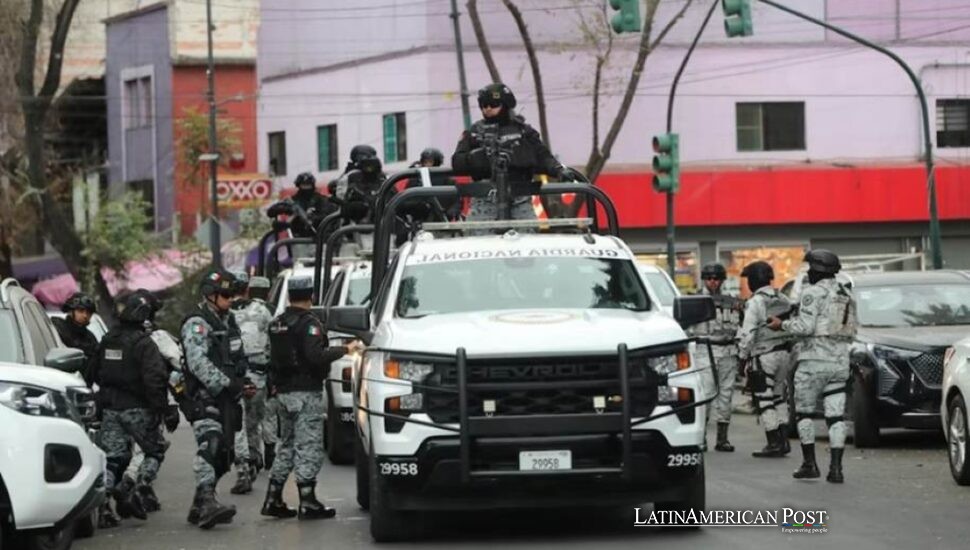
Six helicopters and several aircraft were prepared. Ground forces from the Mexican Army, supported by the National Guard and special forces, sealed off the area before dawn on February 22. Officials later indicated that the plan aimed to move quickly and minimize suspicion, relying mainly on ground units with limited air support.
President Claudia Sheinbaum stated that the United States shared intelligence that supported the operation but did not deploy ground forces. A U.S. defense official informed Reuters that a U.S. military-led intelligence task force focusing on drug cartels had assisted the effort.
This operation was not improvised but the result of accumulated efforts: months of tracking, a relationship, a departure, and then the approach at the forest’s edge.
Gunfire in the Forest
As soldiers advanced up the slope toward the cabin complex, cartel gunmen opened fire. Mexican authorities described the attack as “very violent.” Security forces returned fire, resulting in the deaths of eight suspected cartel members and injuries to three soldiers.
Eyewitness footage verified by CNN showed armored vehicles ascending the incline and uniformed personnel advancing toward the site. Additional clips captured automatic gunfire in the distance and thick, dark smoke rising above the trees.
El Mencho and several of his deputies fled the scene.
They ran into a nearby wooded area, disappearing into the undergrowth and brush. The forest became their shield. For a moment.
Mexican troops established a perimeter. Some units continued to engage gunmen near the cabins, while a separate special forces team pursued them. The image evokes a primal scene: a fugitive in the trees, soldiers closing in, and the forest silent in anticipation, holding its breath.
When they found him, he was not alone. He was with two bodyguards. Another exchange of gunfire followed. A helicopter was hit by a bullet during the broader confrontation and was forced to make an emergency landing at a nearby military installation.
The special forces team ultimately captured Oseguera and the two men accompanying him; all three sustained serious injuries.
Security forces seized numerous weapons at the scene, including Russian-designed RPG launchers. It was the same model used in 2015 to shoot down a helicopter, killing seven Mexican soldiers. The memory of that attack still lingers in military circles. The state does not forget its dead. It does not forget the humiliation either.
The wounded individuals, along with an injured soldier, were loaded into a helicopter intended to transport them to a hospital in Guadalajara. However, all three cartel members died from their wounds during the flight.
Authorities rerouted the helicopter, fearing violent reprisals in Guadalajara, where the cartel maintains strong influence. The aircraft diverted to Morelia International Airport, where an Air Force plane awaited to continue transport.
He died before reaching a hospital, during transit—between forest and city, between pursuit and judgment.
Aftermath and the Dynamics of Power
The killing of El Mencho marked the most significant blow against organized crime since the recapture of Joaquin Guzman, known as El Chapo, nearly a decade ago.
However, Mexico has recognized that removing a kingpin does not equate to dismantling the entire criminal system.
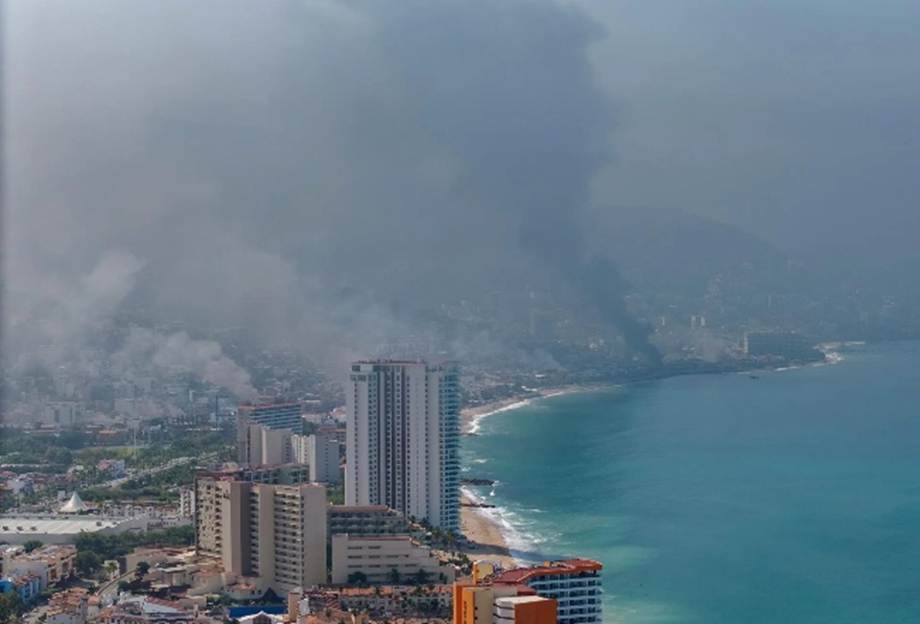
Almost immediately, retaliation spread. Cartel members torched vehicles and blocked highways in several states. In some places, blackened car shells sat in the middle of roads, the acrid smell of burned rubber hanging in the air. Airlines canceled flights to Puerto Vallarta. Schools and universities suspended classes. Authorities urged residents to remain indoors.
By Monday, officials reported that at least 30 suspected gang members, 25 National Guard troops, and one civilian had been killed during the ensuing unrest. More than 70 individuals were arrested across seven states. At least 85 cartel-related roadblocks were recorded on Sunday alone.
A senior cartel figure known as El Tuli, identified as Oseguera’s right-hand man and a top financial operator, was accused of organizing coordinated attacks in Jalisco. Authorities said he offered a bounty of 20,000 pesos for the killing of each member of the military. Later that day, security forces tracked him to El Grullo. He attempted to flee and was killed in a clash.
The escalation was rapid, and the message unequivocal.
For President Sheinbaum, the operation came at a consequential moment. Former U.S. President Donald Trump has pressured Mexico to clamp down on drug trafficking. Guadalajara is set to host World Cup matches this summer. Stability matters. Optics matter.
Armando Vargas of the think tank México Evalúa stated to CNN that the Mexican state appeared to have calculated that the conditions favored capturing El Mencho and that no better opportunity existed. He suggested the government likely assessed its capacity to contain the disruption and restore governance promptly.
What this does is test that confidence.
David Mora, senior analyst at the International Crisis Group, told CNN that the cartel leader’s death might weaken the organization and open “the possibility of further violence within the group.” But he also suggested rival cartels could see an opportunity to encroach.
Others expressed skepticism regarding fragmentation. Much of the cartel’s leadership remains at large, operating through a franchise-like system, according to Vargas. The structure is intentionally resilient.
The killing eliminated a man who built a criminal enterprise over three decades, trafficking cocaine, methamphetamine, and fentanyl to the United States, employing military-style tactics, including the use of armed drones and improvised explosives.
However, a deeper question remains: Does eliminating a single figure alter the trajectory of violence or merely reshape its patterns?
In Tapalpa, the trees still stand. The driveway still curves toward the cabins. In towns across western Mexico, daily life resumes in uneven steps. Children return to school. Shopkeepers sweep ash from sidewalks. Soldiers remain on guard beside charred vehicles.
The forest has returned to a state of quiet.
For the time being.
Also Read: Mexico’s El Mencho Dead and Cartels Torch Roads in Fury