Mexico Reveals How Historical Wounds Continue to Influence Contemporary Atlantic Diplomacy

King Felipe’s acknowledgment of abuses during Spain’s conquest of Mexico has reignited the politics of memory, prompting Latin America to consider whether colonial reconciliation can meaningfully reshape diplomacy, identity, and power between the former empire and the former colony today.
A Gesture Bearing Five Centuries of History
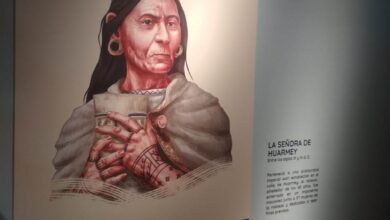
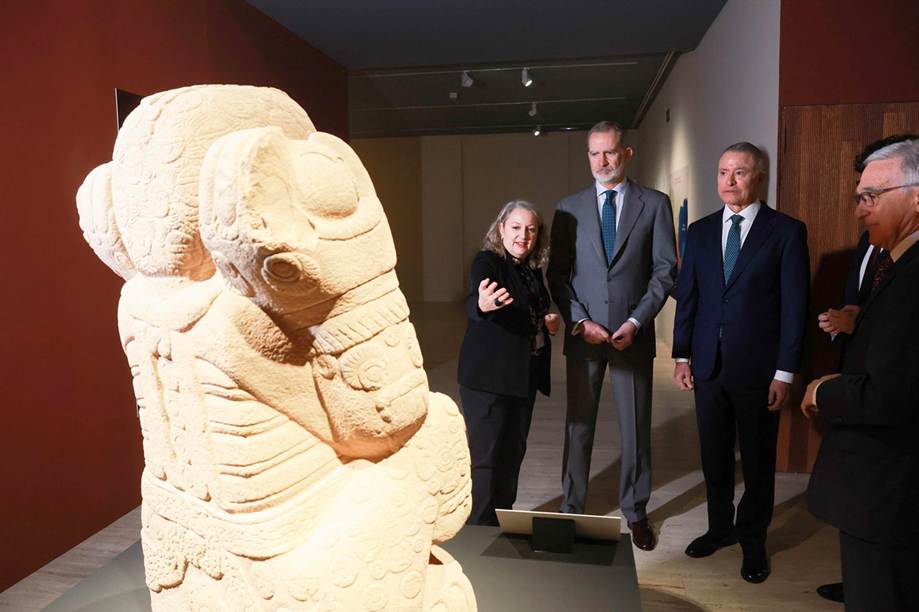
Diplomacy often advances through treaties, trade agreements, and state visits. However, it can also progress through a single statement made in a museum, in the presence of an ambassador, with history as an undeniable witness. This occurred when King Felipe of Spain, during a visit to an exhibition dedicated to indigenous women in Mexico, acknowledged that there had been “a lot of abuse” during the conquest of the territory that became Mexico.
King Felipe’s statement surpassed previous acknowledgments by Spanish royalty. He stated, “There are things that, when we study them, with our present-day criteria, our values, obviously, cannot make us feel proud.” Although informal, such remarks can exert significant political influence when they address an unresolved wound.
For Mexico, these comments represented a form of partial vindication. President Claudia Sheinbaum regarded them as a significant advancement in a dispute that has strained bilateral relations in recent years. Her response was cautious and measured: “One could say that it is not everything we would have wanted, but it is a gesture of reconciliation by the king in terms of what we were talking about: an acknowledgement of excesses, exterminations that happened during the Spaniards’ arrival.”
This phrasing is significant as it encapsulates the central tension of the moment. It was not a full apology, nor a legal or formal act of contrition, and it did not resolve the dispute. However, it disrupted a longstanding pattern: for the first time, a Spanish monarch publicly acknowledged abuses committed during the colonial era. This development alters the diplomatic landscape.
In Latin America, historical memory is not merely an academic subject preserved in isolation. It permeates state rhetoric, indigenous demands, diplomatic tensions, educational materials, monuments, and silences. The conquest is not simply a historical event; it remains a central unresolved issue, particularly in countries where national identity is founded on both indigenous continuity and colonial violence. Mexico exemplifies this contradiction.
The fall of Tenochtitlán, commemorated on its 500th anniversary in 2021, represents more than a historical date; it constitutes a foundational rupture. It marks the origin of modern Mexico through bloodshed, language, conversion, destruction, and reinvention simultaneously. Any Spanish effort to address this history will inevitably extend beyond bilateral relations, engaging the broader Latin American discourse on how former imperial powers are remembered, contested, and politically instrumentalized.
Mexico Transforms Historical Memory into Foreign Policy
Mexico has long sought to bring this conversation into the diplomatic arena. In 2019, Andrés Manuel López Obrador demanded an apology from Spain for human rights violations committed during the conquest and colonization of Mexico. Spain’s response did not meet Mexico’s expectations, resulting in a prolonged standoff. In 2024, President Sheinbaum notably excluded King Felipe from her inauguration, citing the lack of response from both the king and the Spanish government to López Obrador. This decision transcended protocol; it signaled that historical memory had been institutionalized as state policy.
This moment highlights a broader Latin American dynamic. For generations, many regional governments have maintained an ambivalent stance toward Europe, particularly Spain. While cultural affinity, shared language, and extensive economic ties exist, the unresolved colonial history is often framed either as heroic expansion or as a regrettable but concluded chapter. Mexico challenges this narrative by refusing to relegate the conquest to mere symbolism.
King Felipe’s partial acknowledgment signifies that the past can no longer be addressed solely through imperial nostalgia or the softened rhetoric of civilizational legacy. This is significant because Spain’s political right continues to endorse the traditional narrative. Alberto Núñez Feijóo cautioned against judging historical events out of context and criticized the scrutiny of 15th-century actions in the 21st century as unreasonable. He further praised Spain’s legacy in the New World, asserting that Spanish conduct during the conquest compares favorably with that of other contemporary empires.
This defense is revealing as it frames the empire as a relative moral contest rather than as an enduring trauma experienced by the descendants of the conquered. It also explains why Mexico’s position has provoked strong reactions. When the conquest is framed not as a civilizational achievement but as abuse, extermination, and injustice, the symbolic foundation of imperial pride becomes difficult to uphold without appearing either brutal or evasive.
The far-right Vox party responded more vehemently, characterizing the conquest as “the greatest work of evangelization and civilization in universal history.” A party representative expressed astonishment that the king had aligned with those aiming to damage and discredit Spanish history. This backlash conveys an important message to Latin America: the debate is not about the violence of the conquest, which is already acknowledged, but about who has the authority to define its meaning today.
The Resurgence of Latin America’s Colonial Question
The significance of this moment for Latin America extends beyond Spain’s statements to the political opportunities they generate. President Sheinbaum indicated that these comments should initiate dialogue, although the process remains uncertain. This uncertainty is integral to the issue. While reconciliation is frequently invoked, it is difficult to implement. Whether it entails an apology, educational programs, cultural restitution, symbolic gestures, revised diplomatic language, or more candid public discourse remains unspecified. Nonetheless, one fact is clear: history has reentered the political arena.
This development is significant in a region where the colonial past is frequently commodified, romanticized, or obscured by contemporary crises. Latin American governments often assert sovereignty while governing states founded on historical hierarchies of race, land, and culture established during conquest. Thus, Mexico’s demands for recognition from Spain also revive a regional dialogue concerning those who continue to bear the consequences of this history domestically.
Spain presents a revealing contrast. In 2015, it enacted legislation granting nationality to descendants of Jews expelled during the Inquisition, demonstrating the state’s capacity to address historical injustices through policy when it elects to do so. The current question is why a similar willingness has been more restrained concerning the conquest of the Americas. This distinction will not go unnoticed in Latin America.
Politically, Mexico has helped shift the colonial question from a moral appeal to an active diplomatic issue. This transition may prompt other regional countries to reconsider their historical relations with Europe, framing them less as matters of heritage and more as issues of accountability, narrative authority, and symbolic restitution.
King Felipe’s remarks do not close the historical wound; rather, they perform a more politically significant function. They acknowledge the wound’s existence, demonstrate its capacity to embarrass the monarchy, divide Spain’s political factions, and enhance Mexico’s influence in shaping the terms of historical remembrance. For Latin America, this represents a substantial development, indicating that the former empire can still be held accountable, albeit reluctantly, to the memory of its former subjects.
Also Read: Chile Digs Its Desert Line as Latin America Shifts Right