Mexico’s El Mencho Dead and Cartels Torch Roads in Fury
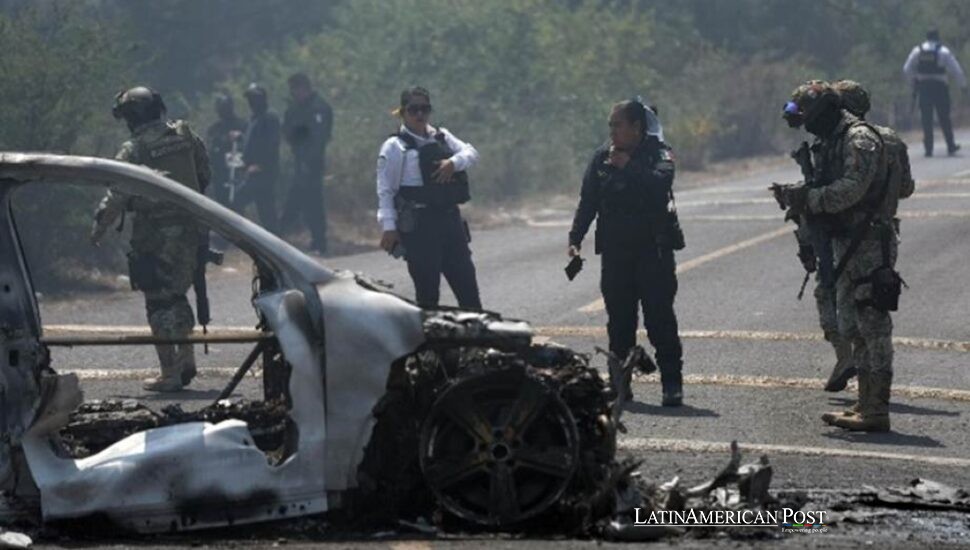
After Mexico announced it had killed cartel leader El Mencho, fires and roadblocks appeared in at least 13 states. The crackdown pleased Washington and challenged President Claudia Sheinbaum’s promise of calm, as families, tourists, and commuters quickly learned to stay inside.
A Sunday Outing Meets a Burning Roadblock
Paulina thought she was doing something normal, a Sunday outing with her husband and their three-year-old son, a small plan that lightens the week. Then the road narrowed, traffic stopped, and their day became a maze. She told The New York Times (NYT) they got trapped by one of the cartel’s roadblocks, and on their way home, they saw a wounded family by the roadside.
“I’m begging people not to go out,” Paulina told the NYT. “After what I saw, I realized these people don’t care about anyone. I wouldn’t wish what I witnessed on anyone.”
In Mexico, normal life and an emergency can be separated by just one burning vehicle blocking a road. On Sunday, that line disappeared quickly after the government announced it had killed the country’s most wanted cartel boss.
The man was Nemesio Oseguera Cervantes, known as El Mencho, the longtime leader of the Jalisco New Generation Cartel, one of Mexico’s most powerful and violent criminal groups. The government said security forces captured him in Tapalpa, a town of about 20,000 people in Jalisco, where the cartel started and is based. Officials said he was injured during the operation and died while being taken to Mexico City for medical care. At least nine other cartel members were also killed.
The problem in Mexico is that removing a boss can be both a win and a spark for more violence. Past captures have led to open fights between the state and cartels, as well as internal battles as groups fight to take over. This fear is real and part of the country’s recent history.
On Sunday, it arrived as smoke.
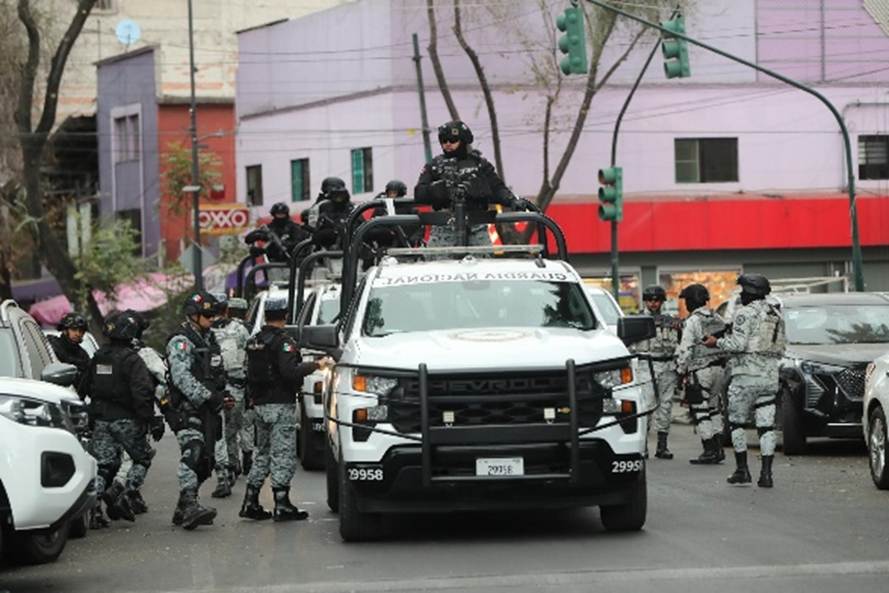
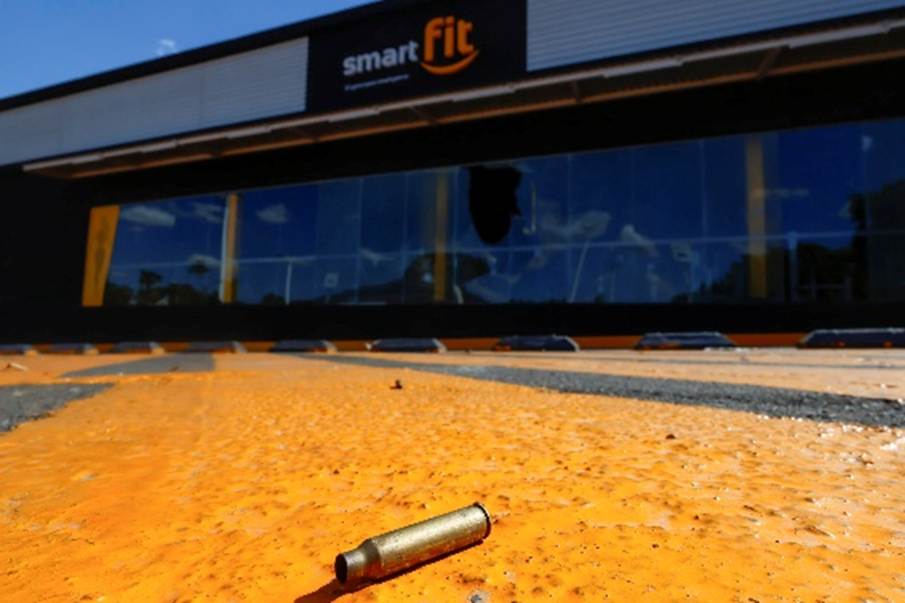
Across at least thirteen states, apparent cartel operatives set fires and blocked roads with burning vehicles. Supermarkets, banks, and cars were torched in what became one of the most widespread eruptions of turmoil in recent history. If the point was to show reach, it worked. If the point was to scare people into staying home, it worked, too.
By Sunday afternoon, Guadalajara felt strangely quiet. Streets were mostly empty. Businesses, including gas stations, closed their doors. It’s a simple truth: when people think violence can spread faster than the police, they cancel plans, close early, and lock up.
How a Kingpin’s Death Became a National Stress Test
Jalisco itself became the clearest picture of the backlash. Officials there said twenty branches of the state-run bank had been set ablaze or damaged, and that more than twenty roads were blocked with burning vehicles. Public transportation was suspended in some areas. Hotels were warned to tell guests to remain inside, including in Puerto Vallarta, a beachside city popular with American and Mexican tourists.
Dalia, a 32-year-old resident who asked to keep her last name private, told the NYT she was out getting breakfast when she saw armed men force a driver off a city bus and set it on fire. The details stuck with her, raw and immediate. “The cars behind started backing up quickly, and then I saw about twenty people, all hooded and dressed in black, pouring gasoline and setting the area on fire,” she said. “We all ran back home along the avenue, while hooded people on motorcycles kept passing by.”
Gasoline has a sharp smell that travels. So does panic. The scene she described is also the kind of moment that rewrites a city’s sense of safety in real time, turning infrastructure into theater. A bus is supposed to move people. A road is supposed to connect places. A fire turns both into warnings.
Much of the violence, officials said, clustered in and around Guadalajara, Jalisco’s capital and a hub of about 1.4 million people that is also a host city for this year’s World Cup. Panic broke out at Guadalajara International Airport, with videos on social media showing staff and travelers fleeing the building. The airport and the federal government said operations were normal, and there was no risk to fliers. Still, the images told their own story about how fear spreads faster than official reassurance.
Concerts and soccer matches were canceled. Flights were diverted. At least one port halted operations. The unrest spilled into the week ahead. Some states canceled classes on Monday. Airlines and bus operators suspended some routes.
Other tourist spots were hit too, like Cancún and Playa del Carmen on the Yucatán Peninsula, where groups set supermarkets on fire, according to videos posted online and confirmed by The New York Times. The locations matter because they show the goal wasn’t just revenge in one area. It was a message sent far and wide.
President Claudia Sheinbaum urged calm. “There is complete coordination with all the state governments,” she said online. “We must stay informed and calm. Activities are proceeding normally across most of the country.”
That’s what leaders say when they want the country to keep running. But the real question is whether people believe it. When roadblocks appear, and buses burn, calm is less about feeling safe and more about making a choice.
Washington Applauds While Mexico Guards Its Sovereignty
Mexico’s government called El Mencho’s death a big win in a new fight against cartels, which could also ease pressure from President Trump, who has threatened strikes in Mexico. Mexican officials said the U.S. provided intelligence to help the operation. U.S. officials stressed it was a Mexican operation, and no American troops took part.
The diplomatic subtext is hard to miss. Mexico wants cooperation without surrendering control, and Washington wants results without being seen as crossing the line into direct intervention. Sheinbaum has repeatedly rejected the idea of U.S. strikes, saying they would violate Mexico’s sovereignty, while also expanding cooperation with American security agencies, including on intelligence.
As the backlash unfolded, the United States warned its citizens to shelter in place in parts of five states: Jalisco, Tamaulipas, Michoacán, Guerrero, and Nuevo León. Airlines issued travel advisories or halted flights.
Christopher Landau, the American deputy secretary of state and former U.S. ambassador to Mexico, praised Mexican forces for killing Oseguera. “This is a great development for Mexico, the US, Latin America, and the world,” he wrote online. “The good guys are stronger than the bad guys.”
But Mexico’s story is rarely that simple. Analysts warn that what happens next depends on whether the Jalisco cartel has a clear successor strong enough to keep the group together. If not, the power gap could split the cartel and lead to more violence. In that way, Sunday was not the end. It was a turning point.
Officials said the operation also captured two other cartel members and seized weapons and armored vehicles, including what they described as rocket launchers capable of downing aircraft and destroying armored vehicles. Three members of Mexican security forces were injured, the government said. The U.S. State Department had offered up to fifteen million dollars for information leading to Oseguera’s arrest or conviction, and he had been indicted multiple times in the United States on federal drug charges.
For years, he avoided capture. Then, on one Sunday, Mexico announced he was dead, and the country saw how fast a cartel could still control the pace.
Also Read: Cuba Blackouts Turn Elevators Into Traps and Kitchens Into Clinics