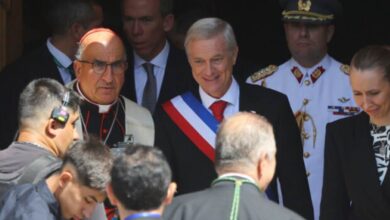
Chile Elects Kast Again: Crime and Memory Shape A Presidency
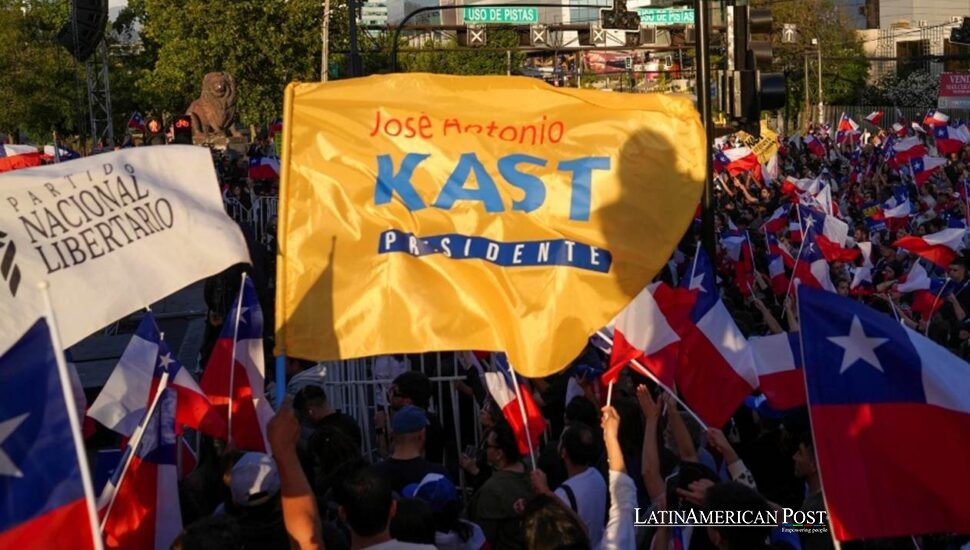
Chile’s run-off gave Jose Antonio Kast 58 percent of the vote and the presidency, ending the center-left era after Gabriel Boric. His plan aims for tough action on crime and immigration, but the shadow of Pinochet and a divided Congress will test him quickly.
A Comeback Built On Fear And Fatigue
On a Sunday night when the ballots stopped feeling abstract and began to feel like a verdict, Chile chose its 38th president: Jose Antonio Kast, 59, leader of the Republican Party, finally winning on his third attempt. With nearly all votes counted, he defeated former Labour Minister Jeannette Jara, a Communist Party politician who carried the governing center-left coalition, Unity for Chile, into a run-off that turned into something more blunt than an ideological debate. It became a referendum on safety, borders, and the emotional economy of everyday life,how a nation measures fear, and how politicians translate that fear into policy.
Jara conceded quickly, writing, “Democracy has spoken loud and clear,” and offering her rival success “for the good of Chile.” It was the kind of message that tries to stitch civic continuity across political rupture, a familiar Latin American ritual after bitter elections: accept the numbers, bless the institutions, and quietly warn that the social wounds underneath the results are still open. The hook in her farewell was persistence; she promised her supporters they would “continue working” for a better life. Even in defeat, she framed politics as a long walk, not a single vote.
The magnitude of Kast’s win matters because it came after a recent history that suggested he had hit his ceiling. In 2021, Gabriel Boric beat him by nearly 10 points. Boric, once the emblem of a new left, saw his popularity drop to about 30 percent by the end of his term. The law barred him from running again. When this election arrived, the governing coalition was defending an era that many voters found messy. People worried about crime, immigration, and a weakening economy. In the region, elections often turn on inflation and insecurity, not slogans. Chile, long marketed as Latin America’s “exception,” is learning how fast that narrative can break.
The mechanics of the vote sharpened the moment. This was the first presidential race since 2012 with compulsory voting, with about 15.7 million eligible voters. Compulsory participation can function like a social audit: it brings in citizens who don’t live on political Twitter, who don’t attend rallies, who don’t speak in ideology. They speak in terms of costs, commutes, and whether their neighborhood feels different at night. Kast didn’t just win; he consolidated. In the first round on November 16, he finished second with about 23.9 percent, behind Jara at 26.8 percent. The fractured right had scattered. In the run-off, those scattered votes returned home, and he swept them into a comfortable majority.

Order As A Creed In A Country Of Wounds
To understand Kast’s career arc, you don’t need an old biography so much as a sense of repetition. He is the persistence of someone who believes time eventually rewards conviction. Three attempts at the presidency can look like ambition, or like stubbornness, depending on where you stand. But the election that finally broke his way suggests a personality shaped by discipline and a philosophy built around a single promise: order.
His campaign leaned into that promise with urgent language. He pledged crackdowns on crime and immigration, and even spoke of mass deportation, explicitly likening his approach to what United States President Donald Trump has done in North America. His security platform, with the kind of uncompromising branding that tries to turn mood into mandate, was called the “Implacable Plan.” The plan’s worldview is stark: society is divided between “honest” citizens and predators. In it, Kast writes that “honest Chileans are locked in their homes, paralyzed by fear.” It’s a line that doubles as a diagnosis and a campaign strategy. It takes the intimate dread of being unsafe and turns it into political capital, then offers the state as the cure.
Policy-wise, the plan proposes stiffer mandatory minimums, more incarceration in maximum security facilities, and isolating cartel leaders completely. In Latin America, this is more than a set of proposals. It is a kind of moral storytelling: the state as stern parent, the prison as a symbol of restored hierarchy. Research in the Journal of Latin American Studies and Latin American Research Review has examined how “mano dura” politics spreads when citizens feel abandoned by institutions that can’t guarantee security. Chile’s election fits that regional pattern. The promise of control competes with the fear of abuse.
Yet Kast is not simply a security candidate. He has taken hard-right positions on social and health issues, including opposition to abortion even in rape cases. This is also a philosophy. It is a moral absolutism that sees compromise as corruption. This resonates with conservative movements across the hemisphere. They speak in terms of “life” and “freedom,” often tied to property rights and mistrust of the state, except when the state punishes. This contradiction is not unique to Chile. It is one of the region’s most persistent tensions.
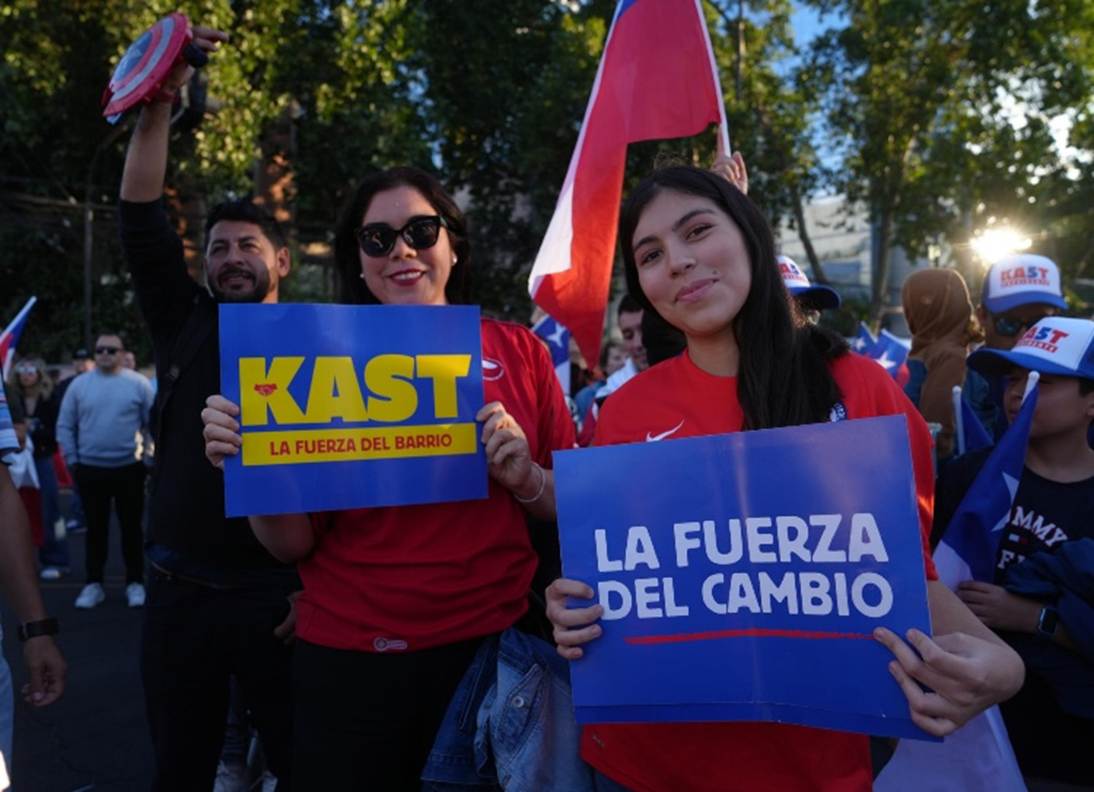
Governing Between Congress And History’s Unfinished Trials
Still, no analysis of Kast can avoid the weightiest part of his public identity: his relationship to Augusto Pinochet and the dictatorship’s long shadow. The country’s collective memory is not a backdrop; it is an active political actor. In 1973, Pinochet led the coup that ousted democratically elected President Salvador Allende, who then ruled until 1990. The record is engraved into Chilean and Latin American history: widespread human rights abuses, thousands executed, tens of thousands tortured. That history doesn’t fade; it recalibrates every election. It defines what “order” can mean, and how dangerous it can become when citizens are urged to trade rights for security.
Kast has rejected the “far right” label, but he has repeatedly defended Pinochet’s government and once quipped, “If he were alive, he would vote for me.” Critics have insisted that this isn’t a stray comment,it’s a window into the kind of order he admires. Supporters argue that he has moderated, that he understands today’s Chile is not the country of barracks and silence. From Santiago, one observer noted that this victory is historic for the far right, the first time since 1990 that such a conservative government will hold power, while also warning, “It’s really not certain just how conservative it will be.” That uncertainty is the space where governance will live: between campaign certainty and institutional friction.
Friction will come quickly. Kast faces a divided National Congress, expected to blunt his most hardline proposals. That constraint can produce two outcomes. It can force negotiation, turning the “implacable” candidate into a pragmatic president, or it can deepen polarization, pushing him to govern through confrontation and symbolic victories while blaming the legislature for what he cannot deliver. Political science research in Comparative Politics and Politics & Society has tracked how presidents with maximalist mandates often collide with divided legislatures, and how that collision can reshape democratic norms, especially when leaders claim to embody “the people” against “the system.”
The regional chorus around Kast’s win already reveals what kind of story this presidency will be sold as beyond Chile’s borders. In the United States, Marco Rubio congratulated him and spoke of strengthening regional security and trade. Argentina’s libertarian President Javier Milei celebrated with the slogan “FREEDOM IS ADVANCING,” hailing Kast as a friend and calling it another step for “life, liberty, and private property.” Ecuador’s President Daniel Noboa declared “a new era” for Chile and the region. In Latin America, leaders often speak about neighbors’ elections as if they were plebiscites on a continental model. That external framing can inflate domestic expectations and turn policy disputes into ideological crusades.
Then comes the human part: how biographies haunt politics. Opponents highlighted Kast’s family ties. His father, Michael Martin Kast, was born in Germany, had been a Nazi Party member, and immigrated to Chile in 1950. In a region shaped by exile, migration, and history, family origin stories can turn into political weapons. Sometimes they are unfair, sometimes revealing. They raise anxieties about belonging, loyalty, and the kinds of pasts a country will accept without reckoning.
Kast will be sworn in on March 11, entering office with a mandate that is both strong and fragile. Strong in numbers—nearly 58 percent—yet fragile because it relies on urgency. The public wants immediate relief from fear. The political imagination sometimes treats democracy as a tool rather than a principle. Kast’s own words show his philosophy: society is safest when the state is strict, borders are enforced, punishment is visible, and moral lines are sharp. The challenge is that Chile’s democracy was rebuilt to stop strictness from becoming cruelty.
If this presidency succeeds, it will be because Kast learns something that campaigns rarely teach: that governing is not the art of being implacable, but the discipline of being accountable. If it fails, it will likely fail not in the slogans, but in the lived realities that produced them,the streets where people want security without surrendering rights, and the history that insists Chile has already paid too high a price for order without limits.
Also Read: Aid With a Flag: What China’s Hospital Ship Signals in Latin America and the Caribbean