Venezuela Prison Hill Shouts Turn Amnesty into Nightly Family Ritual

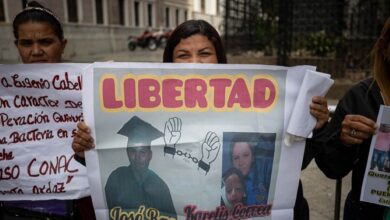
Every night at El Rodeo, just outside Caracas, families climb a hill with candles to shout messages to political prisoners. While Venezuela’s new amnesty has freed some, the voices still call for a mass release and for consuls and the Red Cross to get involved.
Fifteen Minutes a Week and the Rest Is Air
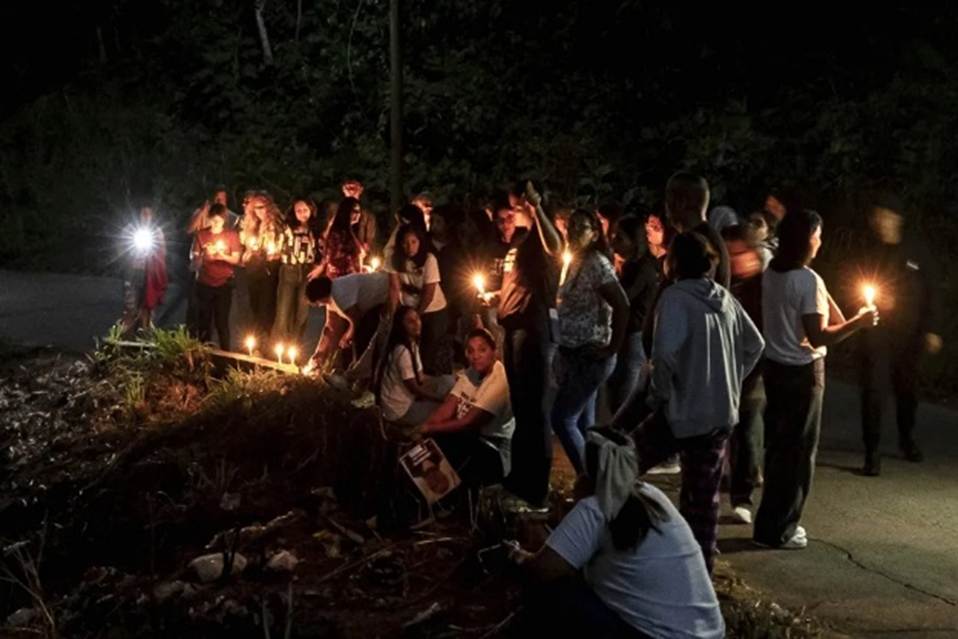
Night falls at El Rodeo I, located in a neighborhood with the same name in Venezuela’s Zamora municipality. Instead of silence, the quiet is broken by women on a nearby hill calling out toward unseen prison walls, with voices answering back from inside. er back from inside.
“Heard you,” one woman shouted into the dark, she told EFE. She waited. Seconds later, a man called out, “How are you?” EFE reported. “We’re fine, how are you all?” she replied, EFE reported.
This is a conversation without faces, carried only by sound. Candlelight flickers on the slope, small flames shaking in the wind as wax drips down fingers. But even when voices connect, they can’t be sure who is answering. The prison is hidden behind brush and weeds, out of sight. Still, this exchange happens almost every night because it’s the only daily proof they have.
Visits are rare, they say. Just fifteen minutes a week, through glass. That’s the rule, turning the hill into a kind of waiting room.
From that hill, mothers, sisters, and daughters send news uphill in the only way they can. They share what’s happening in the country and what isn’t. They talk about the amnesty approved a week ago by the National Assembly, the new attorney general, and their efforts outside to push for the release of all political prisoners. The candles keep burning because the questions never stop.
Inside, the men try to return the favor. Inside, the men try to respond. They describe their conditions as best they can and shout their demands into the night, hoping their words reach those outside,” one detainee shouted from inside, EFE reported. The phrase did not stay singular. A roar followed, many voices together calling for “justice” and “freedom,” EFE reported.
This is what the amnesty debate looks like without the distance of parliament. It’s not a committee room. It’s a hillside, a wall, and a few seconds of sound.
Amnesty Moves Forward, Families Ask What Comes Next
The amnesty is real and measurable, and it has already changed lives. It has fully freed 223 people who were in prison and lifted restrictions like mandatory court check-ins for another 4,534, according to the notes. But the gap between those numbers and the nights at Rodeo I is where the policy debate happens.
“All the rights of political prisoners have been violated. What are you waiting for to free people?” a woman shouted toward the prison, EFE reported. Her words were sharp at first, then settled into a steady routine, like anger that has nowhere else to go.
Families tried to send a message to Delcy Rodríguez, the promoter of the amnesty and Venezuela’s interim president, but it didn’t come through clearly, according to the notes. Still, the attempt mattered. It reminded everyone that amnesty is not just a law. It’s also a test of who gets heard, and when.
Rodríguez proposed the amnesty during what she called a “new political moment” after Nicolás Maduro was captured by the United States on January 3, according to the notes. That phrase promises change. But for families on the hill, change is measured in voices, not speeches.
Foro Penal, the NGO tracking these cases, says there are still about 568 political prisoners in the country, according to the notes. It’s unclear how many are held at Rodeo I. That uncertainty adds pressure, forcing families to hope the person they need is among the unseen voices every night.
What this does is make the amnesty feel both immediate and incomplete at the same time. A law can move hundreds, and still leave a hillside full of candles.
There’s a quieter truth in these exchanges: the women aren’t just demanding release. They’re keeping contact alive. They’re holding family life together in the small space still allowed. That’s hard to put into law. It’s even harder to measure.
A memorable line from a place like this is often the simplest: We’re fine. How are you? The point isn’t that anyone really believes it. It’s what they say anyway.
Hunger Strike Echoes Calls for Consuls, Red Cross, and the UN
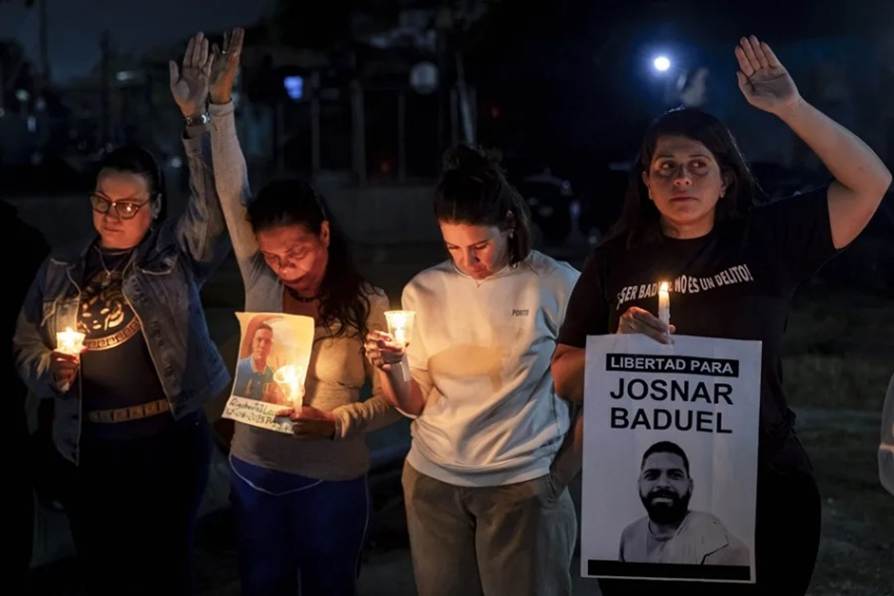
The nights have taken on a new urgency since last weekend, when political prisoners at Rodeo I started a hunger strike to demand their freedom, according to the notes. Hunger strikes have their own pace. They turn time into a weapon and make families witnesses, as each day without food sends a message through the body.
Some of that message is aimed outward, beyond Venezuela’s own political arguments. The detainees have called for the presence of the United Nations and the Red Cross, and for consulates to intervene on behalf of foreigners held inside, according to the notes. Former detainees have testified that several foreigners are in the facility, including Argentine gendarme Nahuel Gallo, detained in December two thousand twenty-four after crossing the land border from Colombia, according to the notes.
On Thursday night, the sound carried another signal: the Colombian national anthem, EFE reported. It was not performance. It was identification—a way of telling the hill, and the world beyond it, who is inside.
“The foreign brothers continue on hunger strike. They need the presence of the consulates,” detainees called out, EFE reported, listing Colombia, Argentina, Ecuador, France, Cuba, Guyana, Spain, and Lebanon. “Let the Red Cross in,” they insisted, EFE reported. “Let the UN come,” they repeated, EFE reported.
Outside, families responded with the only promise they could make without breaking the rules: they would keep pressing. The problem is that pressure isn’t a switch you can flip. It’s a slow grind. And in this country, political grinding is a familiar sound.
As the exchange ended, the prison and the hill did what Venezuelans have done in other crises and times when institutions fail, and people rely on each other. They turned to blessings and chants.
“God bless you all,” detainees called out as they said goodbye, EFE reported. Then voices, separated by brush and concrete, came together on the same phrase, EFE reported: “A united family will never be defeated.”
In the end, that is the nightly stand against disappearance. Not just a slogan, but a practice. A candle on a hill. A voice carried through the dark.
Also Read: Flood Deaths Test Latin America as Rivers Rise, Drains Fail