Venezuela Prison Vigil Turns Mothers into Lawmakers of Daily Survival
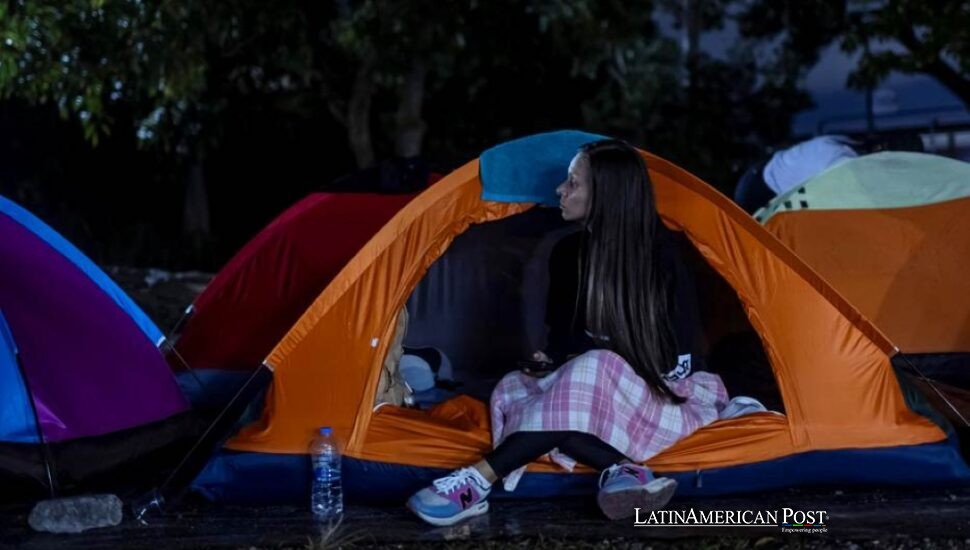
Outside El Rodeo, near Caracas, women sleep in tents and take turns guarding a narrow road, waiting for relatives held as political prisoners. An amnesty could pass next week, but for families here, policy is measured in visits denied and names still missing.
Tents, Turn Lists, and a Road That Shrunk Their World
The road to El Rodeo I is not wide. It is the kind of narrow street that feels temporary even on a typical day, a strip of pavement leading to a place built to end conversations. For the past month, it has become something else, a corridor of waiting where women have built a camp from whatever they could find and whatever others brought.
On one side, about twenty tents sit in a small garden. On the other hand, the families occupy every table at the two shops where they buy food and drinks. The air carries the mixed smell of hot meals and the dampness of fabric that has been slept in too many nights. People talk quietly, then sharply, then quietly again. A routine has formed. Not because anyone wanted one, but because waiting without structure is a kind of collapse.
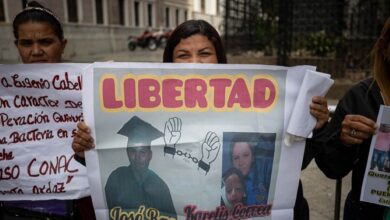
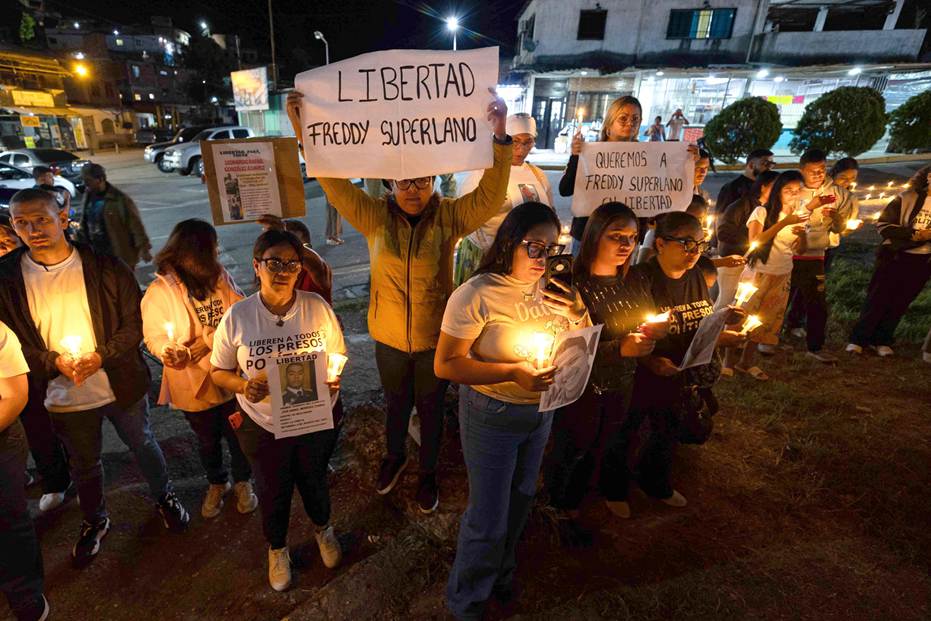
Most of Venezuela’s political prisoners are men. The struggle for their release is being led primarily by women. Mothers, wives, sisters, daughters. Since January eight, they have kept permanent vigils outside this prison near Caracas, sleeping, praying, protesting, trying to hold the state to its own promises. Their ongoing presence demonstrates resilience, inspiring hope in the audience.
“When we got here, we thought they were coming out right away,” says Massiel Cordones, who traveled from Falcón state. She is the mother of Army lieutenant José Ángel Barreno, detained since two thousand twenty and linked to Operation Gedeón, the failed maritime attack in May of that year. “Here we had to unite like a family. Even though there are different cases in there, here we are in a single cause,” she told EFE.
That, she insists, is the cause: freedom for all political prisoners. And the trouble is that the word all has a second meaning here. It includes the women who have made themselves visible on this road and, in doing so, have accepted the costs that visibility can entail.
At first, Massiel says, they slept on the ground. Donations arrived later. Now they have forty-five mattresses, shared in pairs. They set schedules for sleep, for food distribution, and for night watches. It is camp logic. It is also governance, performed by those who have been denied formal power. The wager here is that order and solidarity can keep a vigil alive long enough for law to move.
A Process Announced, a Promise That Still Has No List
The political timeline hovering over the tents is clear, at least on paper. The releases announced on January eight are now expected to accelerate with the approval of an amnesty law proposed by acting president Delcy Rodríguez, according to a Friday announcement by Parliament president Jorge Rodríguez. An amnesty could be approved next week.
That possibility is why the camp holds its breath. But it is also why the camp remains skeptical. People here have learned that public declarations do not always translate into doors opening.
Foro Penal, the NGO that leads the defense of political prisoners, says 2025 closed with 863 cases, 106 of them involving women. Since January eight, Foro Penal has verified 380 releases, but 687 people remain detained, 87 of them women. The numbers also carry an uncomfortable detail: women are a minority among those arrested, and a minority among those released.
The government says it has freed 895 people but has not published lists. What this does is force families to live in a fog of partial information. Every release becomes both relief and rumor, because without an official roster, no one can see the whole shape of who is still inside.
So the camp keeps its own record. Hiowanka Ávila, who has been central in the vigil, estimates that around 85 families are currently there, though at times it has reached 120. They write down identities, releases, and the names of those still missing. Sometimes, those who regain freedom share the names of detainees whose whereabouts were unknown to their relatives. “There have been people in forced disappearance whose families have been able to go in to visit for the first time,” she says. “They are small victories.”
Small victories are a careful phrase. It means a first visit after years of silence. It means hearing a name spoken out loud again. Hiowanka points to a woman who has just reconnected with her brother after seven years without information. Nearby, a teenager waits for her cousin, who is making a first visit after months without knowing where her husband was. These moments of connection foster hope and demonstrate progress.
In the camp, those moments are treated like oxygen. Not because they are enough, but because they prove that the prison is not fully opaque.
Visits Denied, Bodies Searched, and Care That Becomes Protest
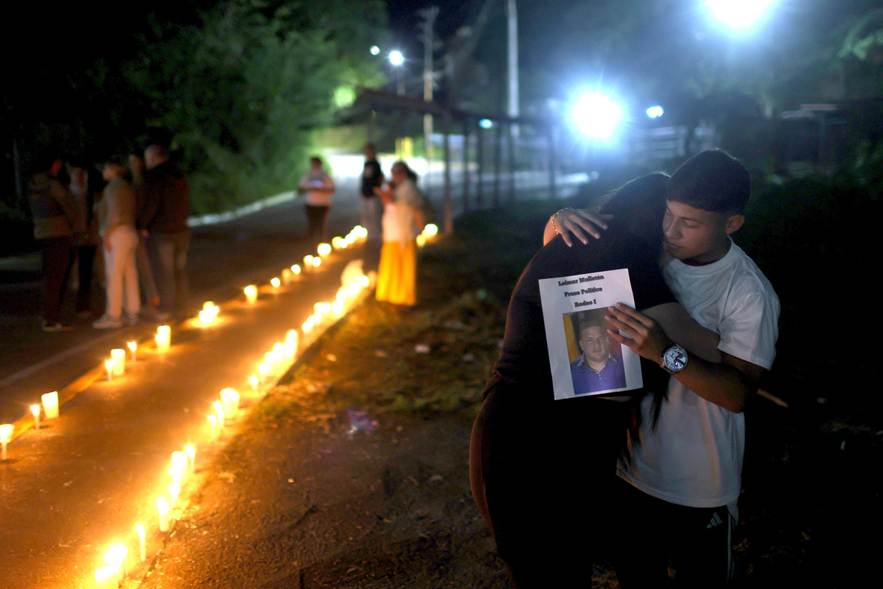
Howanka’s own case shows how quickly the cost of protest can harden. Since the releases were announced, she has not been allowed to see her brother, Henryberth Rivas, detained in two thousand eighteen and accused of an alleged attempt on the head of state. Authorities have barred her from visiting, she says, as retaliation for her protests. This ongoing hardship underscores the personal sacrifices made by families, fostering empathy in the audience.
Hiowanka describes her role without melodrama, and that restraint makes it heavier. She says she dedicates herself fully to the struggle. She recites reports of mistreatment and describes scars she has seen on her brother. “We are imprisoned with them,” she told EFE.
Her words land against a wider allegation documented outside the camp. The United Nations fact-finding mission on Venezuela has reported sexual violence against prisoners and women visitors in prisons like El Rodeo I, including forced nudity and genital inspections. The camp’s women live with that information as they plan visits, trade places with mothers, and decide who can go in and who must remain outside. The trouble is, even the act of visiting can feel like another power contest.
And yet the vigil holds. It holds through schedules, shared mattresses, and meals bought at small shops. It has been through the constant work of keeping one another from falling apart. It is not only a protest. It is care turned outward so it can be seen.
Lorealbert Gutiérrez, nineteen years old, depends on that care. Five of her relatives are detained in El Rodeo I: her mother, her brother, her partner, who is the father of her two children, a cousin, and an aunt. They were linked last year to an alleged plan to attack Caracas with explosives. Lorealbert herself was detained while seven months pregnant, along with her teenage sister. Both were released. For months, they searched for their family until finding them on January nine in this prison.
Now she has to choose whom to visit. Her network is fragmented, stitched together by women doing impossible logistics. Her three-month-old baby stayed with the child’s paternal family. Her two-year-old daughter is in the care of her seventeen-year-old sister, who temporarily left her studies to look after her. The paternal grandmother cares for Lorealbert’s younger siblings.
In this story, men are the majority of those held. Women are the infrastructure that remains outside. Massiel raised her children without a present father. Hiowanka alternates visiting with her mother. Lorealbert faces her situation without her own mother available to her, but surrounded by other women, she says, who are the only ones who can understand.
“It’s like a family,” Lorealbert says of the camp. “We support each other: if one cries, we all cry; if one laughs, we all laugh,” she told EFE.
A camp built from tents and donated mattresses should not have to function as a parallel institution. But that is what has happened on this narrow road to El Rodeo I. Women have built a community because the state has provided only fragments, an announcement without a list, a process without a timetable that families can trust.
Next week, an amnesty might pass. The law may move. The doors may open for some. The wager here is that when those doors open, the women who have been sleeping outside will be counted not as background, but as the people who held the story together long enough for policy to catch up.
Also Read: Colombia Sinú Flood Turns Homes Into Shelters and Questions Into Routine