Venezuela’s Dancing Strongman Bets Oil, Memory, and Defiance Against Trump
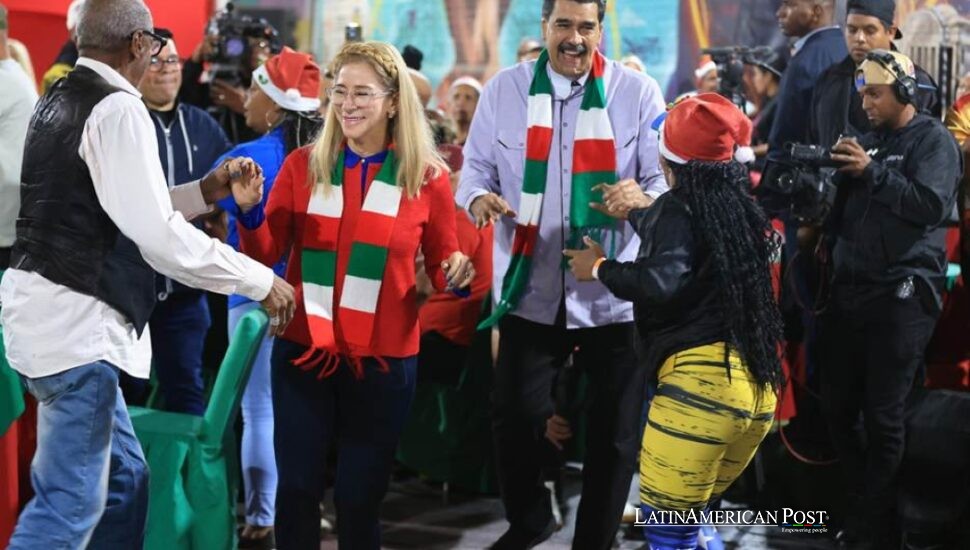
With U.S. warships lingering in the Caribbean and a tightening oil squeeze, Venezuela’s Nicolás Maduro answers President Trump with choreography, not concessions. His rallies, songs, and Christmas strolls signal a regime wagering that time, not Washington, decides power in Caracas.
Maduro Dances as the Fleet Gathers
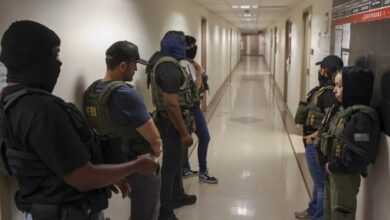
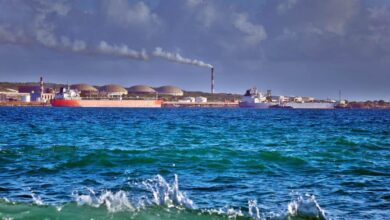
On a stage in Caracas, Nicolás Maduro lifted a peace sign, wore a sombrero, and sang along to “Don’t worry, be happy.” The image, reported by Reuters and author Kejal Vyas, fit a pattern: the 63-year-old leftist dancing at rallies, strolling trade expos, and turning up at Christmas tree lightings hand-in-hand with his wife, even offering his own rendition of John Lennon’s “Imagine.” It is the choreography of a man signaling he expects to outlast the ultimatum. As the Trump administration urges him toward exile, U.S. warships amass off Venezuela’s coast, and Washington escalates a partial blockade of Venezuela’s oil exports, the revenue that keeps his regime together. On Monday, President Trump said the U.S. attacked a dock where drugs were loaded, without details, and Venezuela did not confirm it—another shadowy strike in a campaign that thrives on ambiguity.
The Revolution’s Armor, the Exit’s Trap
People who have sat face-to-face with Maduro and other senior officials say deals that swap amnesty for abdication do not tempt him. For his inner circle, leaving office means stepping into U.S. criminal indictments and a web of international sanctions; survival becomes a legal strategy as much as a political one. He already endured Trump’s 2019 “maximum pressure” effort to unseat him, and now casts endurance as history’s proof. Calling himself the “son of Hugo Chávez,” the mentor who ruled 14 years and died in 2013, Maduro presents himself as standard-bearer for an anti-imperialist lineage that runs through Salvador Allende, Fidel Castro, and Simón Bolívar. Former U.S. diplomat Thomas A. Shannon Jr. told Reuters: “The Chavistas, however corrupt, however brutal, however criminal they might be, still believe they are the last surviving anti-imperialist leftists in Latin America.” Accused of widespread human-rights abuses and torturing political prisoners, Maduro insists such claims are weapons meant to destabilize him. At a Christmas dinner in a Caracas slum, he said, “I’ve never been, nor will I ever become a magnate… I’m like you, a man of the streets, a man of the barrios.”
Oslo’s Challenge and Caracas’s Long Game
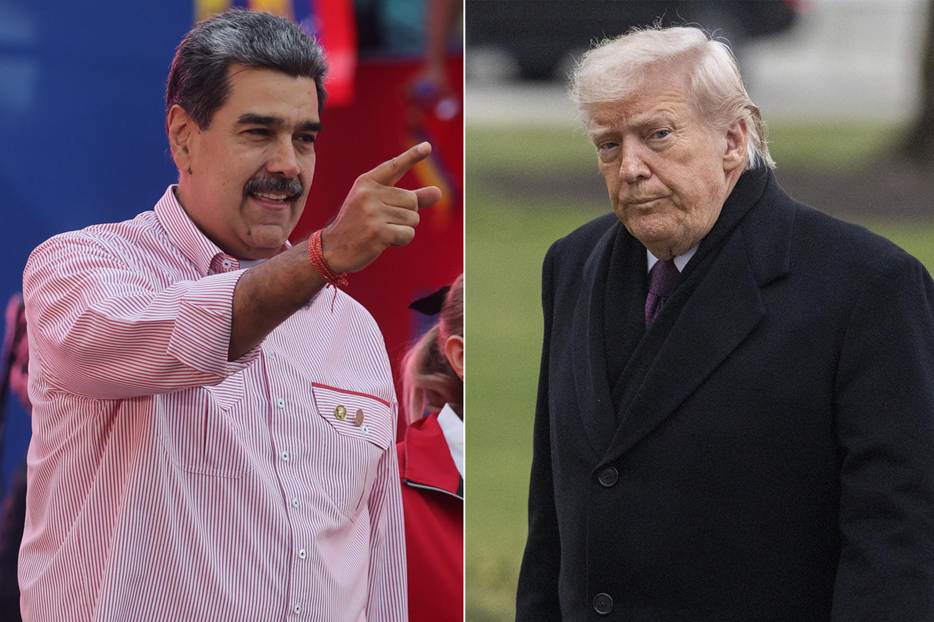
Opposition leaders backing Washington’s squeeze argue the performance is a mask that can be peeled away. From Oslo, Norway, after receiving the Nobel Peace Prize, opposition leader María Corina Machado said, “Maduro will leave power, whether it’s negotiated or not negotiated.” But those who have dealt with him describe a strategist who uses his top negotiator, Jorge Rodriguez, to split rivals and exhaust talks, while leaning on force against protesters and insufficiently loyal officers. Former Colombian official Sergio Jaramillo warned in remarks reported by Reuters: “Maduro is a wily political operator who has been playing the game at the highest level for 20 years… Underrate him at your peril.” In Washington, officials accuse him of leading the so-called Cartel of the Suns and say he is illegitimate because of a 2024 election the opposition and monitors say he stole, which he denies. Asked if Maduro should take the threats seriously, Trump said, “We have a massive armada formed…by far the biggest we’ve ever had in South America.” Yet Maduro’s biography is built on narrow escapes: a former bus driver and union organizer who once played guitar in a rock band, trained politically in Cuba, he survived a 2018 drone attack, a botched 2020 mercenary incursion, and revolts, before rising from Chávez’s failed 1992 coup to a movement that won power in 1998 and an anointment in 2013. He has helped pull Venezuela toward Russia, China, and Iran, and into the orbit of Colombia’s drug-trafficking militias—entanglements that make this showdown feel, across Latin America, like more than one man’s fate.
Reporting and quotes are credited to Reuters and Kejal Vyas. Across Latin America, the standoff reads like a familiar drama for many: empire versus revolution, oil versus ballots. For Venezuela, the question is whether that script finally changes in the coming months.
Also Read: Venezuela Blockade Blues Turn Tankers, Trade, and Power into Theater