Argentina Bets on Copper While Glaciers Keep Score in Silence
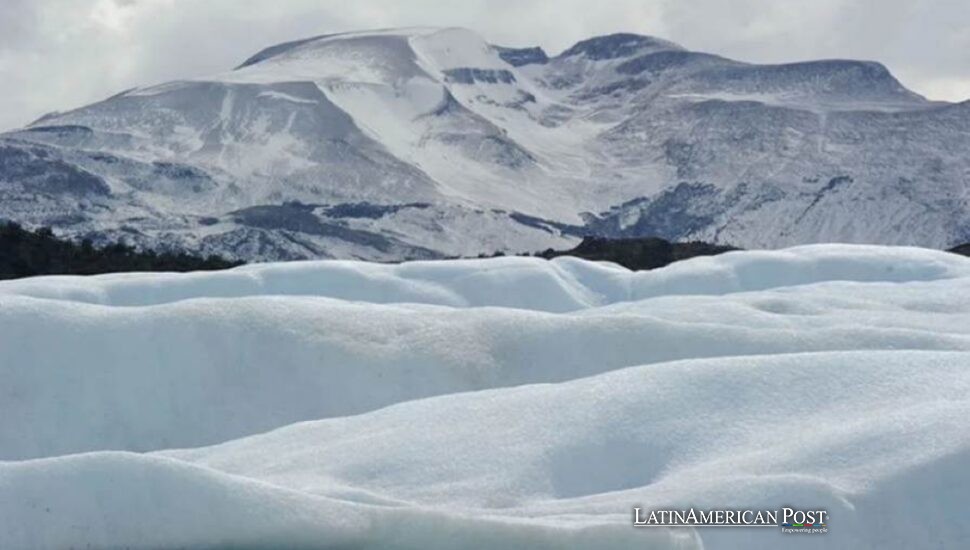
Argentina’s glacier reform has sparked a raw fight over water, mining, and survival in the Andes, where vineyards, towns, and river basins depend on ice once considered untouchable and now face a new era of provincial discretion and uncertainty.
When Water Stops Being Abstract
In Mendoza, water is not a concept people debate from a safe distance. It is the thing that lets vines live, taps run, and a semi-arid province imagine continuity. That is why the BBC’s report from Virginia de Valle’s family vineyard lands with such force. As she walks the 16-hectare property below the Andes, she says, “Without water, there would be no wine.” It sounds obvious at first. Then the larger argument arrives. In places like this, water is not only an agricultural input. It is inheritance, daily infrastructure, and the line between a living valley and a drying one.
De Valle explains to the BBC that the Andes, with their winter snow and glaciers, feed the rivers and streams that irrigate crops and supply homes. In years with especially low rain and snowfall, melted glacier water helps soften the impact of droughts, which are becoming more common in Mendoza. “Every drop of water counts,” she says. That sentence may be the clearest summary of the whole political fight. Argentina’s new glacier reform is not merely about whether more land can be opened to development. It is about who gets to decide when a drop still matters enough to protect.
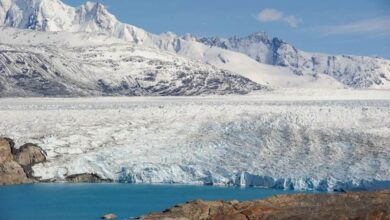
The old law, passed in 2010, treated glaciers as vital water reserves and barred damaging commercial activity around them. It also protected periglacial environments, including permafrost and other frozen areas that store water in less dramatic ways. Those glaciers were recorded on a national inventory by Ianigla, the Argentine Institute of Snow Research, Glaciology and Environmental Sciences. The reform changes the center of gravity. Now, provincial governments will decide whether glaciers in their territories are strategically important for water, agriculture, biodiversity, scientific research, or tourism. If provinces say they are not, those glaciers can be removed from the national inventory and lose those protections.
That shift may sound bureaucratic, but politically it is enormous. Argentina is moving the power to define risk away from a national scientific institution and toward provincial governments, which are also under intense pressure to attract investment. The BBC notes that there are 16,968 glaciers in Argentina, providing water to 36 river basins across 12 provinces and to 7 million people. That makes this less a niche environmental dispute than a national question about who gets to classify the country’s future frozen water.
Mining Dreams Meet Dry Ground
Supporters of the reform have a clear story of their own. President Javier Milei sees the Andes as a gateway to billions in mining investment, especially in copper and lithium. Governments in mineral-rich provinces argue that the 2010 law blocked them from promoting sustainable economic development. Milei has been blunt. As quoted by the BBC, he complained that Argentina does not export a single gram of copper, while Chile, which shares the same mountain range, exports $20bn a year. Bloomberg, according to the report, says mining firms, including Glencore, Lundin, and BHP Group, are interested in investing around $40bn in Argentina’s untapped copper industry.
In the abstract, that argument is easy to understand. Argentina needs investment. The world’s energy transition requires more copper and lithium. Provinces want jobs, revenue, and a way into the future mineral economy. But the BBC’s reporting shows why the argument feels so raw on the ground. Some of the provinces most eager to amend the law, including Mendoza and San Juan, are arid or semi-arid places where water is already scarce. That is what makes the promise of mining feel less like a clean growth plan and more like a wager placed with another resource people cannot afford to lose.
Agostina Rossi Serra, a biologist with Greenpeace, puts it starkly in the BBC report. These are provinces, she says, that believe mining development is more important than ecosystems and the communities themselves. De Valle says much the same in more intimate language. “Milei doesn’t care about natural resources or how it’s going to end,” she says. Whether that judgment feels fair depends on your politics. But it captures a wider fear across Argentina that deregulation is not just trimming away excess. It is redrawing the country’s threshold for acceptable ecological risk.
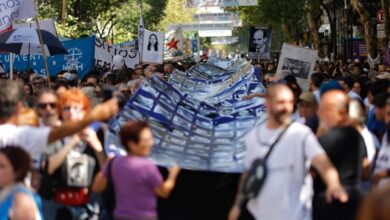
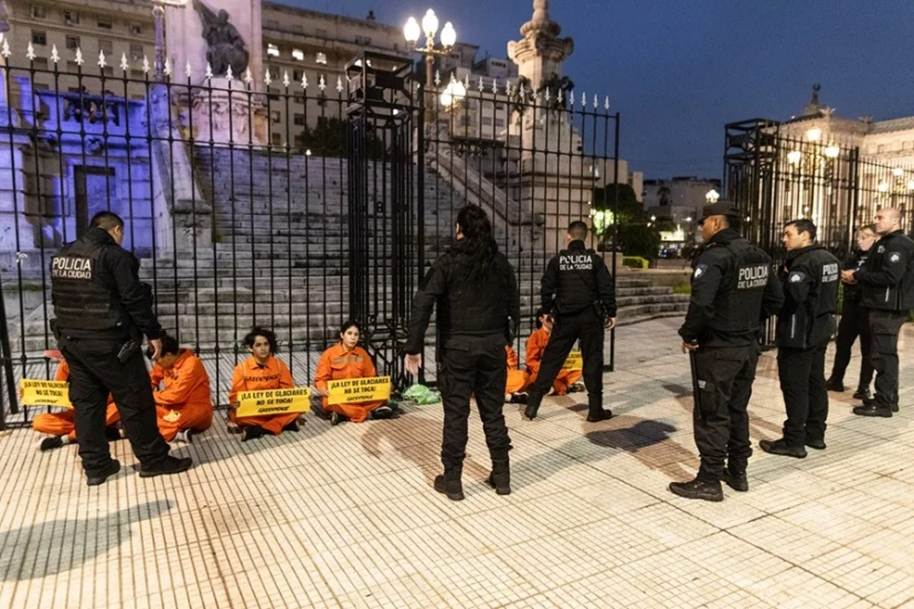
That fear has spilled into public view. The slogan “Los glaciares no se tocan,” or “hands off the glaciers,” has appeared from Mendoza to El Chaltén in Patagonia, sprayed across walls and pavements. More than 100,000 people signed up to participate in a public hearing at the Chamber of Deputies in March, though fewer than 400 were able to speak over two days. Serra told the BBC that the hearing made clear it was not only environmental organizations defending the law. It was the public demanding that water remain protected. That matters. It suggests this is not simply a clash between industry and activism. It is a wider social argument about what counts as common survival.
Still, there is a real constituency on the other side. Federico Palavecino, a lawyer in Buenos Aires who advises mining projects on the glacier law, told the BBC that it is right for provinces to decide how to protect their own glaciers because they will live with the consequences if things go wrong. “Why should we tell them how to live?” he asks. It is a powerful federalist argument that explains part of the reform’s appeal. But it also carries a risk. Provinces competing for investment may be tempted to become the place with the fewest restrictions, especially when the money on offer is measured in billions.
A Paradox Buried in the Ice
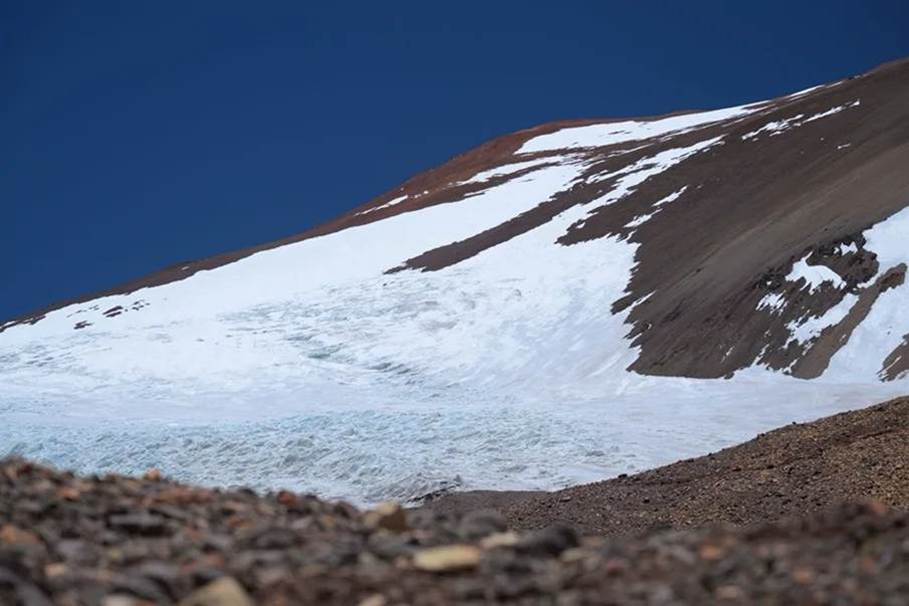
What makes the debate harder than a simple fight between greed and conservation is that some scientists who oppose the reform also recognize the deeper contradiction inside it. Glaciologist Lucas Ruiz, an independent researcher at Ianigla, told the BBC that the amendment is based on “false arguments.” The worst of them, he says, is the claim that some glaciers do not contribute to rivers. “If it’s a glacier, it has ice and contributes water. It’s very basic.” Ruiz also says the reform is unclear. The criteria remain uncertain, the technical bodies involved are not clearly defined, and any glacier or periglacial environment could end up at risk.
Yet Ruiz also describes what he calls a “stark paradox.” Science, he notes, indicates that glaciers are melting so quickly that by the end of the century, Europe could be almost glacier-free, as could the tropical Andes in Peru and large parts of the Southern Andes. Preventing that requires lowering the carbon footprint. But an energy transition cannot happen without more copper and lithium. That means the very minerals needed to avoid a hotter future may come from landscapes that must be handled with exceptional care in the present.
That paradox does not make the reform harmless. It makes the decision more difficult and more morally loaded than slogans alone can carry. Ruiz’s position, as the BBC reports it, is not that mining should expand at any cost. All mining must be responsible and thoroughly assess its impact on glaciers and periglacial environments. That is a much narrower and more demanding path than the one suggested by the loose optimism of deregulation.
Back in Mendoza, De Valle has started talking to visitors at the vineyard about the law. Her closing line in the BBC report is simple and devastating. “It will affect wineries, but first, it will affect life.” That is where the political language finally ends up. Not in copper tonnage, not in federal competencies, not in ideological camps, but in a valley where people know exactly what happens when the river runs lower than it should. Argentina is trying to decide whether its mountains are mainly a treasury or a reservoir. The danger is that by the time the answer becomes obvious, the country may already have spent what it cannot easily replace.
Also Read: Latin America Votes While Trump Looms Over Every Fragile Ballot