Brazilian Ballot Shifts as Lula Confronts a More Challenging Latin America
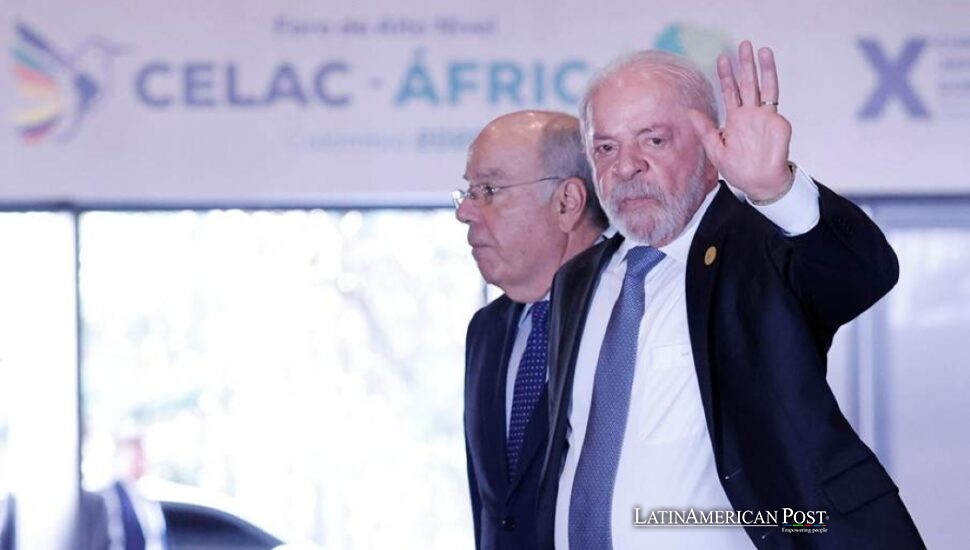
Brazil’s rapidly tightening electoral race extends beyond domestic implications. It indicates a regional shift toward security, conservatism, and anti-establishment pragmatism, even amid relatively strong economic conditions, exposing traditional leftist approaches.
The Political Climate Has Shifted Rapidly
Six weeks prior, Luiz Inácio Lula da Silva appeared to be a president supported by favorable historical momentum. Unemployment was at record lows, the stock market at record highs, and inflation had ended 2025 at its lowest level in seven years. Jair Bolsonaro was incarcerated, and Flávio Bolsonaro, designated to inherit the family’s political legacy, was widely regarded as the least charismatic of his father’s sons. One adviser summarized the sentiment with measured confidence: “We know it won’t be easy, but the wind is at our backs.”
Currently, the political atmosphere has changed.
A Datafolha survey published on Sunday indicated that Lula holds only a three-point lead in a hypothetical runoff against Flávio Bolsonaro, a significant decline from the fifteen-point advantage recorded in December. Other polls corroborate this trend. While a close race is not unprecedented—Lula won the 2022 election by 51% to 49%—the political implications extend beyond typical fluctuations. The data suggest that Lula is no longer perceived as the natural beneficiary of stability but rather as an aging incumbent in a nation whose emotional allegiance may be shifting.
This development is significant for Latin America because Brazil has historically served as a regional indicator of political sentiment. When Brazil shifts leftward, progressive movements across the continent gain momentum; conversely, a rightward shift produces widespread effects. The increasingly competitive race involving Lula extends beyond his reelection prospects; it raises questions about whether the Latin American left can still succeed using the social and political frameworks that defined its victories in the 2000s and 2010s.
A generational factor contributes to Lula’s challenges. At 80 years old on election day and running for president for the seventh time since 1989, his candidacy embodies a dual nature. It reassures supporters who view him as the sole figure capable of maintaining democratic cohesion. Yet, it also appears outdated within a political culture increasingly dominated by speed, image, and digital engagement. Lula does not use a cell phone, and his Instagram following is only half that of Jair Bolsonaro. His most recent video, released on Sunday evening, lasted six minutes—an extended duration in a digital environment favoring rapid content consumption. While this does not render him irrelevant, it indicates a campaign style that communicates in extended narratives to an electorate accustomed to fragmented political messaging.
The Right Advances into New Political Terrain
Scandal has also influenced the political environment. The emergence of the Banco Master case has negatively affected perceptions surrounding Lula, despite his lack of direct implication. This scandal has revived memories of mensalão and Car Wash, two major corruption cases that plagued the Workers’ Party in the previous decade and contributed to Lula’s imprisonment, which was later overturned. Such memories serve as valuable political capital for the right. In Brazil, a scandal need not directly involve a candidate to tarnish the surrounding atmosphere; it suffices to evoke voter distrust rooted in past experiences.
However, corruption alone does not fully explain the current situation; a deeper factor is ideological realignment.
Felipe Nunes’s recent book, Brasil no espelho, which draws on a nationwide survey by Quaest, portrays Brazil as reverting to more conservative tendencies following the progressive movements of the 2000s and 2010s. According to Nunes, public attitudes have regressed toward those prevalent in the mid-1990s. This trend aligns with a broader Latin American pattern in which voters increasingly prioritize moral order, personal security, and individual survival over redistribution alone.
A significant driver of this change is the continued expansion of Evangelical Christianity. Data indicate that Evangelicals comprised 7% of the population four decades ago and now represent approximately 30%. This statistic reflects not only religious affiliation but also a shift in political authority. Many recent converts reside in the working-class peripheries of major cities—areas that previously constituted the emotional core of Lula’s support but now increasingly back Bolsonaro. While the slogan “God, country, and family” may seem simplistic to outsiders, it resonates in the current political climate.
Crime constitutes another factor driving the electorate toward the right. It is identified as the primary concern among Brazilian voters. Lula has faced challenges on this issue, including statements portraying drug dealers more as products of social failure than as active perpetrators of violence. This rhetoric reflects an older leftist tradition emphasizing structural explanations of crime. However, contemporary voters prioritize control over explanatory narratives.
Labor preferences represent the most significant yet understated shift. An increasing number of Brazilians now favor self-employment over salaried positions, indicating a profound cultural transformation. The traditional aspiration for the carteira assinada—formal employment as a symbol of dignity and status—has diminished. It has been replaced by a more individualistic, less trusting, and survival-oriented ethic. Citizens seek not benefactors but guarantors of basic stability, a mindset that does not inherently support a party rooted in the trade union movement.

Implications of Brazil’s Political Shift for Latin America
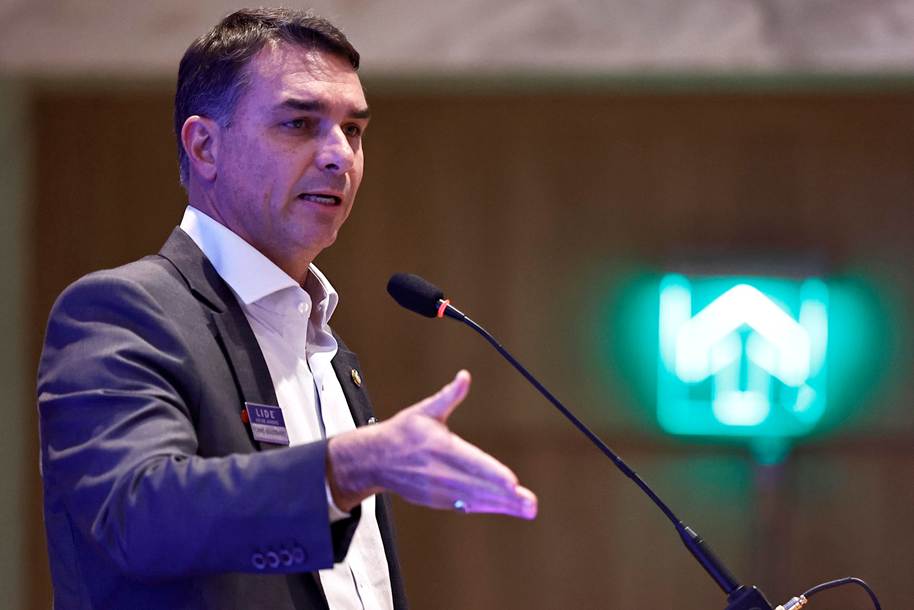
Flávio Bolsonaro has become more politically significant than the Brazilian establishment initially anticipated. Unlike his father, he lacks aggressive rhetoric and a high-intensity style. However, this relative moderation may now serve as an advantage. For voters who align with the family’s conservative social and economic values but were alienated by Jair Bolsonaro’s chaotic governance, pandemic mismanagement, and divisive discourse, Flávio offers a softer alternative without requiring them to abandon their worldview. Although he faces allegations of money laundering and misappropriation of salaries in his congressional office, these vulnerabilities appear less detrimental in the current context, particularly in light of the Banco Master scandal. He denies any wrongdoing. Politically, the critical factor is that the scandal environment no longer inherently benefits Lula.
Lula’s supporters maintain a composed public stance. His job approval rating remains stable at approximately 47%. Advisers contend that a campaign focused primarily on economic issues could secure his victory. Real wages have increased by nearly 20% during his tenure. Additionally, new subsidies for natural gas and tax relief for working-class Brazilians are scheduled to commence in time for the campaign. These constitute tangible advantages that suffice under different political circumstances.
However, the current political climate may not favor such conditions. The war in the Middle East introduces additional uncertainty. The broader lesson from Brazil is that robust economic indicators no longer ensure emotional security for incumbents, particularly in a continent increasingly shaped by fear, moral identity, and distrust.
Brazil’s experience presents an unsettling yet clear message for Latin America. A leftist government can oversee declining inflation, rising wages, and low unemployment while remaining vulnerable if voters perceive the future as oriented more toward self-protection than solidarity. This shift does not eliminate Lula’s prospects but constricts the previously dependable path to victory. Consequently, Brazil’s election transcends a choice between Lula and Bolsonaro; it tests whether Latin America continues to embrace the political discourse that enabled Lula’s initial success.
Also Read: Venezuela Rewires Its Barracks as Latin America Reads the Signal