Colombia and Ecuador Approach a Perilous Border Marked by Suspicion
The discovery of a bomb near the Colombia-Ecuador border has intensified an already severe trade and security rift, prompting questions about whether Ecuador’s security alliance with the United States is altering the concepts of force, sovereignty, and deterrence throughout the region.
A Border Already Tense and Volatile
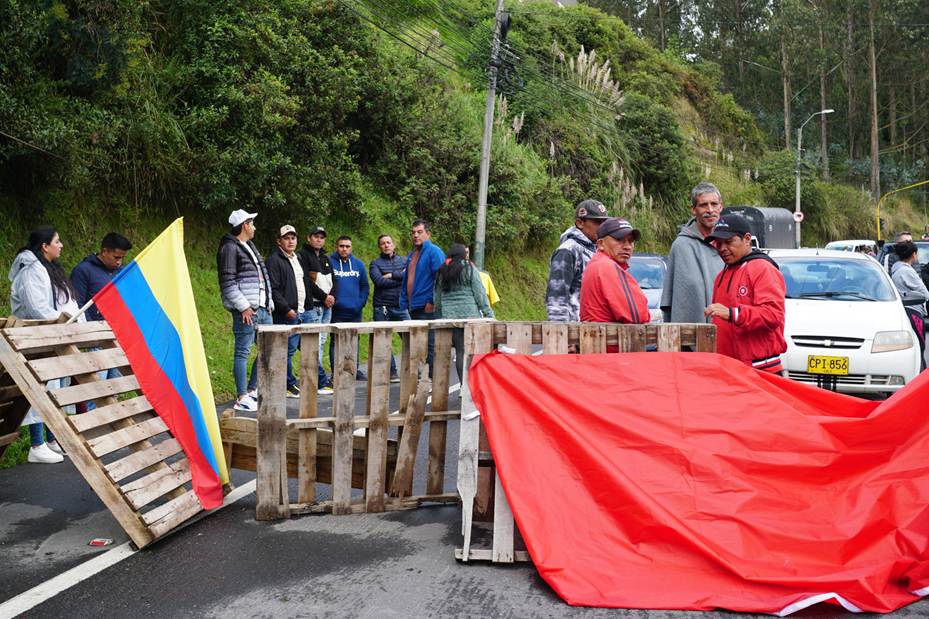
Following the discovery of a bomb near the border, Gustavo Petro asserted that Colombia was under bombardment from Ecuador, a claim that resonated beyond the incident itself. He refrained from drawing definitive conclusions, emphasizing the need for thorough investigation. Petro acknowledged that his suspicion was partially confirmed but remained unresolved. This hesitation is significant, as it positions the accusation in a precarious space between alarm and evidence, between presidential concern and state verification. In a border environment already strained by tariffs, retaliatory actions, and mutual accusations regarding narcotics trafficking, even an unproven allegation can rapidly alter the regional atmosphere.
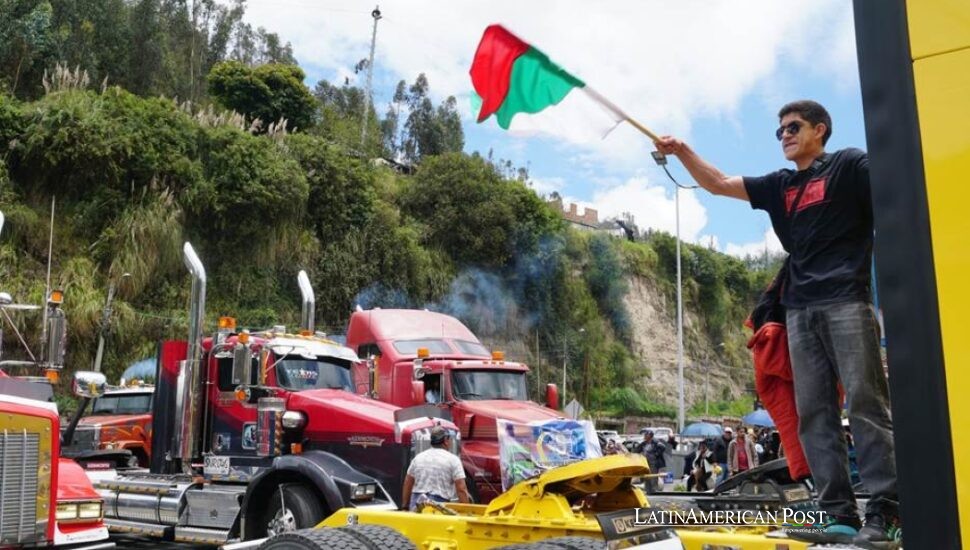
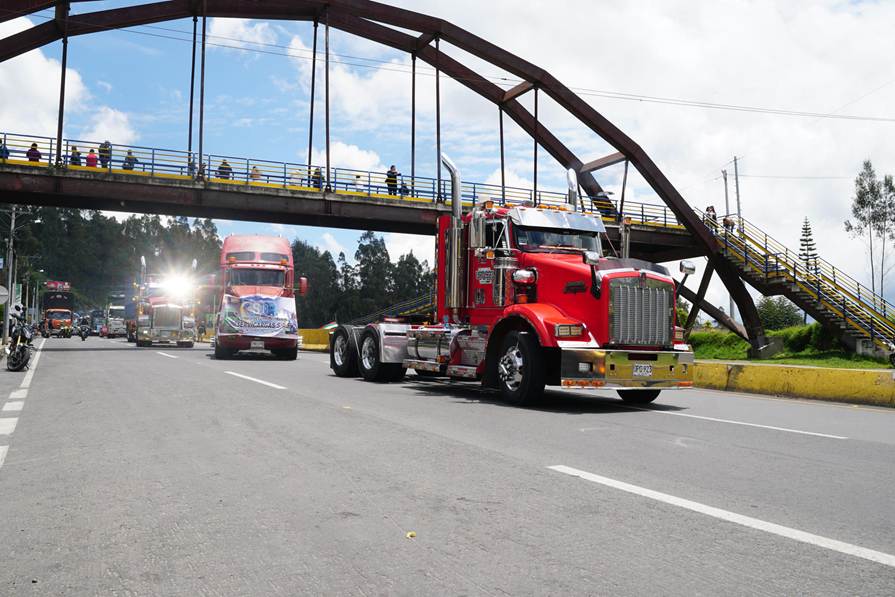
The bilateral relationship was already strained before this incident. The trade conflict began when Daniel Noboa imposed a thirty percent “security” tariff on Colombian imports, citing insufficient action by the neighboring government against narcotics trafficking at the border. Colombia responded with reciprocal tariffs and reduced electricity exports. Subsequently, Ecuador increased fees for transporting Colombian crude through a major pipeline, raising the levy to fifty percent as of March 1. This sequence is significant because it demonstrates both governments’ conversion of security concerns into economic sanctions. Such developments blur the distinction between border management and strategic hostility.
This context renders the bomb allegation highly volatile. Under normal diplomatic circumstances, the discovery of a dangerous device near the border would be treated as a technical issue for investigators and bomb disposal teams. However, in the current climate, it assumes symbolic significance. Petro reported multiple explosions and indicated that his government had received a recording from Ecuador, which he intended to release publicly. He also stated that the bomb was active and posed a danger, necessitating decisive action. While these statements do not identify the responsible party, they signal that Colombia’s president interprets the incident as part of a broader pattern with potential interstate consequences.
The hardest question in the notes, and the one with the deepest geopolitical shadow, is whether the bomb’s appearance could be related to Noboa’s recent embrace of security with Donald Trump and the United States. The honest answer, based on the material provided, is that there is no proof here that the two things are directly linked. The notes do not establish that. But they do establish timing, proximity, and political context. And in geopolitics, timing and context can alter perceptions almost as much as evidence.
The Influence of the Trump Administration on the Border Dynamics
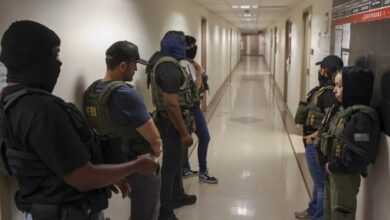
The timing transforms suspicion into a broader regional issue. Recently, Ecuador and the United States formalized the establishment of the first FBI office in Ecuador. Additionally, a new police unit was created to enhance bilateral capabilities to identify, dismantle, and prosecute individuals involved in drug trafficking, money laundering, arms smuggling, and terrorism financing, according to the U.S. Embassy in Ecuador. This development followed joint operations earlier in the month targeting groups described by both governments as terrorist organizations, including the bombing and destruction of a training camp belonging to the Comandos de la Frontera, a Colombian armed group composed of FARC dissidents, near the Colombian border.
This sequence cannot be overlooked. Petro’s allegation follows Ecuador’s enhancement of its security cooperation with the United States and a joint bombing operation by Ecuadorian and U.S. forces near Colombia’s border. While this does not confirm that the bomb discovered on the Colombian side originated from these developments, it renders the suspicion politically comprehensible. When a government permits foreign intelligence, logistics, police coordination, and joint operations in a border area already affected by armed groups and economic retaliation, each new explosion is likely to be interpreted within that framework. Consequently, the border ceases to appear as a boundary between two nations and instead resembles a militarized zone where sovereignty is publicly contested.
The political symbolism intensified following Noboa’s participation in a summit at Trump’s Florida club, which focused on combating crime with U.S. assistance. The notes describe a strengthening alliance targeting drug gangs and “narco-terrorism,” supported by U.S. intelligence and logistical aid for joint operations. Noboa characterized the partnership as a campaign against the mafia and a means to secure Ecuador’s borders. While this rhetoric resonates domestically amid significant criminal violence, it also conveys a regional message: Ecuador no longer frames its border crisis solely as a bilateral or Andean issue but situates it within a U.S.-supported hemispheric security framework.
Regional Interpretations of the Unspoken Dynamics
This issue extends beyond Colombia and Ecuador to affect Latin America more broadly. The region has experienced multiple cycles in which anti-narcotics policies serve as gateways for deeper foreign security influence, progressing from assistance to institutionalization and eventually becoming entrenched. The notes reveal familiar elements reemerging: criminal gangs framed in existential terms, a hard-line government confronting unprecedented violence, a U.S. partner providing intelligence and logistical support, an expanded federal law enforcement presence, and a border dispute evolving beyond customs and policing concerns. Within this context, even uncertainty acquires geopolitical significance.
The danger of the bomb incident lies not only in its nature but also in the interpretations each side assigns to it. For Petro, the device signifies a challenge to Colombia’s sovereignty from across the border by actors beyond armed groups. Conversely, Noboa’s administration frames the broader security campaign as a necessary response to trafficking, organized crime, and the inadequacy of previous softer approaches. Positioned between these perspectives is Trump, whom Petro reportedly contacted to prevent war and to urge the U.S. president to engage Ecuador’s leadership. This detail is notable, illustrating how rapidly a South American border crisis can become mediated through the United States.
Therefore, the geopolitical implication for the region is not that war is inevitable, nor that the bomb has been definitively linked to a summit, treaty, or joint command. The notes do not support such conclusions. Instead, the implication is more nuanced and, in certain respects, more concerning. Ecuador’s security alliance with the United States has already transformed the political discourse surrounding the border. It has rendered bombing a conceivable tactic within a shared operational theater with Colombia, heightened the diplomatic sensitivity to unexplained explosions, and underscored that when border security, trade retaliation, and foreign-supported counterterrorism rhetoric converge, the gap between suspicion and escalation can rapidly diminish.
Also Read: The Cuba Crisis Forces Latin America to Choose Sides