Honduras and the Problem of Legitimacy After Tito Asfura’s Inauguration
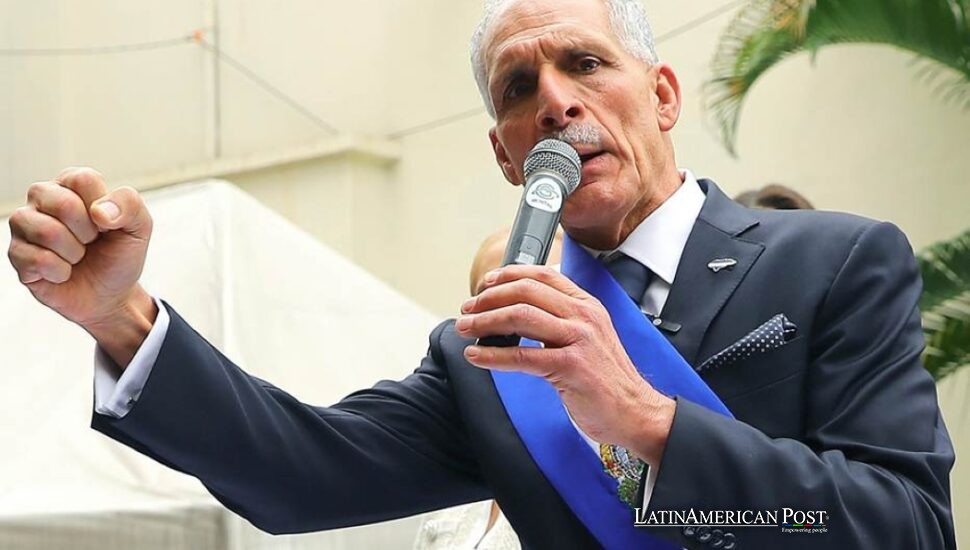
Nasry Tito Asfura took office in a small, plain ceremony that felt like a message. Outside, supporters packed the streets under heavy security. Inside, Honduras quietly changed presidents while arguments about fraud, Congress, and U.S. alignment hung in the air.
A One-Hour Inauguration with a Thousand Unsaid Things
He did not enter like a man expecting a stadium.
Nasry “Tito” Asfura walked into the congressional chamber without taking the corridor of honor where the press and guests were gathered. He wore a simple dark blue suit. He held his wife’s hand. Lissette Del Cid wore white. There was visible shyness in the way he greeted the few people present and the new head of Congress, as if the room itself were smaller than the moment.
The ceremony lasted about an hour at the seat of Honduras’ legislature, a sharp contrast with predecessors who took power in a soccer stadium in events described in the notes as heavily adorned and long. The international community was there, but only as diplomatic delegations, not as the centerpiece. The structure was basic and familiar: the national anthem, a church blessing, military cadets standing guard, the constitutional oath, and the blue-and-white presidential sash.
The sensory detail is in the soundscape more than the décor. A national anthem in an echoing chamber. A prayer spoken aloud. The soft shuffle of uniforms. The kind of official quiet that makes you hear your own breathing.
Asfura’s speech matched the staging. Twelve minutes. Direct. He talked about shrinking the state, security, health, the economy, and nodded at “peace.” He did not lavish the room with greetings. He did not perform well in front of the cameras.
“Honduras no te voy a fallar, vamos a estar bien. Dios los bendiga a ustedes a sus familias, dios bendiga a Honduras,” he said.
The trouble is that in Honduras, words like peace and stability land on ground that is already cracked. A minimalist inauguration can signal discipline, or austerity, or a desire to reset the optics. It can also signal something else: a presidency arriving with low legitimacy, choosing to keep the celebration contained.
A First Decree, and the Shadow of the Past
Asfura did not mention the international community in his remarks. He did not mention the United States either, despite the hurried support he received before the election. He also did not mention former president Juan Orlando Hernández, from the same National Party, who was pardoned by U.S. President Donald Trump from a drug trafficking conviction in 2024, one day after the election Asfura won.
Silence is never neutral in a transition like this. What this does is force the audience to fill in the gaps with what they already know.
His first act as president was not a foreign policy statement or a significant security announcement. It was a signature. He signed a decree to put the presidential airplane up for sale, an aircraft acquired during Hernández’s administration and not used by the outgoing president, Xiomara Castro.
It is an image designed to travel easily. A plane was sold. The state cut down to size—a rejection of elite comfort. In a country where trust in institutions is already thin, symbolic austerity can feel like a simple answer to a complicated question.
Throughout the ceremony, Asfura crossed himself repeatedly. He rarely separated from his wife, now the first lady. In the final minutes of his remarks, he narrated a Catholic prayer.
There is a phrase that keeps returning in moments like this, not because it is cynical but because it is true: in a fragile democracy, even the choreography becomes an argument.
Outside the Chamber, a Crowd and a Congress Waiting
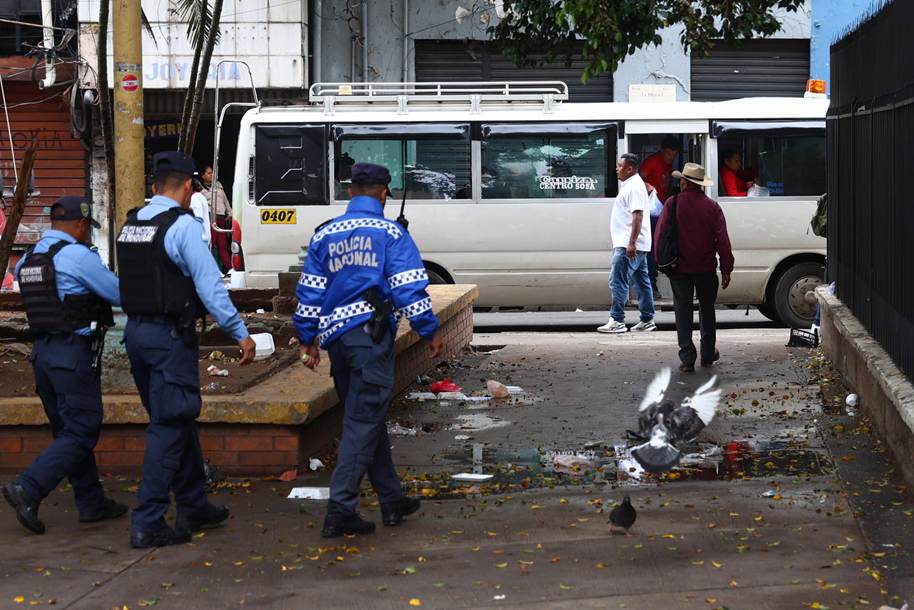
While the parliamentary hall remained lightly decorated and sparsely attended, the streets around the legislature told a different story. Supporters crowded the area with Honduran flags, chanting “Sí se pudo,” under a strong military deployment that had been guarding the zone for days.
After the oath, Asfura walked the corridor where the media waited and climbed a small platform. He repeated, with more force, that Honduras would be fine. He blessed again. He did not stop to speak to reporters. He moved quickly to an outdoor stage beside Congress, where the crowd received him with cheers.
He is described in the notes as a construction businessman of Palestinian origin. His rise comes after an election process marked by tension, a one-month delay in releasing official results from the November 30 vote, and a narrow margin over Salvador Nasralla of the Liberal Party.
The incoming government is stepping into a transition already conditioned by distrust. The outgoing administration, led by Xiomara Castro, did not support the handover. Castro’s party, LIBRE, denounced electoral fraud. The atmosphere grew hostile for weeks, with frustrated attempts at mobilization and without backing from international observers, according to the notes.
And then there is the Congress, the arena that will define how much of Asfura’s program is real and how much is rhetorical. The balance is fragmented: 49 seats for the National Party, 41 for the Liberal Party, 35 for LIBRE, and marginal representation for others. The National Party can seek a simple majority, but qualified majorities will require negotiation, likely with the Liberal Party, described as internally divided and shaped by transactional vote logic.
This is where governance becomes less about speeches and more about arithmetic.
The broader assessment in the notes is blunt: Honduras enters a new political phase with a fragile transition, a profound crisis of confidence in the political-electoral system, and low legitimacy for the incoming government. The election is described as widely questioned due to institutional and technical-legal irregularities, including doubts about the TREP and special counts, within an electoral architecture essentially unchanged since 2004 and adjusted in 2021.
Stability, in this framing, is not a destination. It is a negotiation.
For the Trump administration, Honduras is described as a key partner on migration, regional security, and geopolitical alignment, especially after Trump’s personal endorsement of Asfura. But the notes warn of risks arising from structural impunity, institutional capture, the prioritization of private interests, and the weakening of civic space.
This is the policy dispute at the heart of the new presidency: whether Honduras will pursue a private-sector, investment-driven agenda that rebuilds confidence, or whether that agenda will widen old wounds, especially for human rights defenders, Indigenous and Garifuna communities, and rural areas already marked by socio-territorial conflicts.
The foreign policy alignments listed in the notes are explicit. Reestablishing diplomatic relations with Taiwan. Returning to the World Bank’s investment dispute mechanism through ICSID. Continuing cooperation on security, extradition, and immigration control. Maintaining the Palmerola Soto Cano military base. Potentially reactivating or reconfiguring the ZEDES, the special economic zones are widely criticized for a lack of transparency.
The wager here is whether a tighter alliance with Washington will buy Honduras breathing room, or whether it will deepen asymmetries without confronting what drives migration and instability: corruption, poverty, violence, and impunity.
Asfura’s inauguration was short. The questions waiting for him are not. In Honduras, a president can enter through a side corridor and still carry the full weight of a contested system on his shoulders.
Also Read: Noise Without Collapse: Colombia–U.S. Relations After Twelve Months of Tension