Honduras Pardon Exposes Northern Hypocrisy In Endless Failed Drug Wars
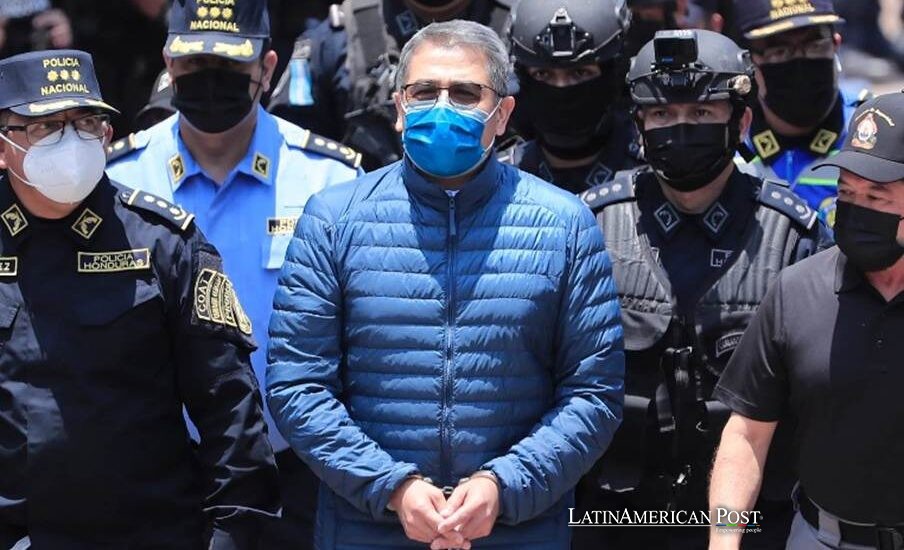
When Donald Trump pardons Juan Orlando Hernández, a convicted narco ex-president of Honduras, he sends a signal to a region exhausted by drug wars and Caribbean interdiction. At the same time, the world’s biggest cocaine consumers remain comfortably north of the Rio Grande.
A Pardon Written Over a Broken “War”
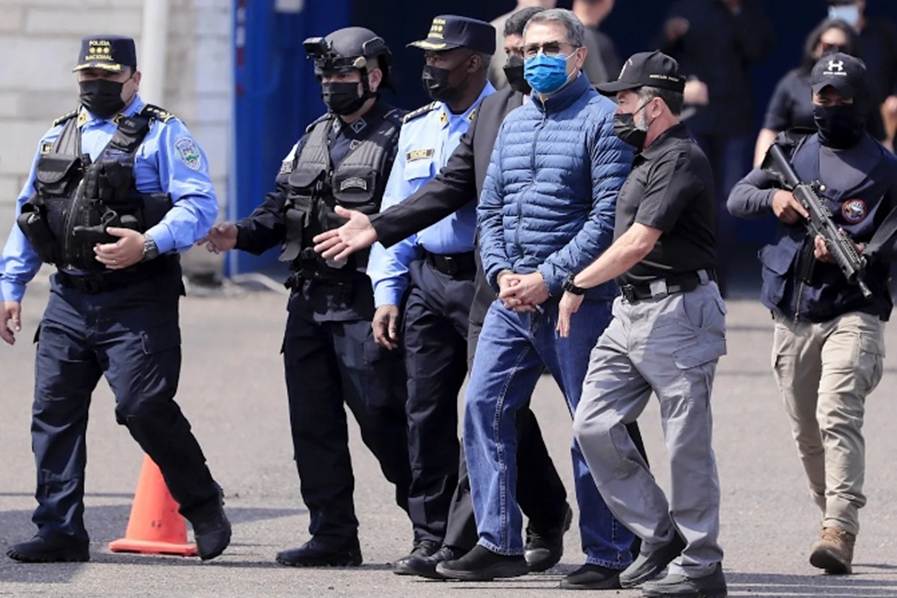
On December 1, according to his wife Ana García, former president Juan Orlando Hernández “became a free man again.” Not even two years have passed since his extradition to New York on April 21, 2022, and barely five months since a court in the United States sentenced him on June 26, 2024, to 45 years in prison on three narcotrafficking charges. The first Honduran ex-president convicted of drug trafficking in a U.S. courtroom is suddenly walking out thanks to a presidential pardon. For a country that has watched its young people disappear into cartels, caravans, or graves, the image is devastating.
Trump did not merely sign and move on. He claimed that the government of now ex-president Joe Biden had “set a trap” for Hernández, insisting that, in the eyes of “many people” he respects, the Honduran had been treated “very severely and very unfairly.” In a deferential letter to Trump, Hernández recalled the close bilateral cooperation during his first term and showered the U.S. president with praise. The exchange reads less like justice and more like political barter. The man once held up as Washington’s model ally in Central America — then prosecuted in New York as a conspirator in a cocaine pipeline — is rehabilitated not because the facts changed, but because the political winds did.
Seen from Latin America, this is not just controversial; it is deeply problematic. It is a horrible example in the face of a decades‑long “war on drugs” fought primarily on our soil, from Caribbean waters patrolled by foreign vessels to dusty interior highways lined with checkpoints. Research published in the International Journal of Drug Policy has shown again and again that heavy-handed interdiction — especially along routes between Central America and the Caribbean — does little to reduce total cocaine flows, while intensifying violence, displacement, and institutional corruption in producer and transit countries. In that light, freeing a politician accused of helping move more than 500 tons of cocaine into the United States does more than free one man; it mocks every community that has paid the price of this militarized failure.
The Long Shadow of Honduras’ Narco-State Years
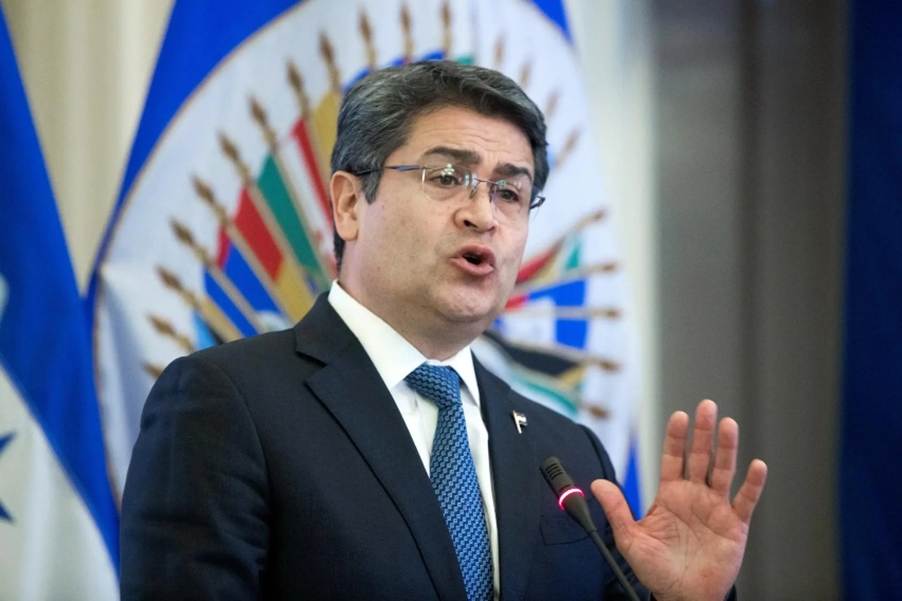
To understand why this decision burns so deeply in Honduras, you have to trace Juan Orlando Hernández’s climb. Before the presidency, he served as president of the National Congress from 2010 to 2014. In November 2013, he won the presidency under the Partido Nacional flag amid persistent opposition accusations of fraud. Four years later, in 2017, he pursued re‑election relying on a Supreme Court interpretation that effectively ignored a Constitution which explicitly prohibits presidential re‑election “under any modality.” The result was a second term born under a cloud of illegitimacy and followed by violent protests across the country.
Opposition leader Salvador Nasralla accused him of stealing both the 2013 and 2017 elections, first as head of the Partido Anticorrupción and later as a presidential candidate again. Those twelve years of Partido Nacional rule — four under Porfirio Lobo, eight under Hernández — finally ended in 2021, when Xiomara Castro of Libertad y Refundación (Libre) won the general elections. Her party now denounces Trump’s pardon and his direct appeal to back conservative candidate Nasry “Tito” Asfura, also of the Partido Nacional, as crude foreign “interference.” Once again, the domestic struggle to leave behind a discredited political order collides with power games decided far to the north.
In New York, prosecutors accused Hernández of taking money from Mexican trafficker Joaquín “El Chapo” Guzmán to finance fraudulent campaigns, in exchange for participating in a conspiracy that introduced more than 500 tons of cocaine into the United States. On June 26, 2024, he became the first former president of Honduras to be sentenced there for drug trafficking. His brother, former congressman Juan Antonio “Tony” Hernández, is already serving a life sentence for narcotrafficking in the same country. At home, a judge in Tegucigalpa issued a capture order in December 2023 for his failure to appear in a corruption case known as “Pandora,” which also touched ex-president Porfirio Lobo and other officials for alleged fraud and breach of duty.
Throughout his trial, Hernández protested his innocence, arguing that the U.S. justice system had allied itself with narcotraffickers who accused him out of revenge, precisely because his government approved extradition to the United States. Even that defense reveals the more profound paradox. For years, Honduras was showcased as a loyal partner: a country willing to extradite its own, endorse harsh security measures, and allow foreign anti-drug operations in its airspace and waters. Scholars writing in the Latin American Research Review have described this pattern as the making of “narco-states,” where political elites publicly embrace U.S. security agendas. At the same time, networks of corruption and trafficking continue to operate in the shadows. The conviction of Hernández in 2024 looked, to many, like a delayed and partial correction. His pardon now suggests that even that minimal reckoning is negotiable.
Northern Demand, Southern Sacrifice
The timing of the pardon exposes its political heart. Trump announced it on a Friday, just days before Honduras went to the polls again, and paired it with explicit support for Nasry “Tito” Asfura, promising “a lot of support” for the country if the Partido Nacional prevails. The message is blunt: align with the right camp in Washington and even a 45‑year narcotrafficking sentence can disappear; fall out of favor and extradition becomes an instrument of public shaming. As research in the Journal of Latin American Studies has noted, U.S. drug policy has often oscillated between moral posturing and hard-nosed pragmatism, punishing some actors harshly while extending flexibility to others whose political usefulness outweighs their sins.
All of this plays out while the geography of consumption remains stubbornly unequal. Studies cited in World Development and the International Journal of Drug Policy underline that the highest demand for cocaine is concentrated in the United States and parts of Europe, not in Tegucigalpa, San Pedro Sula, or La Ceiba. Yet it is along Honduran rivers and Caribbean shorelines where radar signals and armed patrols materialize; it is Honduran youth who vanish on trafficking routes or die in police and military operations; it is Honduran migrants who cross the Suchiate and the Rio Grande carrying the scars of a war declared elsewhere.
Against that backdrop, the clemency granted to Juan Orlando Hernández becomes a textbook case of Northern hypocrisy. For more than four decades, the “war on drugs” has justified Caribbean anti‑drug campaigns, aerial fumigation, and the criminalization of entire communities across Latin America—prisons in Honduras overflow with low‑level couriers and neighborhood dealers. Families grieve sons and daughters caught between gangs, state forces, and hunger. And now, one of the politicians most closely associated with the country’s narco‑political era walks free thanks to a signature in Washington.
From a Latin American vantage point, my stance is unambiguous. This pardon is a horrible, dangerous precedent in a region already exhausted by a war it did not start and does not control. It teaches Central American societies that their “cooperation” can be discarded when it ceases to serve electoral interests in the north. At the same time, the primary cocaine consumers in the Northern Hemisphere continue to enjoy impunity as faceless demand in official reports.
The damage will not only be tallied in diplomatic cables. It will surface in the bitter jokes of Hondurans who see, once more, that justice is malleable; in the silence of families who lost relatives to traffickers or to security operations justified in the name of this war; in the skepticism of any future government told to trust extradition, militarization, and Caribbean interdiction as paths to order. The “war on drugs” was already riddled with contradictions. By pardoning Juan Orlando Hernández, Donald Trump has turned those contradictions into an open wound, one that bleeds first in Honduras, long before anyone in the United States feels even a sting.
Also Read: México’s Coatlicue Supercomputer Embraces Spectacle Over Sober Scientific Dreams Ahead