Latin America and the Few Historical Clues Behind Jesus’ Birth
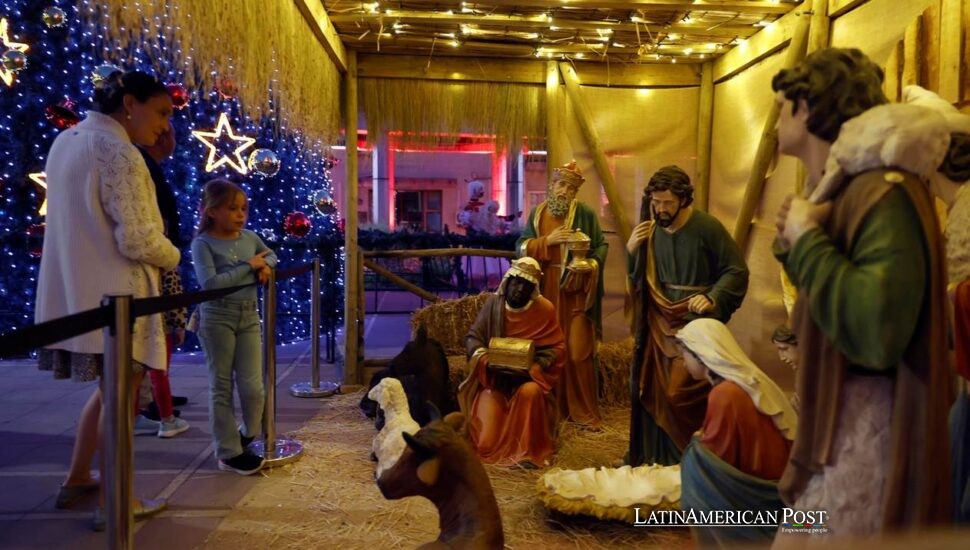
Across Latin America, Christmas is both devotion and social glue. This remains true even as Catholic dominance wanes and Pentecostal churches surge. A report in HistoryExtra Magazine by Dr. Helen Bond asks a deceptively simple question: how historical is Jesus’ birth story, really, today?
Faith’s Majority, And the Quiet Churn Beneath It
In Latin America, the Nativity scene is not a trinket; it is a family mirror, reflecting who belongs and what survives. The text’s figure still places the region at 90% Christian, historically “mostly Roman Catholics.” But the seams show. The Pew Research Center survey in 2014 put Catholics at 69% and Protestants at 19%, rising to 22% in Brazil and over 40% across Central America, with more than half described as converts. The overview also notes the growing presence of Anglicanism and the outsized rise of Pentecostalism.
Another snapshot in the text, from M&R Consultadores in 2024, shows the churn: 36.2% Catholic, 31% nondenominational believers, and 27.7% Protestant. That fragmentation matters. Scholars in the Journal of Latin American Studies have argued that churches often fill gaps left by weak institutions, offering ritual, food, counseling, and networks. When Pentecostalism draws the middle classes, it also shifts moral authority. In 2014, Pew counted the region’s 46 countries and territories as the world’s second-largest Christian region, with 24% of the population. In barrios and boardrooms alike, the cradle story sets the tone.
The Nativity as Archive and Argument
In HistoryExtra Magazine, Dr. Helen Bond approaches that shared season with a historian’s caution. Christmas, the text notes, has become so dominant that it is celebrated by more people than any other religious event. More than two billion treat it as the year’s most important holiday. Yet the 2,000-year-old story at its heart—Mary and Joseph searching for room, shepherds in the fields, wise men arriving with gifts—comes from “shadowy scribes” and scant corroborating evidence. The question is not whether the story moves people—in Latin America, it clearly does. The question is whether it can be pinned to history, and what it means when it cannot.
Bond’s report reminds readers that the Bible does not hand historians one clean script. Mark and John omit the birth. Matthew and Luke agree on Bethlehem and Mary’s virginity, then diverge: Matthew has the magi, the star, and Herod the Great’s slaughter; Luke has shepherds, a census journey, and the manger. Ben Witherington, quoted by Dr. Helen Bond in HistoryExtra Magazine, argues the mismatch is meaningful: “The fact that they do suggests we are dealing with two independent witnesses talking about the text. " The text notes that both gospels were written around 70 years apart, a delay often noted in journals such as the Journal of Biblical Literature and New Testament Studies.

Stars, Censuses, And The Manufactured Date
Calendars disguise uncertainty as precision. In the sixth century AD, Dionysius “the Humble” fixed Jesus’ birth at AD 1 and introduced the Anno Domini system. Yet Luke’s census points to Quirinius and AD 6, while Matthew’s Herod must predate Herod the Great’s death in 4 BC. Witherington, quoted in HistoryExtra Magazine, argues Herod’s reputation fits the massacre: “So ruthless and paranoid was Herod that he killed his very own children.” The star is unclear: Johannes Kepler tied it to Jupiter and Saturn in 7 BC, while others cite a 5 BC comet or nova. John Mosley, of Griffith Observatory in California, cautioned, “Maybe it was something that required interpretation, rather than something brilliant.”
Even the day is chosen, not discovered. Few historians think 25 December is literal; Witherington says shepherds in the fields hint at spring. Bond’s account shows why the date stuck anyway: by the fourth century AD, Rome already celebrated Saturnalia, and northern Europe had solstice customs like mistletoe in the British Isles and Yule in Scandinavia. The Feast of the Nativity spread to Egypt by AD 432, then across Europe, crowned with imperial theatre when Charlemagne was crowned on Christmas Day in AD 800, and later by William the Conqueror in 1066. Latin America inherited that calendar through conquest, then remade it under summer skies. Witherington’s warning, quoted in HistoryExtra Magazine, remains: “nothing about the life of Jesus can be theologically true that is historically false.”
Also Read: Colombia Army’s Renewed Lethal Targets Rattle Ranks and Revive Old Fears