Latin America War on Drugs Returns as Terror Labels Spread
Half a century after Nixon, cocaine hits records again: 3,700 tons in 2023, 25 million users. Now, Trump’s second-term War on Drugs brands cartels as terrorists, expands strikes, and tests Latin America’s sovereignty—while demand barely bends and violence finds new routes.
The Numbers That Refuse to Obey
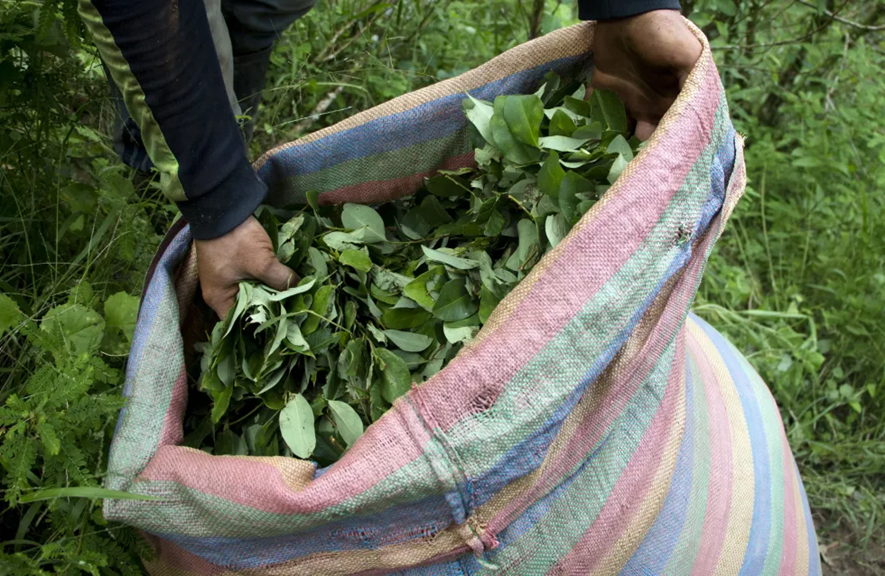
Half a century is long enough for an entire political vocabulary to calcify: “war,” “cartel,” “source country,” “kingpin,” “interdiction.” And yet the core math keeps humiliating the slogans. Americas Quarterly and analyst Robert Muggah point to the bluntest evidence: global cocaine production and consumption are at record highs, with the UN reporting output rising roughly a third in 2023 to over 3,700 tons, and an estimated 25 million people using cocaine. The supply chain has diversified over the past decade; demand has scarcely flinched. In Latin American capitals, this is less a policy failure than a lived pattern—every crackdown redraws routes, every new “plan” creates fresh gray markets, and every promise of a decisive blow arrives like weather: loud, seasonal, and rarely life-changing for the neighborhoods that absorb the fallout.
That is why Trump’s second term matters, not because the region has never heard tough talk, but because the rhetoric is now welded to a more expansive legal posture. The administration has pledged to “disrupt the supply chain from tooth to tail” and to “partner with – or otherwise hold accountable” source countries, a language echoed in the DEA National Drug Threat Assessment 2024. The words themselves signal a shift from cooperation to conditionality: partnership offered with one hand, pressure cocked in the other. In practice, it invites a broader set of American tools—financial, diplomatic, and potentially kinetic—while asking Latin American governments to absorb the political heat at home.
From Cartels to Terrorists, and From Policing to Force
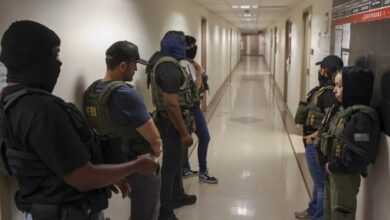
The most consequential move in Muggah’s reading is the attempt to treat criminal syndicates as terrorists—collapsing the line between organized crime control and counter-terrorism. In February, the U.S. State Department designated Cártel de Sinaloa, Cártel de Jalisco Nueva Generación, Cártel del Noreste, Cártel del Golfo, Cárteles Unidos, La Nueva Familia Michoacana, MS-13, and Tren de Aragua as both Foreign Terrorist Organizations and Specially Designated Global Terrorists, with the roster later widening to include groups from Ecuador to Haiti. The immediate purpose is financial: sanctions, asset freezes, and fear of non-compliance. But the deeper consequence is political: once “terrorism” is the frame, the question stops being “How do we police?” and becomes “When do we strike?”
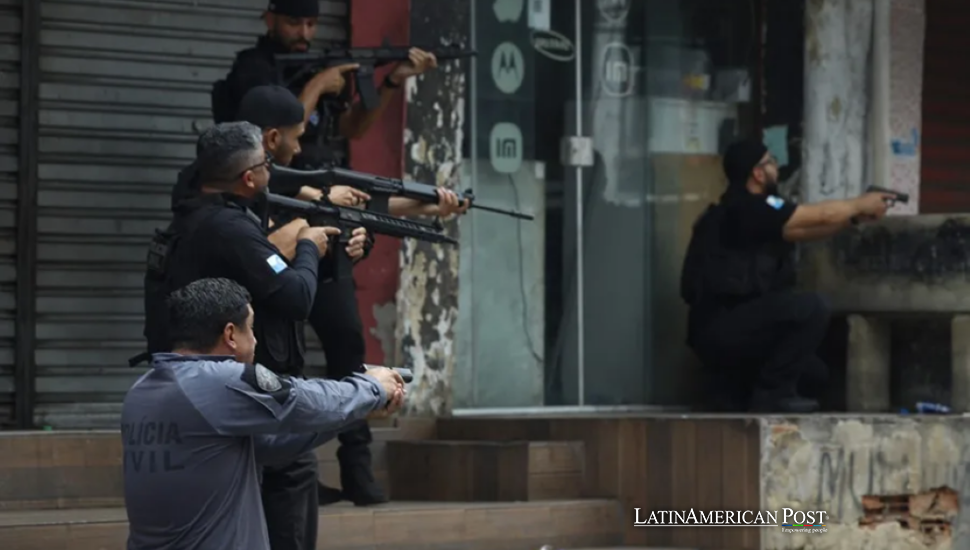
This is not hypothetical. Americas Quarterly describes how legal threats are paired with action: in recent weeks, the administration green-lit maritime interdictions and disclosed multiple strikes on alleged drug-smuggling boats operating out of Venezuela. For Latin American diplomats—especially those shaped by memories of past interventions—the message is unmistakable. Washington is signaling that the high seas and foreign coastlines are again treated as contested space where U.S. enforcement can blur into U.S. force. That is why the legal debate is already alive: analysts question whether such uses of force align with the UN Charter and the law of the sea, and warn about sovereignty, extraterritoriality, and due-process concerns. In the region, the worry is not only legality; it is precedent. Once the threshold is crossed, it rarely returns to its original state.
The policy’s diplomatic edge is sharpened further through decertification. Earlier this week, the U.S. “decertified” Venezuela, Bolivia, and Colombia for failing to meet counternarcotics obligations—an especially stinging rebuke to Colombia, long described as Washington’s closest anti-drug partner, even if a waiver keeps select aid flowing. The timing lands amid record coca cultivation and disputes over strategy under President Gustavo Petro, who lashed out at the decision, accusing the U.S. of seeking to “participate” in Colombia’s politics ahead of the 2026 presidential elections. That accusation resonates in Latin America because it is familiar: drug policy is rarely just drug policy. It becomes leverage over budgets, security priorities, domestic narratives—and, sometimes, elections.
Mexico’s Line in the Sand, and the Region’s Tightrope
The temperature in Mexico is rising as well. Reporting referenced by Americas Quarterly suggests Trump signed a directive opening the door to U.S. military force against cartels on foreign soil and at sea. President Claudia Sheinbaum has pushed back hard on sovereignty grounds, even as Mexico has handed over dozens of cartel members to the U.S. That combination—public resistance paired with selective cooperation—captures the region’s tightrope. Mexico cannot be seen as consenting to the presence of foreign troops; it also cannot ignore the gravitational pull of U.S. pressure when trade, migration, and security cooperation are intertwined. Sovereignty, here, is not a slogan. It is a daily negotiation with consequences for internal legitimacy.
From a Latin American vantage, Muggah argues, the reboot can look less like counternarcotics than hemispheric power projection by other means. Label cartels, terrorists, and Washington can sanction, seize, and strike. Decertify a partner, and leverage over aid, trade, and security cooperation expands. Fold narcotics into terrorism, and the Pentagon’s toolkit becomes fair game. Even when each step is defended as pragmatic, the combined effect is to widen U.S. discretion while narrowing local political space. The risks rise accordingly: strained alliances, legal blowback, miscalculation at sea, and financial overcompliance that can snare legitimate commerce—banks, shippers, insurers—especially in smaller economies that cannot afford to be treated as suspicious by default.
Why the Market Doesn’t Break, It Moves
The hard part is that the strategy’s likely payoff looks thin. The UN data show cocaine production, seizures, and consumption hitting records at once—signals of displacement, not defeat. Enforcement pressure tends to shove flows onto new routes rather than suffocate them. Academic meta-reviews cited in the piece suggest illicit-drug demand is weakly price-inelastic: when enforcement raises risk and prices rise, demand falls, but not proportionally. The result is cushioned revenues and incentives for displacement, adulteration, and violence—sometimes all at once. In that world, every crackdown can unintentionally increase the value of controlling chokepoints: ports, border towns, jungle corridors, and neighborhoods where recruitment is easiest.
The fentanyl pipeline illustrates the same adaptive logic. Investigative reporting has described how chemical brokers in China can feed Mexican labs despite regulatory pressure, showing supply chains that behave like water under a door. Even the encouraging statistic—a 27% fall in U.S. overdose deaths in 2024—is attributed mainly to naloxone, treatment access, and shifts in the domestic drug mix, not a collapse of global trafficking. The implication is uncomfortable: what works most reliably is often public health and governance, not spectacle.
Muggah’s conclusion is not that enforcement is pointless, but that a serious strategy to weaken cartels would target the business model rather than the theater. That means coordinated financial controls, credible governance of chemical precursors and dual-use inputs, violence reduction and institution-building where cartels recruit, and treatment plus demand reduction at home. Those steps require trust, time, and politics—the very resources that terror labels, decertifications, and episodic strikes tend to corrode.
For Latin America, the danger is ending up with the worst of both worlds: a louder War on Drugs that projects power without shrinking markets, while sovereignty disputes multiply and contested nodes grow more violent. Cartels and drug markets adjust because demand hardly bends. Communities absorb the costs because the state still arrives unevenly. And the region—already brittle from inequality, migration pressures, and institutional fatigue—becomes more fragile precisely where it can least afford another “war” waged in its name.
Also Read: Colombia Gulf Clan Grows Stronger As Washington Calls It Terrorism