Latin America Watches Cuba’s Prison Gesture and Washington’s Old Reflexes
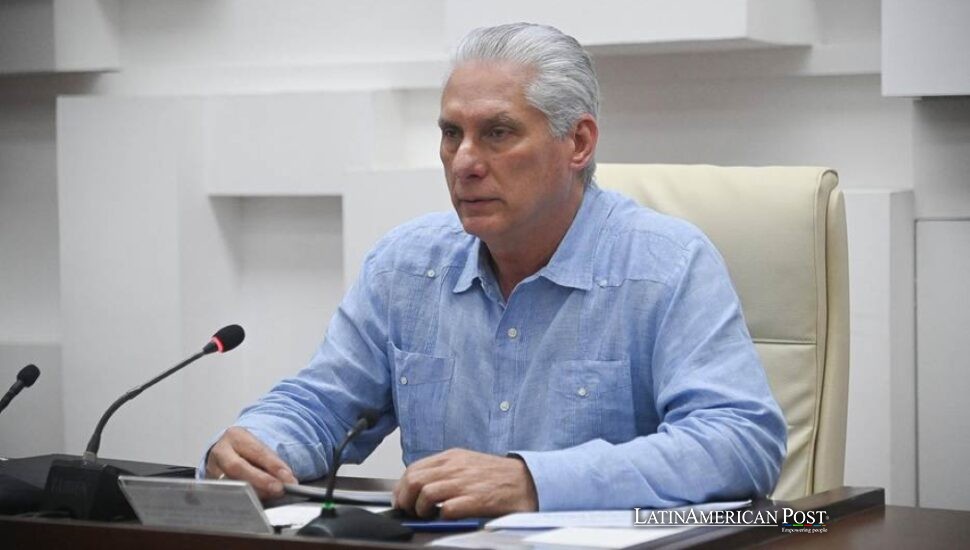
Cuba’s plan to release fifty-one prisoners comes at a tense moment, where Vatican diplomacy, internal pressures, and renewed US pressure all intersect. This forces Latin America to look beyond the gesture and consider what kind of future is really being shaped.
A Gesture That Arrives Loaded
Cuba announced it will release fifty-one prisoners soon, presenting it as a goodwill gesture linked to its close ties with the Vatican. The official language was cautious and formal. The Foreign Ministry said those released had served much of their sentences and behaved well in prison. It did not name them or say if any are political prisoners. That silence is important.
In Cuba, the state rarely makes this kind of move in a vacuum. Timing is part of the message. The announcement came only hours before Miguel Díaz-Canel was due to speak at a rare press conference on national and international issues. That sequence gives the release a dual function. It is humanitarian in presentation, but also political in staging. A government under pressure is trying to show movement without surrendering control over the meaning of that movement.
That is why the unanswered question hangs over everything. Who exactly is being released? The government’s broad numbers are meant to suggest continuity and procedure. It said nearly 10,000 inmates have received pardons since 2010. It added that another 10,000 people sentenced to imprisonment were released over the past three years. Those figures create a backdrop of institutional routine. But the political temperature around this latest step is different, and everybody knows it.
The memory of January 2025 highlights this difference. Back then, Cuba released José Daniel Ferrer as part of a plan to free over five hundred prisoners after talks with the Vatican. These releases started soon after the Biden administration said it planned to remove Cuba from the US list of state sponsors of terrorism. In other words, prisoner releases and international deals have long been connected. This new announcement follows that pattern.
The Vatican Opens a Door, but Not a Clean One
The Vatican’s role adds a special dimension to Latin America. Here, diplomacy is often more than just diplomacy. It can be moral theater, historical memory, and political cover all at once. The Church offers a language of mercy that governments use when they need some space to act. That doesn’t make the move fake, but it does mean it has more than one purpose.
For Havana, being close to the Vatican is valuable. It provides a channel that is neither fully local nor under Washington’s control. This matters in a region where outside pressure often comes with threats, punishments, and lectures disguised as principles. The Vatican, on the other hand, lets Cuba show it is open to dialogue rather than surrender. It allows the government to frame flexibility as a sign of sovereignty.
Still, the trouble is that humanitarian gestures become politically unstable when the wider field is this volatile. The nonprofit Prisoners Defenders said there were 1,214 political prisoners in Cuba as of February 2,026. If none of the people released in this latest group are political prisoners, the government may gain little credibility beyond symbolic goodwill. If some are, then the release will immediately be read not only as clemency but as strategic signaling to foreign actors.
This ambiguity is no accident. It’s the method. Cuba wants to keep as much secrecy as possible while encouraging many interpretations. Across Latin America, governments, activists, churches, and everyday people have seen this before. A small opening can be genuine. It can also be a way to buy time. Sometimes it’s both.
Washington Still Talks Like an Empire
What hardens the meaning of this Cuban move is not only what Havana is doing, but what Washington is saying out loud. Donald Trump’s remarks about Cuba were blunt, even by the standards of a long and bruising relationship. He said Marco Rubio is “dealing” with Cuba. He said there may be “a friendly takeover, it may not be a friendly takeover.” He said it “wouldn’t really matter” because Cuba is down to “fumes,” with “no energy” and “no money.” He added, “They are going to make either a deal or we’ll do it just as easy, anyway.”
In Latin America, that language lands with a familiar chill. It does not sound like diplomacy between sovereign states. It sounds like ownership, inheritance, and entitlement. It sounds old. Very old. The notes explicitly tie this posture to a revival of the Monroe Doctrine, that enduring claim that the hemisphere should sit under United States sway and no other foreign power. That doctrine has never been just an idea. It has been a habit of power, and habits tend to survive their original century.
This is why the prisoner release matters across the region. It’s not just a Cuban domestic issue. It’s part of a bigger fight over who controls the narrative about the crisis in the Americas. Washington paints Cuba as worn out and about to collapse. Havana denies high-level talks but doesn’t fully reject reports of informal contacts. Between these views is a country under great stress, facing an energy crisis and economic hardship, but also trying not to show weakness.
For Latin America, the deeper issue is not whether Cuba is changing. Cuba has always changed, only unevenly, defensively, and under siege. The deeper issue is whether the region will keep accepting a script in which every Cuban opening must be measured against Washington’s appetite. That is the old reflex in the headline truth of this moment. Cuba releases prisoners, and the world should be able to ask about justice, mercy, rights, and political recalculation. Instead, the hemisphere is pushed back toward a colder question. Who gets to take whom over?
That’s why this story feels bigger than just fifty-one names still waiting to be freed. It’s about the space between a gesture and a threat. And in that space, Latin America sees a history it has never fully left behind.
Also Read: Cuba Waits as Power Whispers Through One Family’s Closed Doors