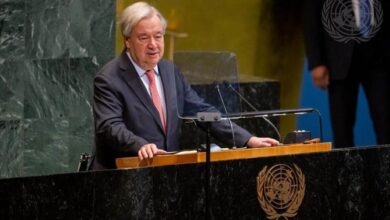
Latin American Democracy Faces a Hard Turn Toward Uniformed Solutions
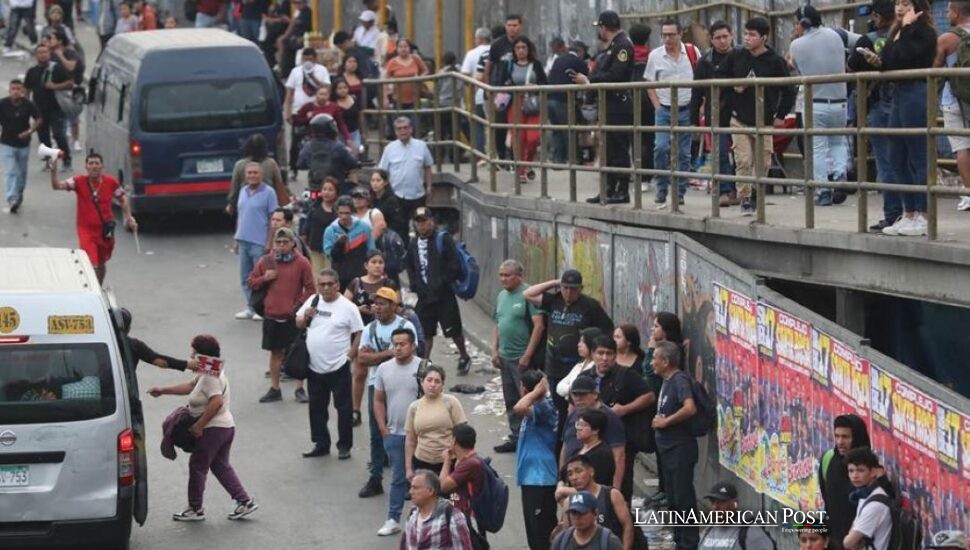
From Caracas to Lima, the region’s elections, extortion rackets, and foreign pressure are converging into a single dangerous story: when states can’t protect people—and parties can’t represent them—citizens are offered the same bargain, again: order first.
The New Fear Carries an Old Accent
South America is approaching a crossroads that feels familiar in the worst way. The attack on Caracas, the abduction of Nicolás Maduro, and the U.S. president’s threats toward the presidents of Colombia and Mexico read like an ominous preview of the years ahead: a region squeezed between its own institutional fatigue and external coercion that arrives with a smile, a sanction, or a strike. Elections have sharpened political tension from La Paz to Santiago, Buenos Aires to Quito, and the continent’s biggest democracies are heading back to the polls later in two thousand twenty-six—with the public mood already primed by frustration, fear, and the sense that growth never became dignity.
Decades of economic expansion produced unequal dividends, and the post-pandemic erosion of state capacity has widened the appeal of hard-line populism. People do not drift toward “mano dura” because they are bewitched by uniforms. They drift because the state feels absent when their child’s bus is robbed, because the court file never moves, because the police arrive late or not at all, because legislators sound like a private club negotiating their own immunity. The danger is not only domestic. The region’s drift toward militarized politics, combined with open threats from Washington, revives a playbook Latin America knows by heart: banana republic logic, gunboat diplomacy instincts, the idea that sovereignty is conditional and self-determination negotiable.
What emerges is a convergence that feeds on itself. Rising insecurity hollows out representation; hollowed-out representation makes emergency rule politically profitable; emergency rule weakens institutions; weakened institutions invite further external influence. A continent that should be arguing over schools, budgets, and rights finds itself pushed back into a simpler, crueler debate: who can impose order, and at what cost.
Peru’s Growth Did Not Buy It a State
Peru is a stark cautionary tale because it demonstrates how prosperity can coexist with institutional brittleness until it suddenly cannot. For two decades, the country posted above-average growth, attracted heavy foreign investment, and even sought OECD membership. By early two thousand twenty-six, the sol is widely regarded as South America’s most stable currency. Yet stability in exchange rates did not translate into stability in the republic. Seven presidents in nine years speaks to a deeper dysfunction: the machinery of political representation—parties, Congress, courts—has failed to produce legitimacy that people can feel in daily life.
The sociologist Julio Cotler offers one way to understand the paradox. Peru’s elites, enriched by exports of raw materials, had scant incentive to share gains or build capable, inclusive institutions. In that political economy, colonial hierarchies linger rather than dissolve, and inequality across gender, class, and ethnicity persists. When state services remain dysfunctional, legitimacy frays. The state becomes something you encounter as a permit, a bribe, or a baton—rarely as protection.
Now that brittleness is colliding with insecurity. In Lima, transport strikes over rising violence and extortion have repeatedly paralyzed the city. Dozens of bus drivers were murdered in broad daylight throughout two thousand twenty-five, a ritual of intimidation meant to tell everyone else: pay, obey, or bleed. In October two thousand twenty-five, protests turned deadly when a rapper and street artist was shot near the government palace during demonstrations against the new president, José Jerí. The president of Congress called the victim a “terruco”—a word once tied to terrorism, now repurposed as a political slur aimed at dissenters, often Indigenous or peasant, to delegitimize their demands. In that single insult is a whole governing reflex: treat conflict as criminality, and politics as something to be policed.
Under Jerí, Peru’s response has been the militarization of public space: a state of emergency, soldiers patrolling streets “until insecurity is eradicated.” The phrasing matters because it promises a clean ending to a messy reality. Violence becomes a stain to be scrubbed, not a system to be dismantled. But when political demands are marginalized in favor of military or police force, representation collapses into patronage or fear. Peru’s Congress is described as a plutocratic trading house where vested interests are waved through, rather than a forum for reforms that would let the state respond to citizens as citizens.
The two thousand twenty-six presidential campaign amplifies the same logic. Frontrunners promise mega-prisons, drone surveillance, and even transferring inmates to Salvadoran prisons. Keiko Fujimori, daughter of former president Alberto Fujimori, openly invokes “mano dura.” Across the Andes, “order” returns as a magical solution, reinforced by the idea—often encouraged from the north—that repression can substitute for politics. Yet it rarely fixes the roots of violence: social exclusion, impunity, and hollowed-out states.
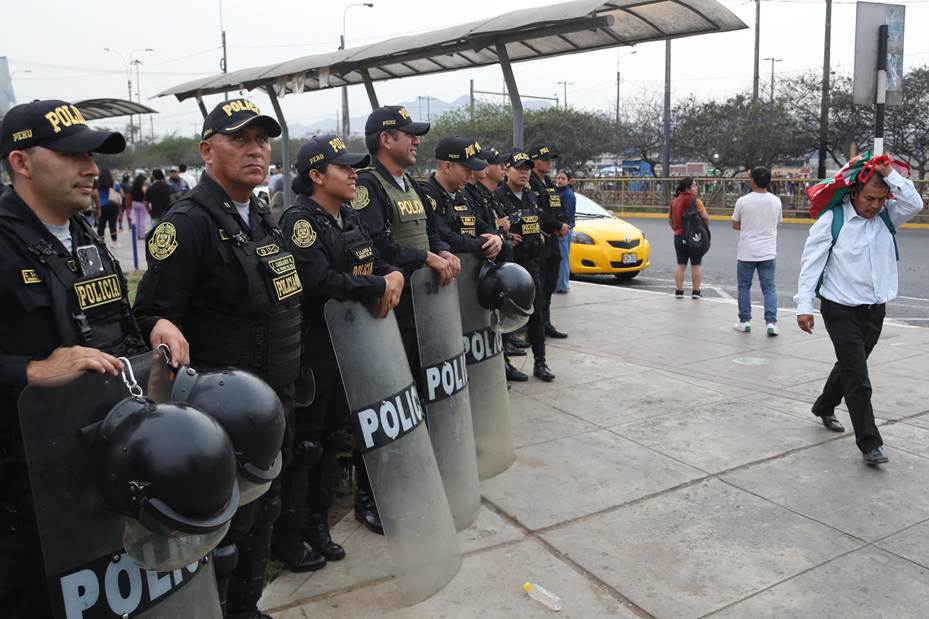
Chile’s Echo Shows How Nostalgia Becomes Policy
If Peru shows what happens when growth fails to become a capable state, Chile shows how disillusionment can become nostalgia—and how nostalgia can turn into permission. The celebratory chants for Pinochet heard after José Antonio Kast’s electoral victory signal something more troubling than ideology: a longing for the certainty of authoritarianism, the fantasy that democracy is messy but dictatorship is efficient. It is a dangerous shortcut in a region where U.S.-sponsored intervention once helped install the very authoritarianism now being romanticized.
The appeal of “strong hand” governance is less about doctrine than about betrayal. When parties feel distant and self-serving, toughness becomes a performance that replaces representation. A politician stops persuading and starts commanding. A legislature stops deliberating and starts trading. The military becomes politicized; society becomes militarized. From there, it is a short step to symbiosis—politicians and uniforms defending predatory interests, local or foreign, under the banner of security, while authoritarian arrangements harden and soldiers receive “warrior dividends,” rewarded not for protecting the public but for expanding the theater of control.
Across the region, the return of hard-line populism coincides with a wider revival of militarized solutions to social and political problems. The text’s language—revivals of old doctrines, breaches of international law, sheer force—points to a governing logic that substitutes coercion for legitimacy. Financial pressure, visible in Argentina’s most recent legislative elections, and the summary execution of alleged drug traffickers fit the same pattern: social problems are gaslit through force, as if violence can be managed by louder violence.
The result is not stability but fragility. Militarized governance produces states that look tough while hollowing out the capacity that actually delivers safety: fair courts, honest police, functional public services, credible parties, and legislatures that do not operate like marketplaces. Fragile states create fragmented societies. Fragmented societies make it easier—not harder—for external interference to return, because sovereignty becomes a negotiation over weakness.
A different path is possible, but only if the problem is described correctly. Violence is real, and people have the right to demand safety. But security without legitimacy is ephemeral, and force without institution-building is brittle. The Andes will not escape the trend of insecurity and instability by doubling down on emergency powers, larger prisons, and soldiers sweeping streets in full gear. The only way out is slower and less cinematic: invest in justice, rebuild state capacity, and tackle the institutionalized inequalities that make violence feasible and profitable. That cannot happen without recasting political representation away from predatory dynamics—so that Latin Americans are not once again offered the same bargain, dressed in the same uniform, under a newly updated script.
Also Read: Venezuela Was the Test Case. Could Cuba and Iran Be Trump’s Next Target