Mexican Golden Casket Tests How Narco Legends Outlive Their Leaders
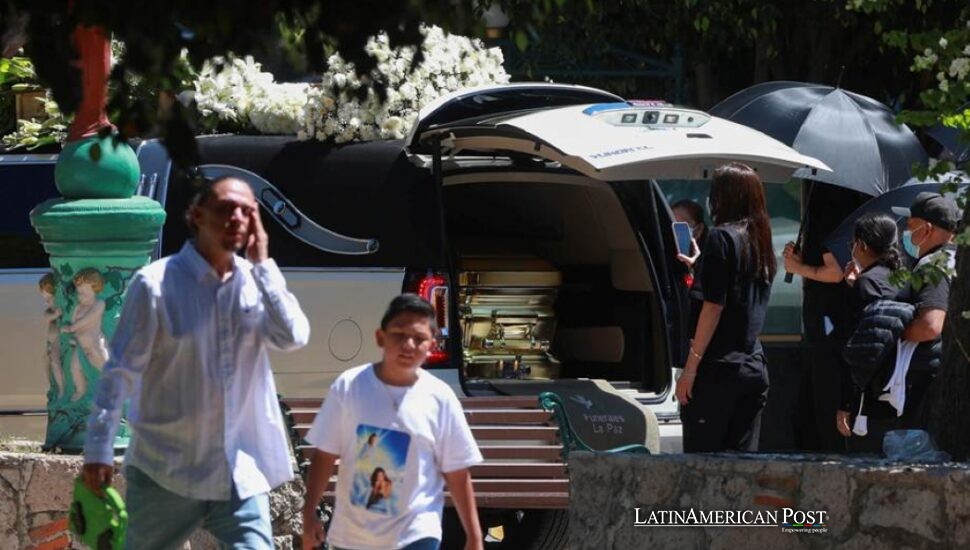
Under hard sun in Jalisco, black umbrellas followed a gold coffin to the grave. As soldiers watched, bands played banda and narcocorridos for El Mencho. Mexico’s latest kingpin burial shows how death fuels narco culture and policy for years ahead.
A Funeral With Umbrellas and Roosters
The umbrellas were the first tell. It was a sunny day, but dozens of people still carried black canopies as they moved with the procession, a portable shadow that also worked as a curtain. Somewhere behind that moving shade was a shiny golden casket, and around it, enormous flower wreaths, and around those, a large military presence in the state that gave its name to one of Mexico’s most powerful cartels.
A federal official confirmed that Nemesio Oseguera Cervantes, known as El Mencho, was buried Monday in a cemetery in Zapopan, a suburb of Guadalajara. The official asked not to be named because they were not authorized to discuss the case. Even in death, the man remained an operational detail.
The Attorney General’s Office declined to confirm the location for “security reasons,” it said in a brief statement. In Mexico, that phrase has its own weight. It acknowledges that a gravesite can become a flashpoint, that a tomb can turn into a message board, and that the state itself can become a target simply by standing too close to the wrong patch of earth.
Security had already been stepped up since Sunday around a funeral home where large wreaths kept arriving without names. Some of those tributes featured a rooster-shaped arrangement of flowers. Oseguera Cervantes, the notes say, was sometimes called the “Lord of the Roosters,” a nickname that folds a taste for cockfighting into the broader mythology that follows cartel leaders. Reuters photographs showed large floral tributes being carried inside ahead of the ceremony. According to AFP, five lorries were needed to take the arrangements to the cemetery, most of them sent anonymously. Anonymous, but not quiet.
A band played Mexican regional music known as banda. Another band played ranchero music and narcocorridos, the genre that praises drug lords, turning violence into verse and logistics into legend. Local media reported that “El Muchacho Alegre,” meaning “The Cheerful Boy,” played as the gold colored coffin arrived at a chapel inside the cemetery grounds. After an hour-long ceremony, mourners, many in face masks, followed the casket to the grave.
This is how the narco story often wants to be told. Even a burial turns into a performance. Even an ending demands applause.
A Victory Claimed, an Aftershock Promised
The trouble is that the funeral did not take place in a calm country where one could take a breath. It happened just over a week after the Mexican army killed Oseguera Cervantes while attempting to capture him. He died from multiple bullet wounds, according to the death certificate obtained by The Associated Press.
The certificate matches the official account given by Defense Secretary Ricardo Trevilla. Trevilla said the cartel leader and two bodyguards were badly wounded in a gunfight with soldiers outside a home in Tapalpa, Jalisco, and all three died on the way to a hospital. The document lists bullet wounds to Oseguera Cervantes’ chest, abdomen, and legs. It also notes he was to be buried, which is standard in violent deaths, so forensic evidence can be collected if needed. It doesn’t say where the burial happened.
His body was taken to Mexico City, where an autopsy was performed, and then turned over to his family on Saturday, the Attorney General’s Office said.
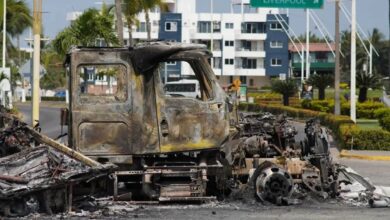
Then came the retaliation. Oseguera Cervantes’ killing set off violence in some twenty states, according to the notes, and cartel members set fire to vehicles and blockaded roads across the same span. More than seventy people died between the military operation and the violence that followed. The government has said security operations continue against other high-ranking members of the cartel.
In the official frame, this was a major win. Oseguera’s killing by Mexican special forces has been seen as a victory for President Claudia Sheinbaum’s government, which has come under increasing pressure from U.S. President Donald Trump to do more to combat drug trafficking. The notes also say the U.S. had offered a fifteen-million-dollar reward for information leading to Oseguera Cervantes’ arrest, a price tag that makes clear how international this story has become.
But the situation is complicated. Killing a leader can be both a success and a trigger. The notes warn that the power vacuum could cause a short-term surge in violence as factions fight for control. In other words, the state can win a battle but still have reasons to worry.
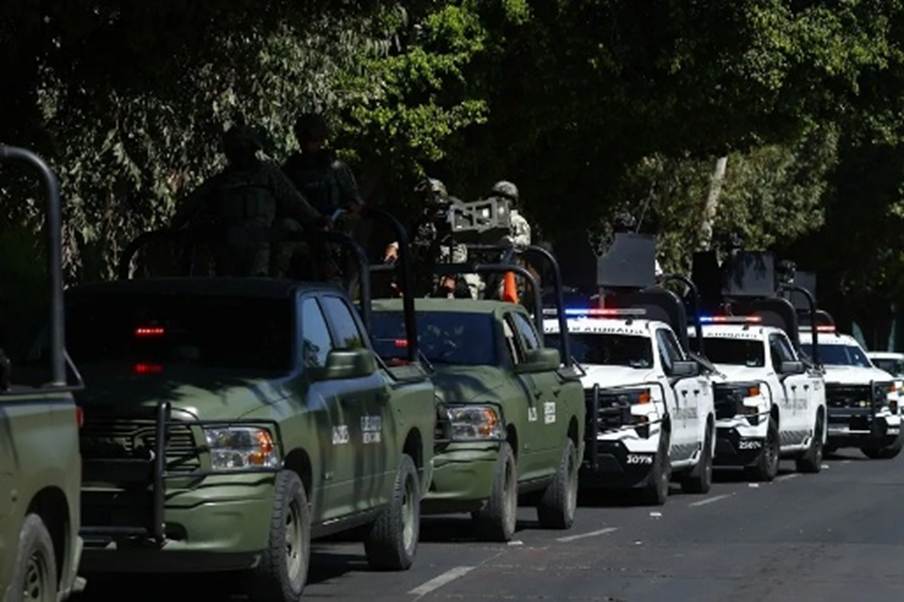
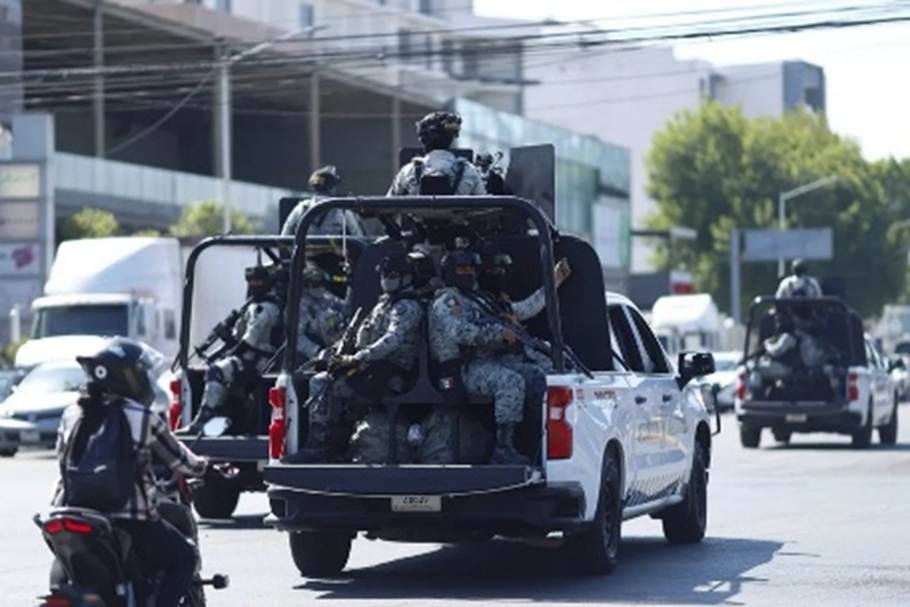
At the funeral near Guadalajara, National Guard members were heavily present to stop new violence. The state showed up, armed and visible, in a place where grief and intimidation mix. Their presence was meant to deter. It also highlighted a point narco culture keeps making: the state must appear in uniform because the myth arrives with music.
When Burials Become Narco Culture’s Loudest Microphone
It is customary for an air of mystery to surround the burials of drug lords in Mexico, the notes say, and supporters take advantage of that mystery to elevate them to legend. The mystery is practical because authorities are concerned about security. The mystery is also cultural, because it invites storytelling. And storytelling, in this world, is currency.
The notes say that within hours of El Mencho’s death, ballads and narcocorridos were already written about his killing. A man dies, and the chorus starts. Say it once, and it sounds like a rumor. Say it a thousand times, and it starts to sound like history.
Mexico has seen this pattern before, in almost surreal ways. There was Nazario Moreno, the leader of the violent and pseudo-religious Knights Templar cartel, who authorities said was killed in two thousand ten, only for him to be killed for real in 2014. Sometimes bodies disappear, as with Heriberto Lazcano, the leader of the Zetas, whose body was stolen in two thousand twelve. Sometimes death arrives under bizarre circumstances, like Amado Carrillo Fuentes, the “Lord of the Skies,” who died in a botched plastic surgery.
Even cemeteries become archives of the narco imagination. In Culiacán, in neighboring Sinaloa, there is a cemetery known for luxury crypts and mausoleums for kingpins like Ignacio Coronel, described in the notes as an old associate of El Mencho, and Arturo Beltrán Leyva. Against that backdrop, Mexican media noted something that sounds minor but is not: El Mencho’s plot was relatively plain compared with those of other drug lords.
A plain plot under a bright sun. A gold casket. Roosters in flowers. Soldiers on watch—Narcocorridos in the air.
The policy question is what happens next, and whether the state can stop the next chapter from being written in smoke and roadblocks. The cultural question is tougher because it lives in music, rumor, and how a funeral can turn a feared man into a story that outlasts him. Mexico keeps killing bosses. Narco culture keeps burying them like saints on their own dark calendar.
Also Read: Cuba Speedboat Shootout Revives Old Trauma, New Oil Pressure Politics