Peru Ousts Jerí as Congress Keeps the Revolving Door Spinning
On Tuesday, Peru’s Congress removed interim president José Jerí just weeks before the April elections, adding to nearly a decade of political instability. The decision came after investigations into his meetings and hiring practices. Now, lawmakers have to choose a new caretaker leader by Wednesday evening.
A Goodbye at the Palace Gates
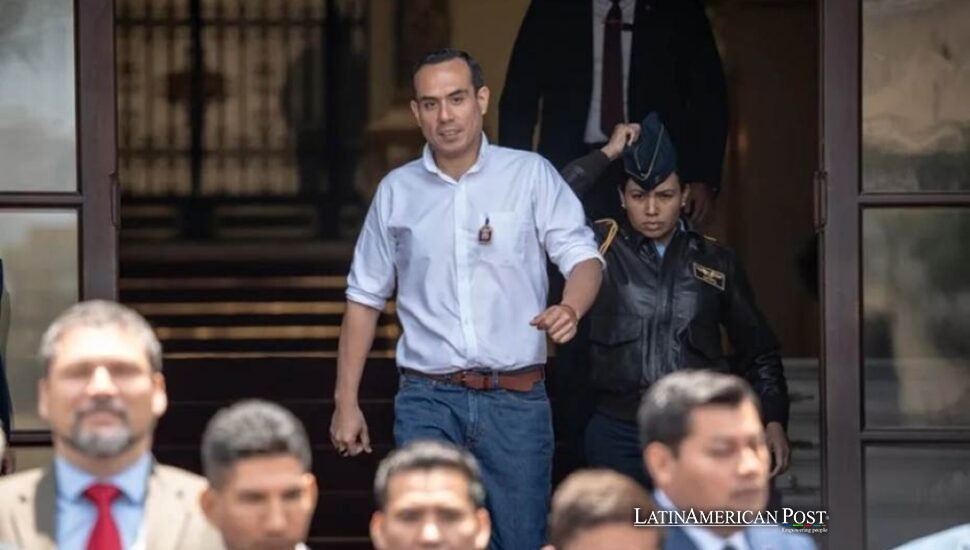
Late at night, the patio of honor at Peru’s government palace felt like a small stage.
José Jerí showed up with his cabinet, the prime minister leading the way, and for a moment the scene felt stiff and formal. The courtyard’s light wasn’t flattering—it bounced off stone and metal, making faces look paler than usual. Jerí walked to the iron gates, said goodbye to his ministers, acknowledged a small group of citizens outside Lima’s Plaza de Armas, then got into a private pickup truck and left.
This small moment is what people will remember because it captures something larger. The problem is that in Peru, leaving office has become the most predictable part of the job.
Earlier on Tuesday, Congress voted 75 in favor, 24 against, and 3 abstentions to remove Jerí. He had been president for only four months—not elected by voters, but because he was president of Congress when lawmakers removed Dina Boluarte last October. Under Peru’s system, censuring the head of Congress also removes the interim head of state. Since Jerí was censured as Parliament’s leader, his role as acting president ended automatically.
The country now faces another handover—the eighth presidential change in nearly a decade of political instability that started after the 2016 elections. Ollanta Humala, who served from 2011 to 2016, was the last president to finish a full term. Since then, seven presidents have come and gone. Jerí’s exit and the rush to replace him make these changes feel less like numbers and more like routine.
And habits become ingrained.
They change how institutions speak. They change what citizens expect. They change what parties fear most as the calendar inches toward election day.
Investigations, Optics, and the Mechanics of a Fall
Jerí’s downfall on Tuesday was tied directly to the investigations that gathered around him during his short tenure, and to the political math those investigations made possible.
Congress cited the open probes against Jerí, including a series of semi-clandestine meetings with Chinese businessmen who were described as state contractors. The episode that became most controversial was the one that looked, on its face, like an attempt to avoid being seen: Jerí went hooded to a restaurant owned by a Chinese businessman who had state contracts and ties to the presidential office. Later, Jerí also visited one of the businessman’s stores on January 6, after municipal authorities had closed the location hours earlier.
Peru’s politics often depend on appearances as much as laws. Wearing a hood isn’t a policy, but it sends a message. It looks like secrecy, even if explained later. This narrows the gap between investigation and judgment in the public’s mind, especially in a country used to expecting the next scandal at any moment.
The other issue was hiring, which hit differently. Congress highlighted alleged irregularities involving female officials who joined Jerí’s government after meeting him at the palace. Local media reported that at least five young women got state contracts following these meetings, and one reportedly stayed at the government palace all night on Halloween, leaving the next morning.
That detail is not just salacious. It is politically structural. It suggests a pathway to the state that is personal, private, and insulated, the opposite of merit and the opposite of transparency. In Peru, where public employment and contracts are already loaded words, the insinuation matters as much as any signed document.
Jerí’s party, Somos Perú, made a last attempt on Tuesday to delay his removal. They suggested suspending the debate so the process could follow vacancia, a presidential vacancy procedure needing a two-thirds vote. The majority rejected this. Instead, lawmakers chose censure, a quicker method that fit Congress’s urgency to resolve the issue before the campaign season fully kicked in.
These details matter because they show a deeper pattern. Peru’s frequent leadership changes aren’t just about individuals. They reflect how many loopholes exist in the system and how fast they can be used when political alliances change.
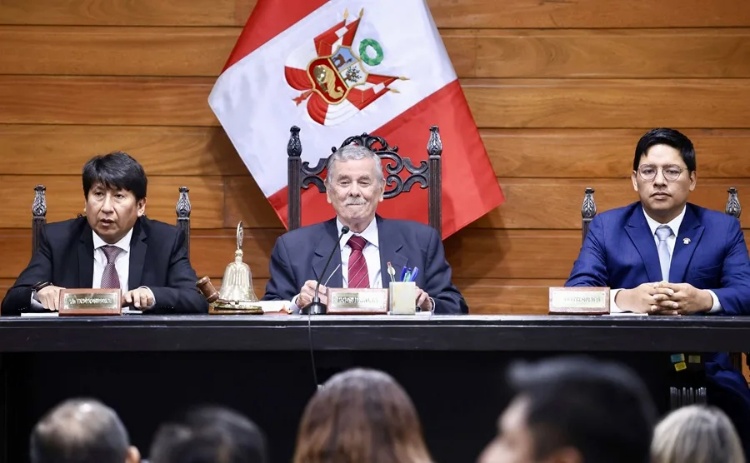
Election Season Turns Distance Into a Survival Skill
At the heart of Tuesday’s vote was a simple election-season instinct: to distance themselves.
The conservative parties that control Congress had initially supported Jerí’s arrival, but withdrew their confidence weeks before the general elections. The text is blunt about why. They wanted to avoid being contaminated at the polls by Jerí’s loss of popularity, especially after the recent revelations that led prosecutors to investigate him for influence peddling.
That’s the gamble. In the final stretch before an election, parties don’t just protect their positions—they protect their reputations. When the leader at the center starts to feel like a burden, the fastest move is to cut ties and step away.
Only one bloc held firm, according to the notes: Fujimorismo. It supported Jerí as a group, even though in the past it has promoted and backed presidential changes against other leaders. This time, it argued that keeping Jerí in place until the new president takes office would give the country stability.
Stability is a powerful word in Peru right now, but it’s also vague. It can mean continuing policies, keeping the police steady, or simply avoiding another leadership change. On Tuesday, Congress basically decided that separation was more important than stability.
Now, after Jerí’s exit from the palace gates, lawmakers have to fill the vacuum they created. Congress is scheduled to choose a new interim president on Wednesday during an extraordinary session beginning at six p.m. local time. Fernando Rospigliosi, the acting head of Congress and a Fujimorista, formally stated that by approving the censure motions, the congressional leadership declared the office of president of Congress vacant, and therefore the presidency of the republic vacant as well. He added that the deadline for parliamentary blocs to present candidates expires Tuesday at six p.m. local time.
In other words, Peru is about to choose a caretaker to lead during this caretaker period, with elections just around the corner. It’s like a relay race where no one wants to hold the baton for too long.
The deeper issue is not that Peru has rules for replacement. It does. The deeper issue is what repeated replacement does to legitimacy. When leadership turns over again and again, the presidency begins to feel less like a mandate and more like a temporary assignment, something inherited by procedure rather than earned by persuasion.
This change affects daily life in ways that are easy to overlook. People start talking about politics like the weather—always changing and always present. They learn officials’ names like new bus routes: quickly and without much connection. They watch the drama because they must, but they don’t put their trust in it the way a democracy needs.
Jerí, for his part, had initially drawn some public approval by prioritizing the fight against crime. That early acceptance now feels like another short chapter in a longer story Peru cannot stop repeating. A new leader arrives. There is a brief window of patience. Then the investigations, the revelations, the vote, the exit.
The palace gates. The private truck. The courtyard light.
One more goodbye, this time in central Lima, with the election clock ticking and Congress already readying the next leader. The problem is that in a system like this, the next leader isn’t really a new chapter. It’s the same chapter, just turned over again.
Also Read: Venezuela Amnesty Bill Stalls as Families Chain Themselves Outside Prison Walls