Peru Polls Revive Keiko Fujimori and an Unfinished National Argument
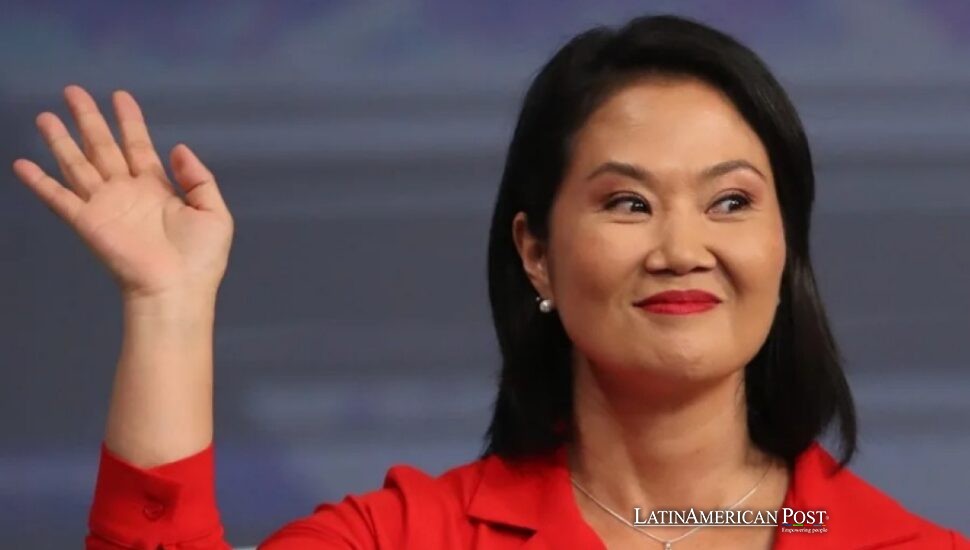
Keiko Fujimori leads Peru’s crowded presidential field, but her polling strength reflects more than campaign momentum. It is shaped by memory, fear, a desire for order, and a political surname that represents stability for some voters and a warning of democratic erosion for others.
Why the Polls Favor Her
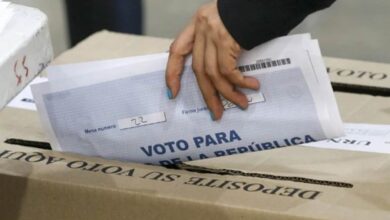
One week before Peru’s presidential election, three polls released on Sunday place Keiko Fujimori in first, highlighting her current electoral strength and its potential influence on the race. The Datum International poll shows her at 14.5%, up from 13%, while undecided voters have dropped to 16.8% from 23.9%. Ipsos Peru and the Peruvian Market Research Company also rank her first, though they differ on whether Carlos Alvarez or Rafael Lopez Aliaga is second. In a field of 35 candidates, where no one is expected to secure more than 50%, this lead underscores her strong position but remains uncertain in its ultimate impact.
The numbers indicate a solid base rather than a surge. Fujimori’s position is not accidental. At fifty, she is making her fourth presidential bid and is a familiar figure, not a newcomer seeking last-minute momentum. She reached the second round in 2011, 2016, and 2021, and has led Fuerza Popular since 2010. From 1994 to 2000, she served as first lady alongside her father. In a political system with weak parties, low trust, and an ongoing crisis, familiarity is valuable—and she possesses it.
Her advantage also stems from the race’s structure and her well-established political identity. Alvarez has risen from 6.9% to 10.9%, while Lopez Aliaga has declined from 11.7% to 9.9%. Other candidates, including Jorge Nieto, Ricardo Belmont, Roberto Sanchez, and Alfonso Lopez Chau, remain in the high single digits, with Chau dropping from second to between fourth and seventh place by early April. As Datum CEO Urpi Torrado stated, “The battle is no longer for the undecided voters.” The contest is now among candidates seeking to draw support from one another, with Fujimori entering this phase with a clear, recognizable political profile that resonates with her supporters.
The Shape of Fujimorismo
Her identity is not only personal but also ideological, familial, and historical. Keiko Fujimori’s political approach seeks to modernize her father’s legacy while maintaining its core elements. She positions herself as a pro-market, right-wing advocate for stability, investment, and public order. In 2021, she characterized the election as a choice between “markets and Marxism” and emphasized the need for a “firm hand” in government. On social issues, she aligns with Peru’s conservative camp and opposes same-sex unions and adoption.
Her politics are not solely defined by rigid positions but also by careful calibration. Aware that the Fujimori name is linked to the authoritarianism of the 1990s, she has sought to reassure centrist voters by pledging to uphold human rights, press freedom, and democratic institutions, and by stating that the most controversial aspects of her father’s rule should not be repeated. This balance contributes to her resilience. Supporters view it as maturity, while critics see it as repackaging.
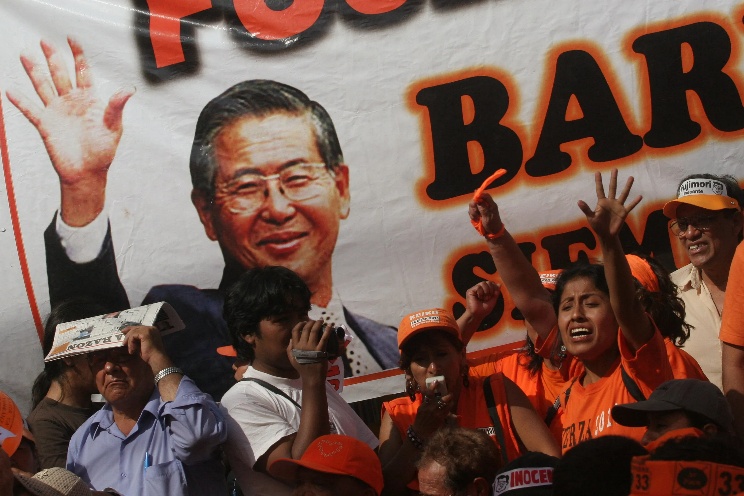
This is where Fujimorismo becomes significant. The term does not fit traditional left-right ideology. It refers to the political movement initiated by Alberto Fujimori and continued by Keiko Fujimori and her party. Fujimorismo is best understood as a governing approach that combines free-market economics with populist, anti-establishment rhetoric, direct appeals to “the people” over traditional parties, a strong security focus, and a readiness to centralize executive power when institutions are seen as obstacles. Scholars have described it as neoliberal populism or populist autocracy. Supporters view it as pragmatic and effective, while critics see it as normalizing authoritarian practices within electoral politics. This tension is central to Fujimori’s polling strength.
The Father Still in the Room
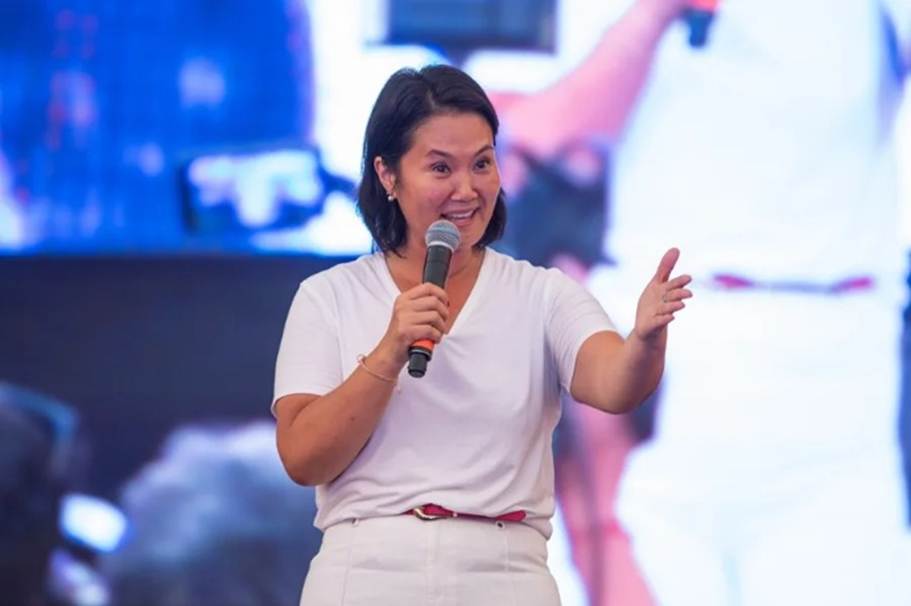
Alberto Fujimori’s political story explains why this current still carries force and influences Keiko Fujimori’s campaign. He was elected president in 1990 during Peru’s hyperinflation and insurgency crisis. Once in office, he reversed campaign promises and implemented sweeping economic reforms, including privatization and trade liberalization. In 1992, he carried out the autogolpe, using the military to shut down Congress and refashion Peru’s constitutional order. His government’s capture of Shining Path leader Abimael Guzmán marked a decisive moment in Peru’s history, shaping the political landscape that Keiko Fujimori now navigates.
However, the latter part of his rule was marked by increasing concentration of power, the influence of intelligence chief Vladimiro Montesinos, and systemic corruption. After bribery videos involving Montesinos emerged in 2000, Fujimori fled to Japan and resigned by fax. He was later extradited from Chile and convicted in Peru on multiple charges. This dual legacy persists: many Peruvians credit him with ending hyperinflation, restoring economic stability, and defeating Shining Path, while others recall military abuses, corruption, and the weakening of democratic institutions that contributed to today’s fragmented political system.
Keiko Fujimori’s lead reflects more than polling trends; it signals the return of a national debate that remains unresolved. Her candidacy evokes memories of order and effectiveness, but also of democratic decline. She presents a more electoral, civilian, and rhetorically democratic version of her father’s legacy, yet cannot separate herself from the controversies associated with her surname. In Peru, Fujimorismo endures because it offers authority amid instability. However, for many, it also contributed to the instability it seeks to address, keeping the country divided.
Also Read: Colombia’s Left Finds New Life in an Unequal Nation’s Mirror