Peru Votes Again as Fear and Fragmentation Rewrite the Campaign
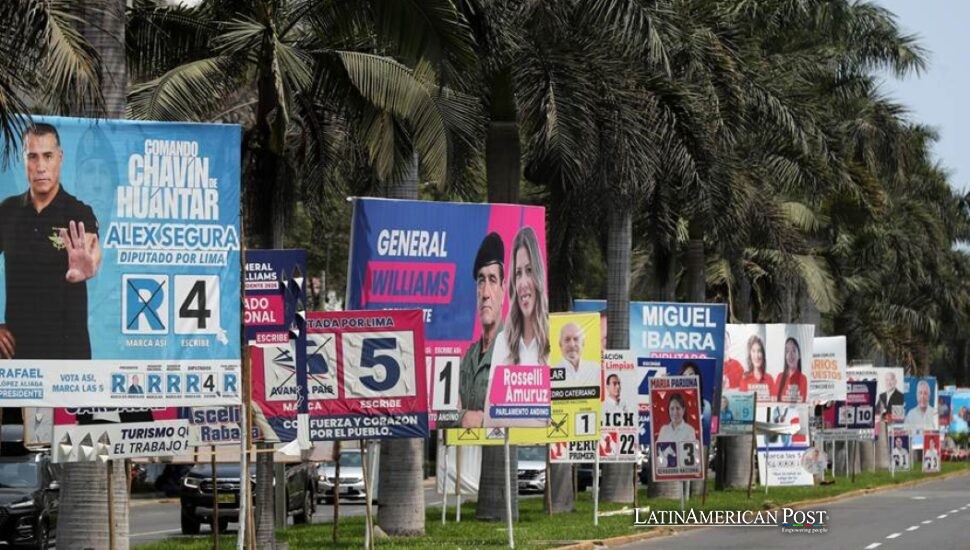
Peru enters its April vote after another presidential fall, a doubled homicide rate, and a record field of candidates, with voters weighing not just ideology but whether any contender can tame disorder, rebuild trust, and survive the machinery of collapse.
Nine Presidents and No Time to Exhale
Peru has developed the kind of political rhythm that stops feeling like rhythm at all. Another president falls. Another replacement arrives. Another campaign opens amid unfinished crises. In February, Congress removed José Jerí from the presidency for failing to disclose meetings with Chinese businessmen. He had lasted only four months. The legislature replaced him with José María Balcázar, an eighty-three-year-old former judge and member of the leftist Perú Libre party.
That episode did not create Peru’s instability. It merely joined the pile. The country has now had nine presidents in ten years, a number so large it stops sounding like a statistic and becomes a social condition. It changes how elections are felt. Voters are not only choosing a program or a personality. They are voting after years in which permanence has looked temporary, institutions have looked brittle, and authority has seemed forever one scandal away from rearrangement.
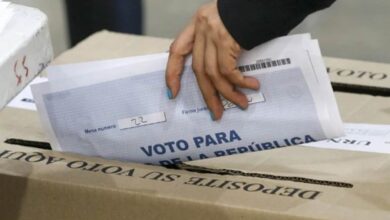
This is the context for the April twelve general election, and it helps explain why the race feels so crowded, so restless, so sharp at the edges. A record thirty-six candidates are vying for the presidency. If no one clears 50%, the top two move to a June 7 runoff. All seats in Congress are also at stake, making the contest unusually consequential. On top of that, Peru will choose a Senate for the first time in decades after a 2024 reform reinstated a bicameral system and reversed a ban on consecutive terms for legislators. Every winner will get a five-year term. The ballot, then, is not only about who takes office. It is also about whether the political system can give itself a more durable shape.
But the system seeks stability while the street sends a darker message. Peru’s homicide rate has doubled since twenty nineteen. Extortion and other gang-related crimes have become much more common. That matters because crime does more than generate fear. It changes political taste. It makes patience harder to sell. It rewards candidates who sound punitive, decisive, and unembarrassed by force. In a country already worn down by revolving door leadership, rising violence makes institutional argument feel thin unless it is paired with a promise of immediate control.
Why Crime Has Become the Master Language
That is why the clearest divide in Peru’s race is not simply left versus right. It is also personalistic versus institutionalist. In moments like this, voters often start looking less for administrators than for figures who seem capable of grabbing the wheel with both hands. Among candidates polling above six percent, the strongest campaigns reflect that mood in different ways.
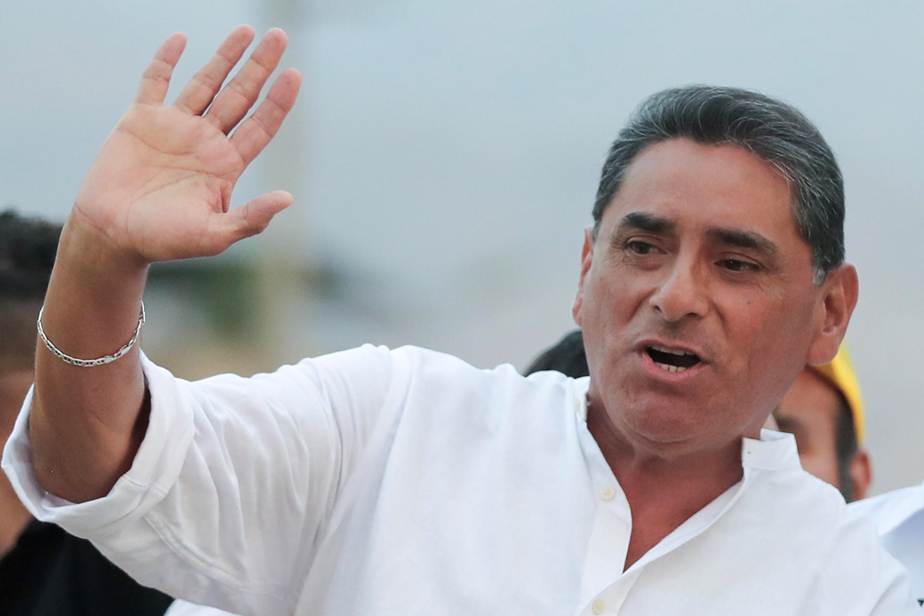
Carlos Álvarez may be the purest expression of outsider hunger. He is a comedian and television personality from Lima, known nationally for political satire and social commentary. He lacks a college degree and has little formal political experience beyond an unsuccessful run for mayor of Lima. Under normal conditions, that résumé might look thin. In this campaign, it looks strategically useful. He can present himself as someone who knows the country from up close, someone unmarked by the machinery that voters increasingly distrust.
His appeal makes sense in a race shaped by disgust and anxiety. He has the name recognition many rivals lack, a smooth presence in traditional and social media, and strong debate performances that are generating late momentum. He is also one of the few candidates polling well in both urban and rural areas and across most socioeconomic sectors. That suggests something important. His support is not only ideological. It is emotional and atmospheric. He offers familiarity, humor, and the feeling that politics could speak plainly again.
But even Álvarez’s outsider persona is built around severity. He admires Nayib Bukele and wants to adapt those security policies to Peru. He favors mega prisons, stronger law enforcement intelligence, more military deployments, broader use of states of emergency, and an expansion of the death penalty. Those are not marginal proposals. They show how far the center of gravity has moved. Even the fresh face in the race is speaking the language of confinement, punishment, and exceptional force.
At the same time, Álvarez is not selling repression alone. He has proposed early childhood health programs, rural internet expansion, scholarships funded by taxing private universities, a microcredit fund for small businesses, and more meritocratic public hiring. That mix is revealing. Peru’s voters do not seem to want punishment for punishment’s sake. They want a state that can finally reach people, protect them, formalize what is now precarious, and do it without drowning in corruption. His vulnerability is that inexperience cuts both ways. So does proximity to a small party whose leader, Vladimir Meza, faces recent graft charges in two separate cases, even as he denies wrongdoing.
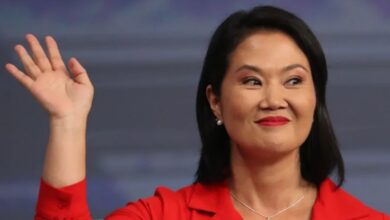
Keiko Fujimori, by contrast, embodies the politics of memory rather than novelty. She has led her political bloc for years, served in Congress, and run for president three times, losing narrowly in the runoff each time. Few figures in the race are more known, or more polarizing. Her father’s legacy remains the center of her appeal and her burden. Alberto Fujimori was convicted on charges of bribery, illegal wiretapping, and crimes against humanity in separate cases. Yet he is also remembered for tackling hyperinflation, growing the economy, subduing violent insurgencies, and expanding social programs. In a Peru marked by high crime and drawn-out instability, that memory of mano dura has become more politically usable again.
A Crowded Right and a Hollowed Center
Fujimori is promising to rescue Peru from violence, and much of her program sits squarely in the hardline register. She would deploy troops, military intelligence, and other armed forces units against street violence and organized crime. She would temporarily place the military in charge of the prison system. Her platform introduction advocates for a deregulatory shock. Yet her support base shows that fear alone is not the whole story. She remains especially popular in some of the poorest areas in and around Lima and in northern Peru, where memories of social programs and attentive disaster response still matter. For many voters, experience may now look more comforting than freshness, even when that experience comes wrapped in old bitterness and unresolved accusations.
Rafael López Aliaga pushes the race still further toward confrontation. The former mayor of Lima, railway and luxury hotel magnate, and head of Renovación Popular, offers brash right populism with religious and moralist overtones. He is strongest in Lima and has built support in southern Peru through alliances with local business and religious leaders. He is also popular with wealthy and religious voters, Catholic and Evangelical alike, who back his conservative stances on abortion, gay marriage, and other culture war issues.
His program reads like a frontal assault on the existing state. He wants to slash red tape, shutter most government ministries, deploy troops to the borders, use military courts for civilian prosecutions, confront street crime as an admirer of Bukele, and even request U.S. boots on the ground. He also wants to rebalance Peru’s trade relationship with China through new agreements with the U.S. The message is unmistakable. Civilian institutions are not merely slow or imperfect in this vision. They are something to be bypassed.
And yet López Aliaga’s own record exposes the trap at the heart of this election. He received praise in Lima for canceling a controversial toll road contract and for organizing the donation of more than 100 decommissioned train cars from California for transit expansion. But he could not lower crime rates in the capital, and he has faced criticism for acting unilaterally and for harsh rhetoric toward the press. The strongman style continues to attract attention even when delivery falls short.
That may be the truest thing this election reveals. Peru is not facing a tidy battle of ideas. It is facing a crisis of confidence so deep that almost every viable contender, outsider or veteran, is forced to speak in the key of force. The field is crowded because distrust is crowded. The right is strong because fear is strong. And the return of the Senate, rather than calming the picture, lands inside a society that no longer easily believes institutions can repair what years of upheaval have broken. Peru will vote on April twelve, but the deeper question is whether any winner can govern a country that has learned to expect the next rupture before the current one is even over.
Also Read: Peru Polls Revive Keiko Fujimori and an Unfinished National Argument