Uruguay Flirts With Bukeleism While Defending Its Fragile Democratic Soul
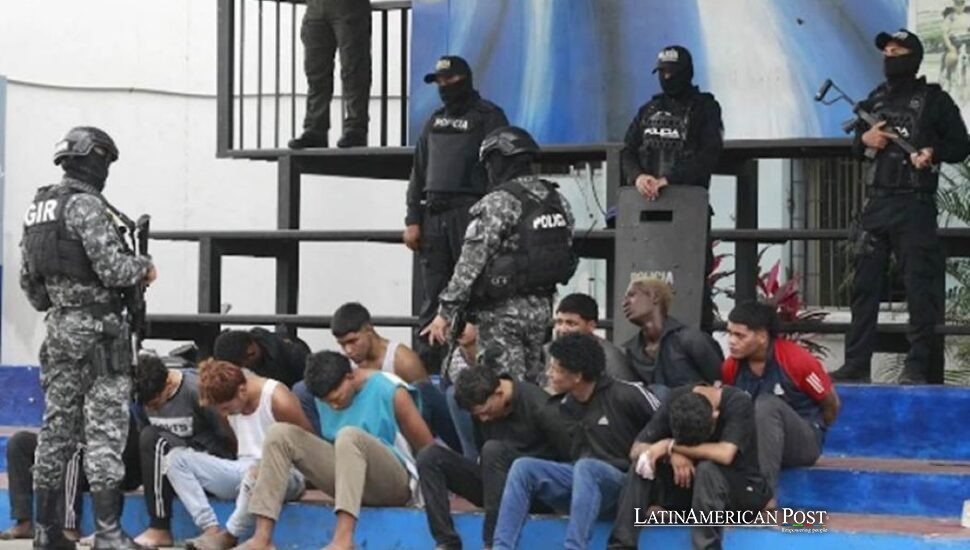
As crime fears rise, Uruguay weighs Nayib Bukele–style security policy, testing whether a proud left-wing democracy can confront gangs, drug networks, and the region’s hard-won lessons about dictatorship and state violence without sacrificing civil liberties and due process today.
A Left President Name-Checks Bukele
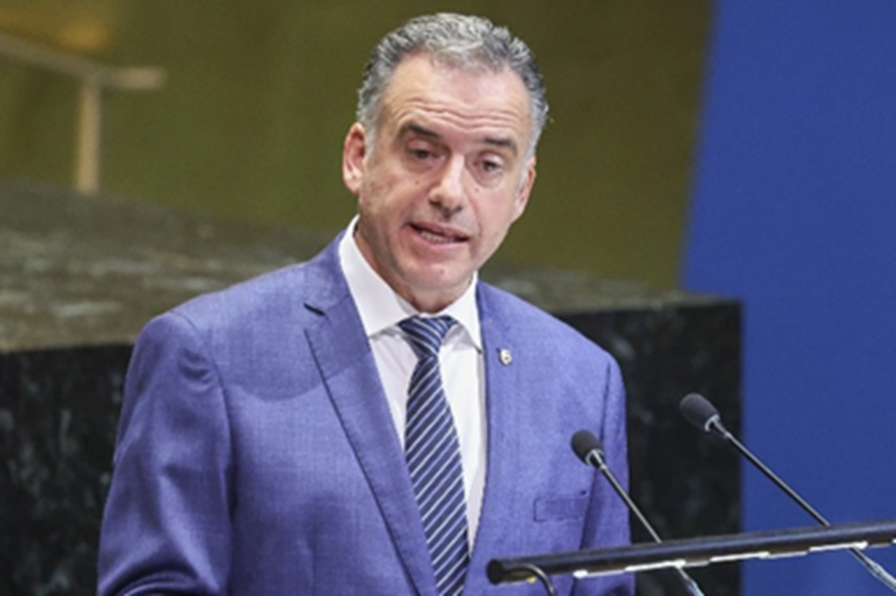
When Yamandú Orsi, Uruguay’s new left-wing president, said, “We need to talk about security, and I think the example is Bukele … It’s an example of a process that should be analyzed,” the shock traveled faster than any official communiqué. The remark echoed well beyond Montevideo’s cafés and WhatsApp debates, touching a raw nerve in a country that prides itself on being the quiet student in a noisy neighborhood. Uruguay is one of just two “full democracies” in Latin America according to the Economist Intelligence Unit’s Democracy Index, and it carries a living memory of the dictatorship that ended in the 1980s. Invoking El Salvador’s strongman was never going to be neutral.
The reference laid bare how far the appeal of Bukele’s mass-incarceration model has traveled, from the gang-ravaged barrios of San Salvador to a small South American republic long marketed as safe, egalitarian, and institutionally solid. Scholars writing in Latin American Politics and Society and the Journal of Democracy have described Uruguay as a “critical case” for democratic resilience: strong parties, robust civil liberties, and a relatively trusted state. Precisely because of that reputation, Orsi’s words became a warning flare. If even Uruguay’s left feels compelled to look over its shoulder at Bukele, the regional debate on crime has entered a new phase.
Before that remark, Orsi had admitted that the Latin American left often stumbled when addressing security, preferring softer language around “coexistence” to avoid being labeled “reactionary.” He now insists those taboos are fading, opening space for more assertive policies. The right seized on his comments, some celebrating the apparent conversion, others accusing the government of lacking a coherent vision. Inside the administration, Alejandro Sánchez, secretary of the presidency, attempted to re-anchor the debate by emphasizing that “the population has a security problem, and it must be addressed from within democracy.” Orsi later clarified that the Bukele model “is impossible and unacceptable” in Uruguay, but by then the phrase had done its work.
Fear Of Crime Reshapes Uruguay’s Political Map
Behind the rhetorical storm lies a public that is, simply put, tired. Uruguay’s crime rate remains below most regional averages, something noted repeatedly in Latin American Research Review, but public perception is moving in the opposite direction. The country’s emerging cartel ecosystem has grown more transnational, integrating into Southern Cone drug corridors described by analysts in Trends in Organized Crime. Each new seizure at a border or airport only reinforces the sense that larger forces are quietly expanding in the shadows.
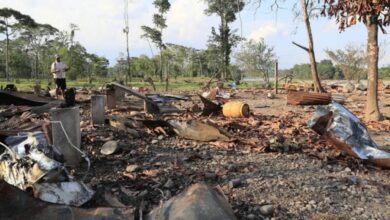
On the streets, ordinary Uruguayans say life feels more precarious: more visible homelessness, more petty theft, more open drug consumption, and more scattered but spectacular acts of violence. The most alarming moment came with the shooting and grenade attack targeting the home of Attorney General Mónica Ferrero in late September. This attack felt lifted from grimmer security stories in Ecuador or Honduras. For a society that has long seen itself as calm and orderly, this was a jarring reminder that past success offers no protection. Research on penal populism in Punishment & Society shows how such symbolic attacks can rapidly intensify public demand for swift, forceful measures.
The polls reflect the mood: 49% of Uruguayans now identify crime as the country’s most urgent issue, far ahead of unemployment at 29%. Although down from a peak of 64% in August 2024, the number has ticked upward again, and evaluations of the government’s security performance have worsened. Orsi’s approval has slipped from 41% in April to 36%, a worrying trajectory in a region where governments can unravel after a single security crisis.
The attraction of mano dura is evident in public opinion. According to Latinobarómetro, favorable views of Bukele in Uruguay jumped from 15.6% in 2023 to 34.4% in 2024. This does not signal full endorsement of mass arrests, but it reflects admiration for a leader seen as producing results. At the same time, trust in parties and parliaments is weakening across Latin America, while tolerance for leaders who “bend the rules” is rising. That is the tide Orsi is struggling to resist.
Regionally, the context is also shifting to the right. In Chile and Costa Rica, conservative candidates running on crime-first agendas are prominent in upcoming elections. In Spanish-speaking South America, Uruguay may soon stand alone as the only left-leaning government. Meanwhile, the United States is reframing aspects of its foreign policy around fighting organized crime and challenging left-wing authoritarian regimes such as Venezuela and Cuba. For a small, open democracy led by the left, balancing principles with political reality will be a delicate task.
Designing Security That Defends Democracy, Not Undermines It
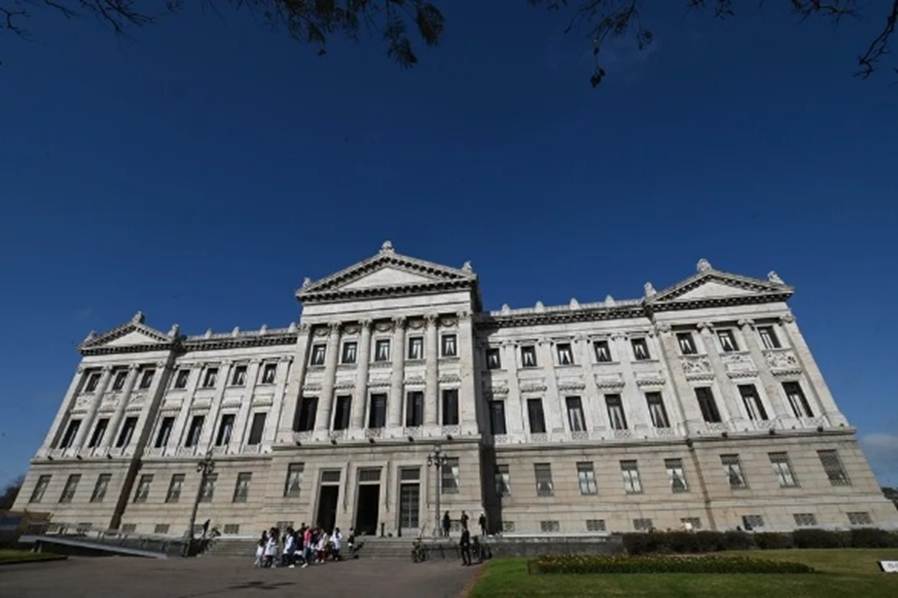
Against this backdrop, Orsi is attempting to build something that does not yet entirely exist in the region: a security model that can reduce crime without damaging institutions. His government is working on a National Public Security Plan, expected to launch in March 2026. Rather than a single flagship policy, it is conceived as a whole-of-government strategy, supported by multilateral agencies, combining vigorous enforcement with interventions targeting social exclusion and territorial inequality. This dual approach aligns with findings in the Journal of Latin American Studies, which show that enforcement-only strategies deliver fast but fragile gains unless reinforced by social policy and judicial reform.
The plan’s future performance will put Uruguay’s democracy to the test. It must demonstrate that a system committed to due process and civil liberties can still satisfy a public desperate for safety. Cooperation from opposition parties will be essential, even as polarization increases. Uruguay’s advantage lies in its institutional strength: a stable party system and a vocal civil society. Social movements, unions, and neighborhood organizations, actors highlighted frequently in the Latin American Research Review, serve as guardrails against overreach, but also as pressure points demanding faster results.
In this tension between urgency and restraint lies the drama of Orsi’s first term. Patience is what he is asking of voters, yet nightly news and social media reward bold, visible action. The challenge is clear: unless the March 2026 plan delivers measurable improvements, the public may drift further toward the politics of iron-fisted security.
If Uruguay succeeds, it may become one of the few countries able to show that security and rights can be defended together. If it fails, the next wave of mano dura may arrive not as a warning from abroad but as a demand from within, powered by disillusionment and the legitimacy of disappointed hope.
*Adapted from the original analysis by Nicolás Saldías, published in Americas Quarterly
Also Read: Latin America Watches U.S. Diplomacy Turn Hashtags into Online Weapons