Venezuela Amnesty Bill Stalls as Families Chain Themselves Outside Prison Walls
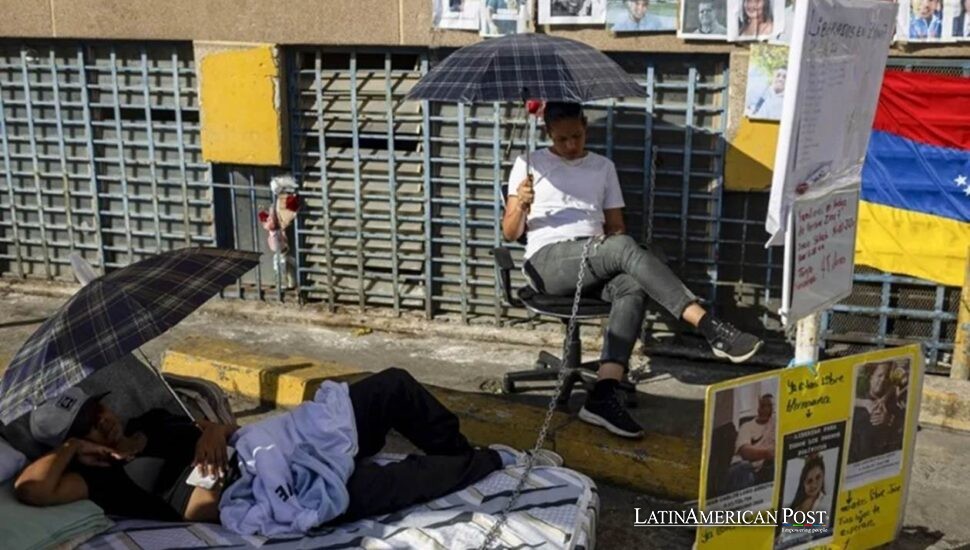
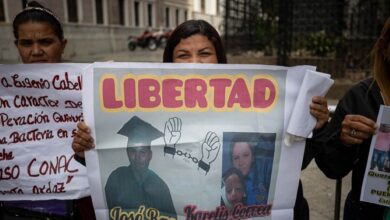
In Venezuela, a delayed amnesty vote collided with a country that no longer waits patiently. Outside a police command in eastern Caracas, relatives linked themselves in chains. They turned a sidewalk into a deadline, pressing Parliament and the state to choose words or freedom.
Chains on the Sidewalk, Law in the Chamber
By late day in eastern Caracas, the protest had a stubborn, metallic sound. Chains scraped against the ground as relatives tightened links around their waists and wrists outside the Bolivarian National Police command known as Zona 7. People shifted their weight. They watched the doors. They listened for movement inside a building that holds the people they call political prisoners.
Yessy Orozco, the daughter of former lawmaker Fernando Orozco, said the families would remain chained outside until everyone held in that facility is released. “Here we are going to remain chained, nobody enters, nobody leaves, unless they free our political prisoners, until the last of our political prisoners leaves this penitentiary center,” she told EFE.
The trouble is that the promise they thought they heard from the National Assembly has now been pushed into next week.
Earlier Thursday, lawmakers in Venezuela’s National Assembly postponed the second and final debate required to approve an amnesty bill covering cases of political prisoners since 1999. The session moved forward, but only up to Article Six of the proposed Law of Amnesty for Democratic Coexistence. Then it snagged on Article Seven, the clause that demands something the opposition says turns amnesty into accusation.
On paper, the bill aims to grant what it calls a general and full amnesty for crimes or infractions committed during the events and time frame outlined in the text, with the stated purpose of promoting social peace and democratic coexistence. It is a language of reconciliation, almost ceremonial. But the practical hinge is whether people who might be prosecuted or convicted must appear before the justice system to benefit from that amnesty.
Article Seven says the amnesty applies to anyone who is or could be prosecuted or convicted for alleged or proven participation in crimes or infractions committed, as long as that person is in good standing before the law or places themselves in good standing after the law takes effect.
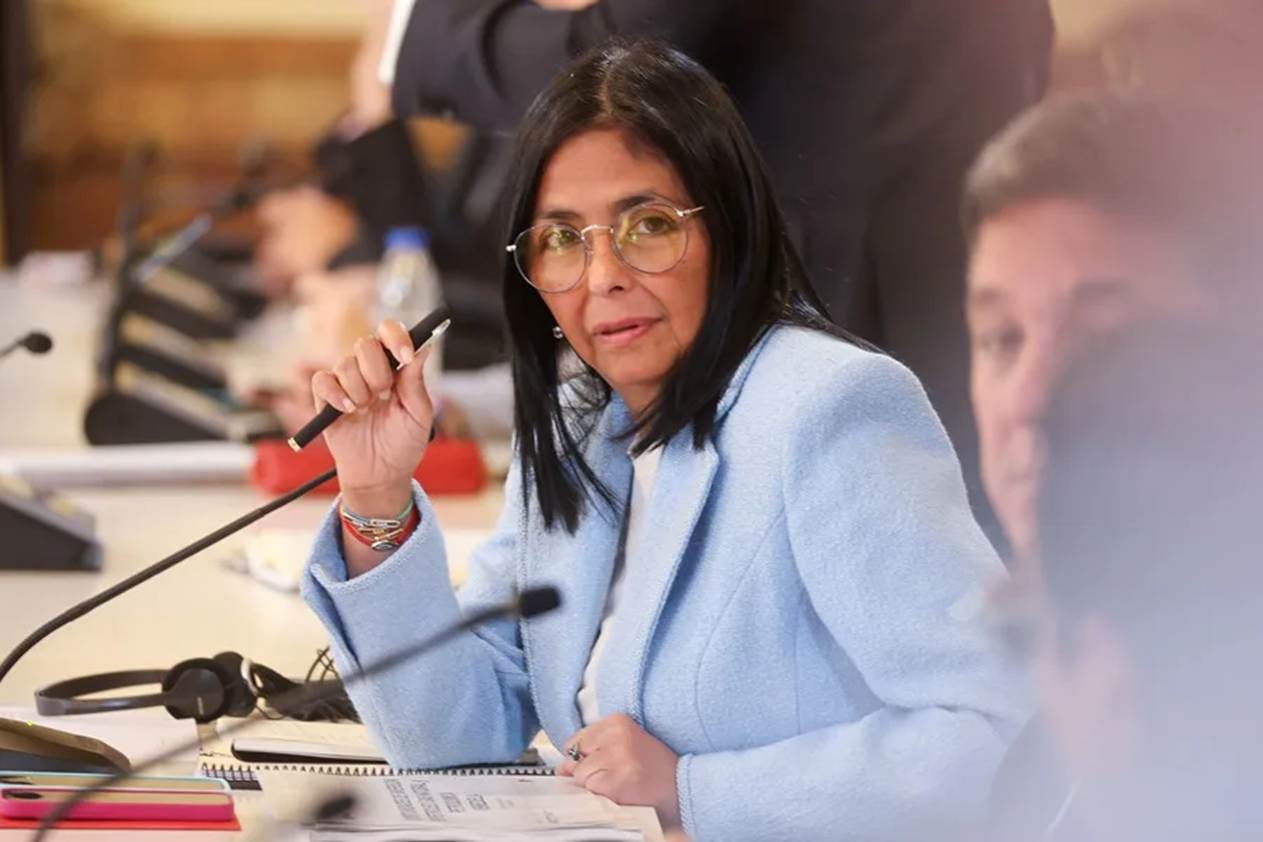
Opposition lawmaker Luis Florido of the Libertad faction argued the article had to be modified because requiring people to present themselves before the justice system already casts them as guilty if they are under judicial proceedings. Chavismo lawmakers responded that the Constitution establishes that people must be present in a criminal process.
In the end, both sides asked to postpone. The next session is expected next Thursday, after the Carnival holiday.
For families outside Zona 7, the delay is not procedural. It is personal. It is another week.
Orozco said that last Friday, National Assembly president Jorge Rodríguez said the bill would be approved this week and that afterward all political prisoners would be released. Petra Vera, a relative of another detainee at Zona 7, demanded Rodríguez keep that promise. “We are protesting because of the mockery that all the families of the political prisoners in this penitentiary center have been subjected to; we consider it a mockery,” she told EFE.
The wager here is that public pressure can force a schedule to mean something.
A Single Article That Changes Everything
Inside the Assembly, the debate turned into a fight over what it means to be “at the disposal” of a justice system and what it means to return to it, especially for people the opposition frames as persecuted and the government frames as defendants.
This is not a minor legal edit. It is the difference between a law that functions as a release mechanism and one that functions as a filter.
Florido’s argument is blunt: if someone is asked to present themselves before the courts, the state is already signaling that person as responsible. The chavista answer is also blunt: due process requires presence, and the Constitution matters.
Both claims can be true in the abstract. The trouble is the lived reality around them. A country does not argue about amnesty in a vacuum. It argues about it with jail cells in mind, with police commands that become symbols, and with relatives who can recite promises because they have learned to measure politics in calendar weeks.
What this does is place the entire bill under the shadow of one phrase, “to place oneself in good standing,” and the political question beneath it, who gets to decide what good standing looks like.
The bill’s supporters say it seeks to promote peace and coexistence. Its skeptics look at the requirement to show up and hear something else: a new condition attached to freedom, a new administrative gate.
So the Assembly approved up to Article Six, then stopped. The chamber did not break because it ran out of time. It broke because the seventh point marks the point where policy becomes consequence.
Youth in the Streets, Promises Under Pressure
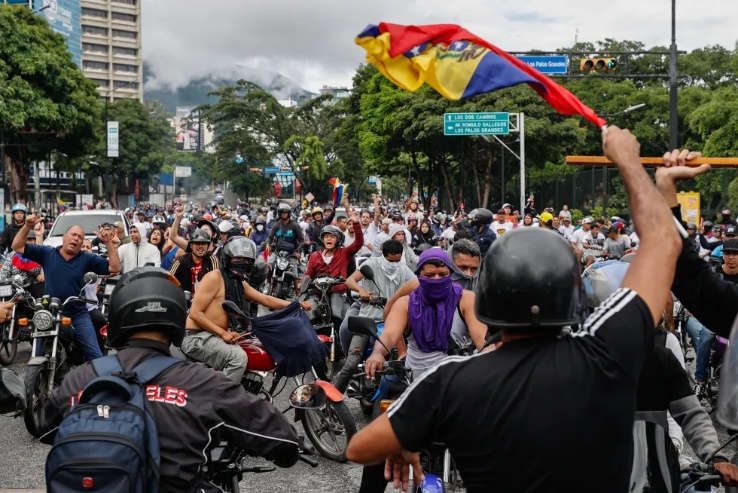
The postponement did not keep the opposition quiet. Thursday was the National Youth Day, and the Venezuelan Student Movement returned to the streets in multiple cities, demanding the release of all political prisoners. It was one of the largest opposition mobilizations in more than a year.
In Caracas, hundreds gathered at the Central University of Venezuela, the country’s principal university, moving within and outside the campus. Their chant was simple and designed for echo: “Not one, not two, all of them,” a response to the release process that began January 8.
According to the NGO Foro Penal, 431 releases had been verified through February 10, while it estimates that more than 600 remain imprisoned. The numbers hang over everything. They create a sense of movement, but also of unfinished business.
Miguel Ángel Suárez, president of the Federation of University Centers at the Central University of Venezuela, said they would keep pressuring “until all civil and political rights are restored,” and called for an end to persecution and for guarantees that would lead the country to a democratic transition.
In Maracaibo, students from the University of Zulia also marched, demanding inclusion in the amnesty debate. Yeissel Pérez, president of the university’s student federation, criticized the fact that youth leadership was not called to the public consultation on the bill. This process did include academics, NGOs, and relatives of political prisoners.
Seen together, the scenes form a single argument made in different locations. Students demand inclusion in the terms of the law. Families demand results from the law. Lawmakers debate whether the law requires deference to courts that many protesters distrust. And the state, still controlled by chavismo in Parliament, insists procedure is not optional.
On the sidewalk outside Zona 7, chains hold steady. Not one, not two. All of them. Repetition becomes a strategy when faith in timelines runs out.
Also Read: Colombia Tiger Candidate Turns Homeland Theater into a Presidential Test