Venezuela Exposes Europe’s Double Standards When Trump Targets Other Lands
Europe thunders about Greenland’s self-determination, yet tiptoes around Trump’s remake of Venezuela. From Caracas to Copenhagen, that contrast reads as colonial reflex—rules for the North, loopholes for the South—while quietly corroding Europe’s moral authority for Latin Americans who remember interventions.
Greenland Gets a Principle, Venezuela Gets a Pause
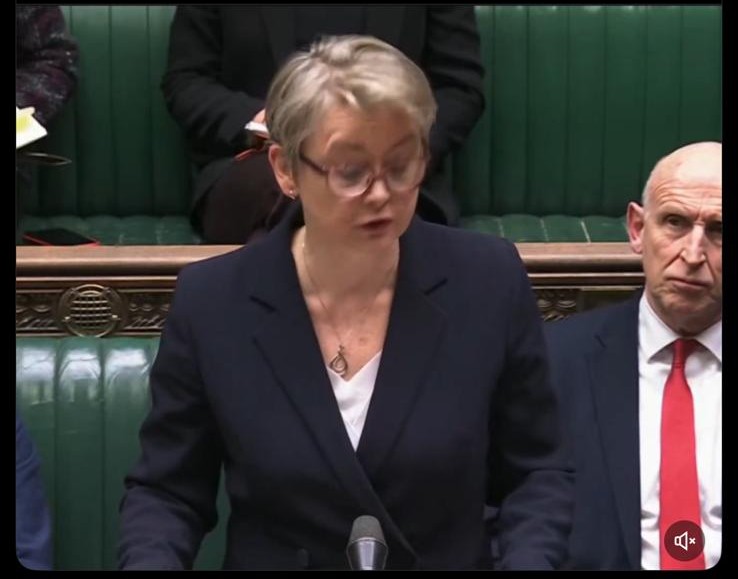
In London, the line was crisp. UK Foreign Secretary Yvette Cooper rebuked Donald Trump’s talk of Greenland by insisting the island’s future belongs “to the Greenlanders and Danes and no one else.” It sounded like the Europe that lectures the world about sovereignty.
Then the map slid south and the moral confidence thinned. Faced with Trump’s audacious intervention to force regime change in Venezuela, many European leaders have spoken as if the problem were awkward timing, not a broken norm. They can call Nicolás Maduro illegitimate. Yet they struggle to say the matching sentence: that foreign military action, however tempting, violates the rules meant to protect sovereign states.
This is hypocrisy in plain daylight: self-determination for Greenland, conditional sovereignty for Venezuela. In Latin America, conditional sovereignty has a long shadow. It arrives as “temporary” measures that become permanent leverage; as “transitions” designed elsewhere; as the quiet assumption that political rights can wait until the powerful are satisfied. For Venezuelans who have endured repression and scarcity, that is not a nuance—it is a warning.
Europe’s own rhetoric makes the hedge harder to defend. Emmanuel Macron, Keir Starmer, and Ursula von der Leyen have referenced international law while making clear they shed no tears for Maduro’s fall. But references are not condemnations. When leaders cite the law without naming the violation, it reads like a disclaimer—words chosen to preserve alliances, not norms.
Others have turned ambiguity into convenience. Germany’s Friedrich Merz spoke about “looking into” legality, as if cross-border regime change were a puzzle. Italy’s Giorgia Meloni framed intervention as “legitimate” self-defense against narco-trafficking—a rationale that, if accepted, would let any strong state invade any weaker one by citing crime.
Europe’s history makes the selectivity hard to miss. From Algeria to the Congo, “security” and “order” once justified control, and that reflex lingers when Latin America is treated as a problem to be managed, not a partner to respect.
There is also a geography of empathy. Greenland is framed as Europe’s frontier, so outrage comes easily. Venezuela is framed as distant disorder, even as its collapse has pushed millions across the region. Distance helps leaders trade principle for convenience, year after year.
When Fear of Trump Becomes Policy
The standard excuse is security. Condemn Trump too loudly, the argument goes, and he may retaliate: pull US forces from Europe or further weaken support for Ukraine. Yet the same text points to a minor US troop withdrawal from Romania and signals that NATO allies should expect a significant pullout by next year. Silence has not purchased stability; it has trained Europe to bargain with itself.
On Ukraine, the bargain looks even shakier. The account describes Trump humiliating Volodymyr Zelenskyy at the White House last February, suspending assistance, welcoming Vladimir Putin in Alaska, and floating a 28-point plan later revised into a 20-point version that leaned toward Ukrainian capitulation. If Europe believes restraint on Venezuela buys reliable protection, it is mistaking deference for influence.
And when principles are negotiable, dependency becomes a posture. Condemning Trump on Greenland while hedging on Venezuela signals that Europe’s courage stops at its own borders. It tells Latin Americans that the “rules-based order” is, in practice, a regional privilege.
The Colonial Shortcut That Boomerangs
There is also a motive Latin America recognizes instantly: resources. Venezuela’s ties to Putin’s Russia make Maduro’s fall attractive to Europe. A US-driven transition could raise production, lower prices, and drain the Kremlin’s war machine. Even if that is true, the method matters. Treating Venezuela as an energy valve repeats a colonial logic—extract value first, justify later.
That is why Europe’s passion for Greenland can ring hollow in Caracas, Bogotá, or Mexico City. It implies colonialism is unacceptable only when it threatens a European territory. When the target is Latin American, many European leaders can live with a quasi-protectorate, so long as it is dressed as “transition” and sold as security.
Worse, selective outrage helps build the world Europe claims to fear. Trump’s “Donroe doctrine” is a blueprint for spheres of influence. If Europe tolerates regime change by force in the Americas, it weakens its own argument against domination in Ukraine, Georgia, or Moldova. It normalizes the law of the jungle.
A principled position is not complicated. Europe can denounce Maduro and denounce the act used to remove him. It can defend Greenland’s right to decide and demand the same respect for Venezuelans. Anything less is not prudence. It is hypocrisy—strategic, shameless, and self-defeating.
Also Read: Latin America Under Trump 2025: Ports, Prisons, and Tariffs Rewrite Regional Politics