Venezuela Was the Test Case. Could Cuba and Iran Be Trump’s Next Target
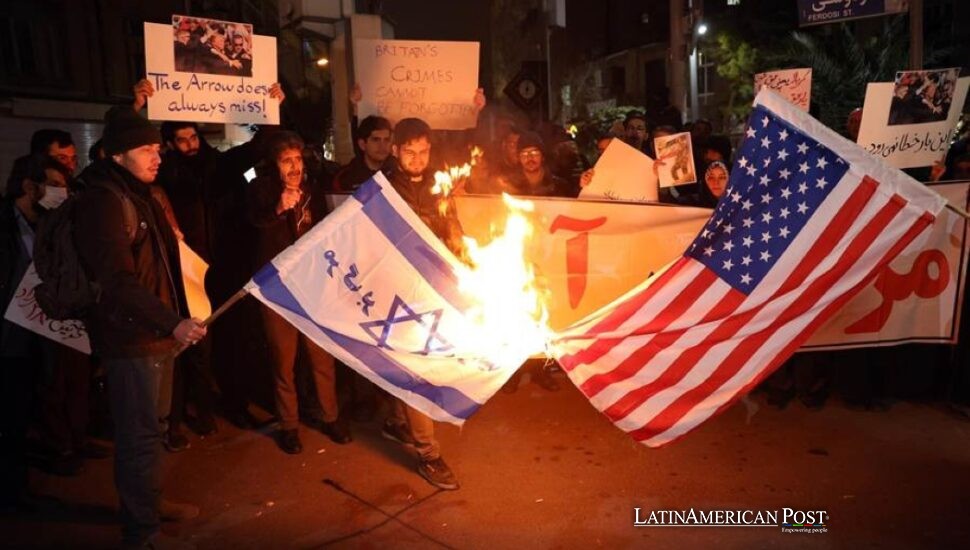
Two weeks after Trump’s January 3 raid in Venezuela, the world is reading Caracas like an omen. As protests rage in Iran, the question tightens: could Tehran face a similar sudden “decapitation” play, or a quieter oil-for-power bargain?
A Raid That Became a Global Forecast
History is moving so fast that last week already feels like a precedent. With protests against the Iranian regime continuing amid what the text describes as hideous violence, potentially thousands of demonstrators killed, observers are looking for signals in unexpected places. They are studying President Donald Trump’s gambit in Venezuela this month the way coastal towns study the sea: not because it tells them everything, but because it tells them something about the next wave.
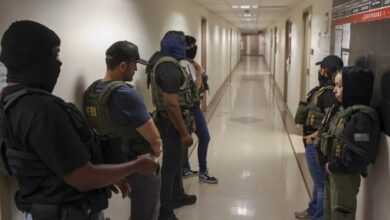
On January 3, Trump ordered what the text calls a brazen raid. U.S. Special Forces captured Venezuelan President Nicolás Maduro and whisked him away to detention in New York, effectively ending his thirteen years in power. The move landed like a geopolitical bombshell, framed here as the most concrete expression of Trump’s desire for hemispheric domination, and it sent ripples beyond Latin America, as far as Greenland and Iran. In a region with extended memory, the shock wasn’t only that Washington acted. Still, how decisively it did so: one night, one operation, a leader removed, a new reality imposed before most people had even read the headlines.
Then came the rhetoric that turns pressure into theater. Trump reiterated his support for an uprising on Tuesday, urging anti-government protests to “take over” state institutions while insisting “help is on its way.” Even without a public invasion plan, the specter of U.S. military action looms, and looming is often enough. It changes what protesters expect. It changes what regimes fear. It changes what diplomats whisper in corridors while microphones still carry defiance to the public.
There are apparent differences between the political circumstances in Venezuela and Iran, as well as between the United States’ room to maneuver in each. But the text points to a common throughline: Trump’s eagerness to impose his will abroad, even in defiance of international law and legislative checks at home. For Latin America, that is not a theoretical debate. It is a lived history in which “sovereignty” often functions like a word on paper, beautiful, official, and easily ignored when power decides that speed matters more than process.
The Caracas Endgame and Tehran’s Dilemma
If Caracas became a signal, it also became a warning, especially for Iran’s protesters. The text suggests that after the raid, Trump began working with remnants of Maduro’s regime while sidelining Venezuela’s pro-democracy opposition. That detail matters because it hints at an endgame where the public story is liberation, but the operational story is control. In Latin America, many have seen this pattern before: the promise of democracy used as a door, the bargain for resources used as the room beyond it.
Strategically, the Maduro case is relevant less as a template than as a message about risk. It suggests a United States willing to act decisively against leaders already criminalized and sanctioned, rather than allowing standoffs to persist under the assumption that fear of escalation will keep everyone frozen in place. In this reading, the old logic, which doesn’t provoke because it might spiral, no longer guarantees restraint from Washington. The spiral becomes a tool, not a deterrent.
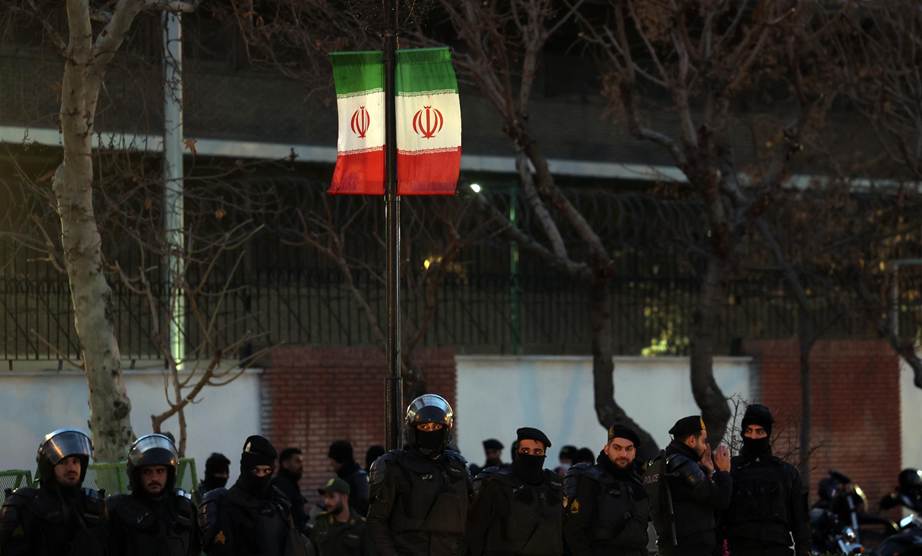
That is why, as the text frames it, Tehran’s streets are haunted not only by domestic repression but by external possibility. People are watching to see whether the United States treats Iran as a regime to be pressured into a deal, or as a target for a dramatic intervention meant to end the question in one sharp night.
Still, the text emphasizes uncertainty. It’s far from clear whether Trump will opt for “kinetic” action against Iran. Regional Arab allies are reportedly skittish about intervention. Analysts see a regime that has lost legitimacy and a popular revolt demanding its overthrow, but the theocratic establishment and its military apparatus remain too entrenched to be easily dislodged. A decapitation strike can remove a man; it cannot remove a system that has fused itself to security services, courts, patronage networks, and ideology.
The portrait of Trump here is of a leader who enjoys brief, decisive military strikes, his removal of Maduro, or the blitz the United States carried out on Iranian nuclear facilities last summer, but who is less keen on complicated, protracted engagements. The text insists on a complex reality: the full defeat of the Iranian regime cannot come from airstrikes alone. Which raises the question that protesters feel in their bones: if “help” arrives, what exactly is it meant to help accomplish, and for whom?
Oil, Sanctions, and the Next Domino
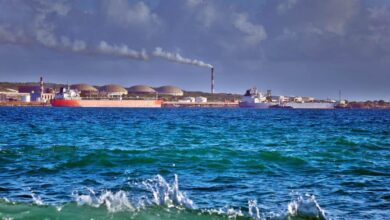
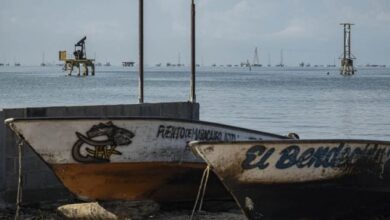
The most revealing part of the story is not the raid but the bargain it may have enabled. According to the text, the Trump administration has reached an accommodation with Maduro’s interim successor, former vice president Delcy Rodriguez, in exchange for U.S. control over Venezuelan oil exports. The logic is chilling in its simplicity: remove the symbol, keep the machinery, secure the resource.
That is where a Venezuela-style scenario gains resonance for Iran. Iran is oil-rich, isolated, chafing under sanctions, and reckoning with economic disaster at home. In that context, the text suggests a similar arrangement could tempt both sides: relief in exchange for concessions, stability purchased at the cost of sovereignty. “To stabilize the system, it must address the sanctions regime, which in turn requires engagement with Washington,” the text argues, before sketching a possible pathway: Iran’s collective leadership could marginalize or remove Ali Khamenei, open negotiations with Trump, invite U.S. oil companies back into Iran, and secure sanctions relief sufficient to stabilize the economy.
It is a scenario built on pressure, not goodwill. And the text offers reasons it may fail. Khamenei may be aging and “eminently expendable,” but the power structure he presides over is trapped by complicity and by a foundational reliance on anti-Americanism. The apparatchiks understand they go down together, the text suggests, which helps explain why Iran’s once-vaunted reformists have remained silent through the latest crackdown. A system that has trained itself to survive by declaring America the enemy cannot easily pivot to survival through partnership with America without risking internal collapse.
The text concludes that a Venezuela-style outcome is not “plausible” in the short term. Trump seems more interested in intensifying pressure as the Iranian regime weakens each day protests continue. The regime, in this telling, is not yet willing to make the internal changes that would induce Trump to seek accommodation. But everything is fluid, realities shifting by the day, an ominous phrase when people are dying in the streets and leaders are making decisions in rooms the public never sees.
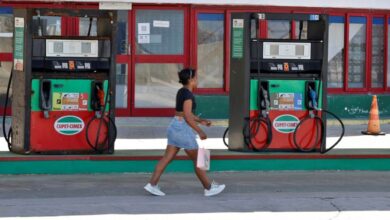
And beyond Iran, the precedent radiates through the hemisphere. Trump’s boosters are already looking for the next stage. “Cuba may be next,” the text warns. The Cuban government is under pressure from economic mismanagement, and the strain grows as Venezuelan oil is cut off. If Caracas becomes a model, Havana becomes a test: can the same blend of coercion and bargain be exported again?
For Latin America, the question “Could Iran go the way of Venezuela?” carries a second, quieter echo: if Washington is comfortable reshaping Caracas at speed, who in the region can truly assume they are not next, especially when oil, sanctions, and spectacle become the tools of policy.
Also Read: Brazil’s Lula Walks a Tightrope After Maduro’s Sudden Capture Abroad