Why Trump Spares Nicaragua’s Ortega — Murillo the Drug Cooperation Factor
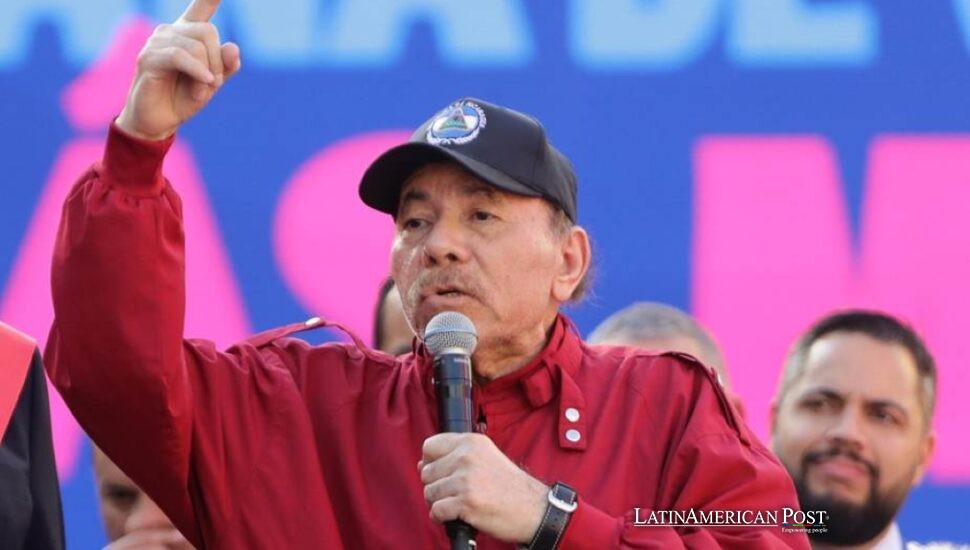
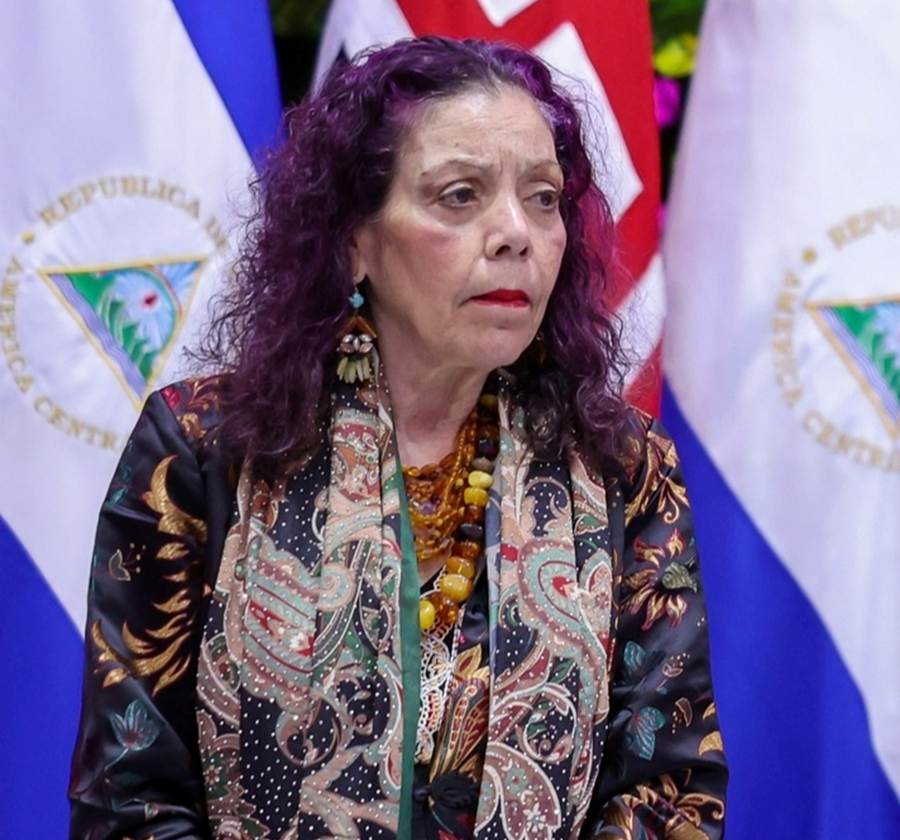
Nicaragua has two co-presidents, Daniel Ortega and Rosario Murillo, and a reputation that once placed it in Washington’s “tyranny” file. Yet in Trump’s second term, Managua stays oddly off the hit list, helped, insiders say, by quiet drug cooperation.
The Dictatorship That Doesn’t Make Noise in Washington
In the Western Hemisphere under President Donald Trump, there are countries he names as enemies in a speech: Venezuela, Mexico with its cartels, and the symbolic obsession of Cuba. And then there is Nicaragua, a place that should fit every category of condemnation, and yet, for now, sits in the blind spot. That absence is not a compliment to Managua. It is a lesson in how modern authoritarianism survives: not by becoming kinder, but by becoming convenient.
Nicaragua is governed by a married couple who have turned the phrase “power couple” into a state structure. Daniel Ortega and Rosario Murillo, now co-presidents of a nation of roughly seven million, have spent years rigging elections, bending institutions into personal property, and crushing dissent until the word “totalitarian” feels less like rhetoric than a description of air. The opposition has been exiled, jailed, or suffocated into silence. The country’s slide has been so stark that even the first Trump administration once grouped it with Cuba and Venezuela as a “troika of tyranny.”
And yet the second Trump administration has barely mentioned it. The silence has produced a darker question: what does a dictatorship have to do to avoid being targeted by a White House that claims it stands against oppression, especially when that same White House has shown it can move fast and hard elsewhere? The answers offered by current and former officials and activists converge into a blunt thesis: Trump’s priorities aren’t built around human rights so much as material interests, domestic politics, and the management of threats that touch U.S. soil.
“The lesson from Nicaragua is: Don’t matter too much, don’t embarrass Washington, and don’t become a domestic political issue,” said Juan Gonzalez, a former Latin America aide to President Joe Biden. “For an administration that doesn’t care about democracy or human rights, that’s an effective survival strategy for authoritarians.” It is an ugly kind of wisdom, but Latin America has seen it before: regimes survive not by being loved, but by being tolerable to the world’s most significant powers.
Some Nicaraguan opposition leaders still hold onto optimism because Trump is not consistent, even when he claims to be principled. He has threatened to bomb Iran, saying he stands with protesters fighting an unjust regime. But as Felix Maradiaga, a Nicaraguan politician in exile, put it: “The fact that Nicaragua is not at the center of the current conversation doesn’t mean that Nicaragua is irrelevant. It means that the geopolitical interests of the U.S. right now are at a different place.”
Why Managua Stays Off the Radar
If you want to understand how Ortega and Murillo have kept a low profile in Trump’s worldview, you have to look at what Nicaragua lacks. Unlike Venezuela, it is not a significant oil producer, the resource that the text describes as the one Trump covets most. It has gold, but not enough to make it irresistible. It is not a canal state like Panama, the kind of place that can be framed as “strategic” in a single headline. And it is not, at least comparatively, a significant source of migrants to the United States, especially now that Trump has essentially shut down the border.
That last point matters more than many want to admit. In American politics, a crisis becomes real when it becomes domestic. Cuba has been a domestic political flashpoint for decades because a politically powerful Cuban American community can move votes in key places. The Nicaraguan American community, the text notes, cannot do that at scale. In the cold mathematics of attention, suffering that doesn’t translate into electoral pressure becomes easier to ignore.
This is not to say the regime is harmless. Hundreds of thousands of Nicaraguans have fled poverty and repression, some to the United States. The government has strengthened ties with Russia, China, and other U.S. adversaries, while maintaining rocky relations with Washington even as it participates in a free trade agreement. U.S. sanctions, tariffs, and penalties have landed on Managua for eroding democracy and deepening repression. The regime has not buckled. Nicaraguan officials did not respond to requests for comment in the original reporting.
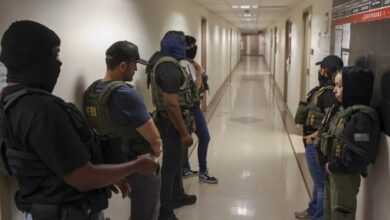
The more revealing possibility is that Managua has figured out how to be useful. A White House official, speaking anonymously about a sensitive national security matter, said Nicaragua is cooperating with the U.S. to stop drug trafficking and fight criminal elements. “Nicaragua is cooperating with us to stop drug trafficking and fight criminal elements in their territory,” the official said.
That one sentence functions like a shield. In Latin America, “anti-drug cooperation” has long been the currency with which governments purchase tolerance. It can be genuine, performative, or selective, but it is legible to Washington. And if it is readable, it can be traded for quiet.
The Drug Shield and the Dictator’s Survival Manual
It isn’t easy to prove the depth of this cooperation. The text notes that there were reports last year of tensions between the two countries, and a federal report in March said the U.S. would terminate Drug Enforcement Administration operations in Nicaragua in 2025, partly due to a lack of cooperation from Nicaraguan agencies. The DEA did not respond when asked if that plan proceeded. But the text suggests that the regime may have become more helpful recently. Cooperation has waxed and waned over the years.
What matters politically is that Nicaragua is not seen as a major cartel hub compared to countries that regularly draw Trump’s ire, such as Mexico. And the opposition’s hope that U.S. legal moves against Nicolás Maduro would expose narcotrafficking links between Managua and Caracas has not yet materialized in a way that forces Washington’s hand. A 2020 U.S. indictment of Maduro mentioned Nicaragua, but the latest indictment unveiled after Maduro’s January 3 capture does not. When pressed about why, the White House official insisted “both indictments are valid,” while a Department of Justice spokesperson declined to comment.
Meanwhile, Ortega and Murillo appear to be practicing a careful discipline: prove anti-imperialist credentials without personally antagonizing Trump. They may have learned from watching how hard Trump came down on Colombia’s president for taunting him. The result is a style of dictatorship that performs defiance but avoids a direct insult to the man who decides where the spotlight falls.
The regime’s moves can look contradictory, even surreal. It reportedly detained around sixty people for celebrating Maduro’s capture, while also reportedly freeing “tens” of prisoners, including critics, after the U.S. embassy urged Nicaragua to release political prisoners as Venezuela had. The government, the text notes, framed the releases instead as commemoration of nineteen years of its rule, charity presented as triumph.
Critics warn that ignoring Managua carries long-term risks. Alex Gray, a former senior National Security Council official in the first Trump administration, argued the U.S. should care more about Nicaragua’s ties to Russia and China. These ties could deepen if Washington looks away. The White House official said the administration is monitoring Nicaragua’s cooperation with U.S. rivals “very closely.” But even that may not be enough to elevate Nicaragua’s priority, given Trump’s mixed record confronting Moscow and Beijing, and given Nicaragua’s limited strategic weight compared to larger flashpoints.
For Nicaraguan opposition activists, many now in exile, the pattern is painful: the world notices them most when they become a bargaining chip. In 2023, the regime put 222 imprisoned opposition activists on a plane to the United States and stripped them of citizenship, leaving many effectively stateless and now vulnerable to Trump’s immigration crackdown. Even the drama of Maduro’s fall offers limited comfort, because Trump left much of Maduro’s machinery in place, suggesting stability matters more to him than justice.
Still, opposition figures sense pressure building. Juan Sebastian Chamorro, a Nicaraguan politician forced out of the country, argued that shocks like Maduro’s removal put dictators on alert. “When you get this kind of pressure, there are things that get in motion,” he said. “They are feeling the heat.”
In Managua, heat does not always mean collapse. Sometimes it means adaptation: cooperate just enough on drugs, stay uninteresting on resources, avoid becoming a U.S. domestic obsession, and keep repression running quietly at home. It is a grim survival manual, and, for now, Ortega and Murillo appear to be following it line by line.
This article is adapted from an original report published by Politico and written by Nahal Toosi.