Colombian Startups Promise a New Latin America but Need Roots
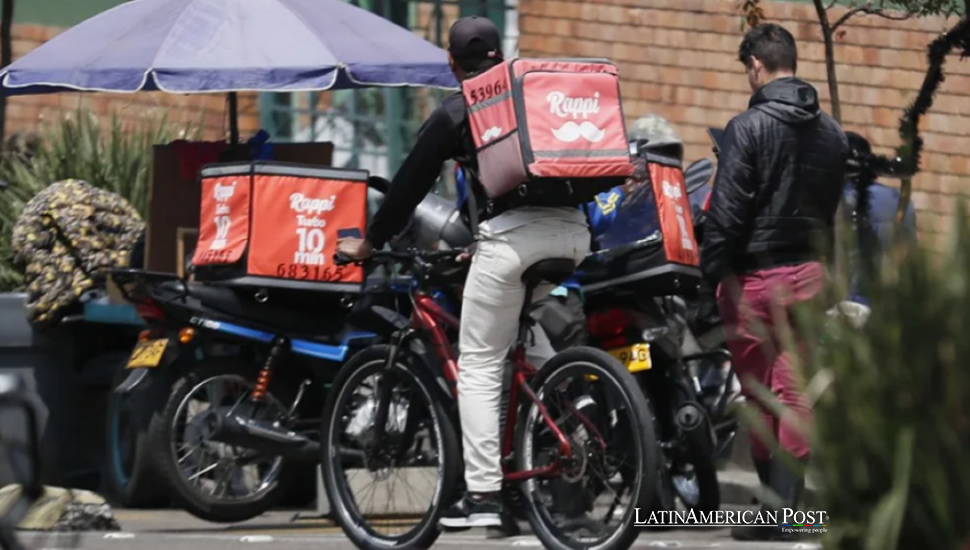
Rappi’s orange bikes tell a bigger story than convenience in Bogotá. They mark Colombia’s emergence as a tech symbol for a region chasing growth and credibility while exposing Latin America’s old weakness: too little local capital for its future.
A Country Rewriting Its Own Reputation
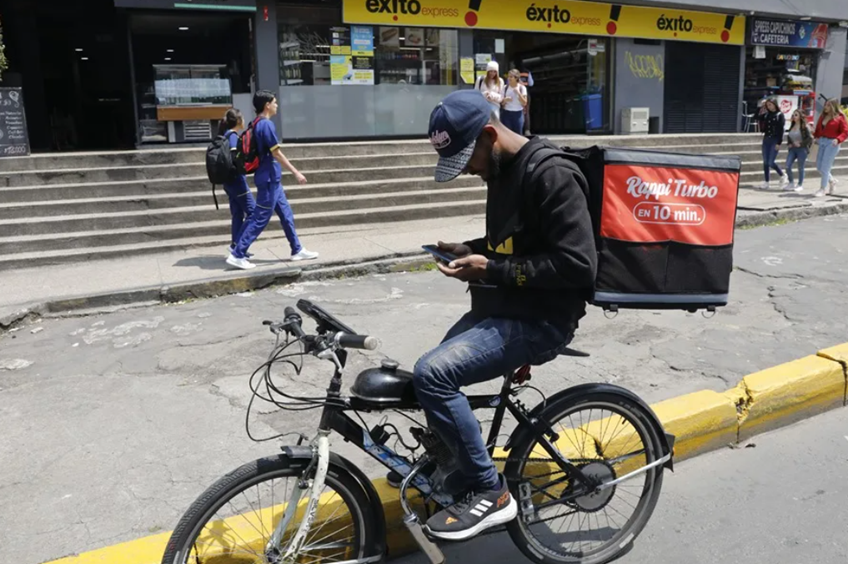
Visit Bogotá, and the first thing that strikes you is movement. Not abstract growth or the language of policy decks, but movement you can actually see. Orange Rappi bags weave through traffic. Phones light up. Orders arrive. The city inspires a new kind of confidence in the public. For years, Colombia was often framed abroad by danger, insurgency, and cautionary headlines. Now, in reporting and interviews credited by the BBC, it appears as something else too: a business hub, a startup laboratory, a place where investors, tourists, immigrants, and founders try to imagine a different future.
That shift matters far beyond Colombia.
Rappi, the on-demand delivery platform born in Colombia, has become the emblem of this transformation. The company is described as the country’s most successful tech startup, a unicorn valued at over $5bn, with more than 35 million active monthly users. Those numbers matter because they give Latin America something it has often struggled to produce at scale: a homegrown technology success story big enough to alter the region’s self-image. Not merely a local app doing well, but a company that tells young founders from Bogotá to Mexico and Peru that regional ambition is not a fantasy.
The notes point to a deeper political meaning. Colombia’s success signals a country shaking off an older reputation, especially since the 2016 Peace Accord. That line deserves to be read slowly. Peace not only changes security. It changes imagination. It changes whether capital lingers or flees, whether talent stays or leaves, and whether a city can market itself not just as survivable but as buildable. In that sense, Colombia’s startup story is also part of a post-conflict story or at least a post-conflict aspiration.
The BBC quotes Maria Peñaranda of KPMG Colombia, who says the country ranks second among Latin America’s best startup ecosystems, behind only Brazil. KPMG counted 2,100 startups in Colombia last year, up 24% from the year before. Almost 80% are early-stage. That last figure says a lot. Colombia is not simply celebrating a few famous winners. It is producing a churn of new attempts, a culture of trying, a generation of founders less willing to assume that innovation happens somewhere else.
And yet Latin AmerLatin America has seen moments like this before, when optimism runs ahead of structure. That is where the Colombian case becomes most useful as a regional mirror.
The Boom Is Real, but So Is the Fragility
Foodology offers a good example of both promise and pressure. Founded in Bogotá in 2019, it built a business around virtual restaurants and dark kitchens, raised over $60m, employs more than 800 people, and says it is fully profitable. It represents the kind of practical innovation Latin America often does well when conditions allow: not abstract disruption for its own sake, but a system designed around urban demand, software coordination, and speed.
Daniela Izquierdo, quoted by the BBC, explains that the company built software to manage inventory and menu consistency across thousands of digital storefronts connected to a single kitchen. She says they now license that software. Something is revealing in that trajectory. The company began by solving an everyday problem around food delivery, then moved into the less visible but more durable business of infrastructure and systems. That is how ecosystems mature.
Izquierdo also says something familiar across Latin America. Colombia is not a huge market on its own, so founders usually start there and then expand to Mexico or Brazil. Foodology did exactly that, moving into Mexico and Peru. This is not just a growth strategy. It is a regional condition. In Latin America, many companies must think across borders early because no single national market, outside the largest ones, offers enough scale on its own. That creates a culture of outward ambition, but also a chronic dependence on securing fresh capital and expanding into new terrain.
The BBC reporting makes clear this is where the story darkens. The boom years drew global attention, especially after SoftBank launched an innovation fund for Latin America in 2019. Daniel Vásquez, a managing partner at Actions Capital based in Colombia, says the move changed the dynamic and created a positive news cycle. But he also says many investments failed, which prompted other investors to retreat. Izquierdo is even more direct. Latin America had a big boom from 2021 to 2022, she says, but in recent years, the market has not been great for the region. When the U.S. stock market fell and global venture funding slowed, emerging markets were among the first pushed aside.
That sentence alone explains much about Latin America’s place in the world economy. The region can innovate, build, hire, and expand. It can produce companies like Rappi, Foodology, Habi, Yuno, and Erco Energy. But it still often depends on confidence generated elsewhere. When money tightens in global markets, the consequences arrive quickly in Bogotá, Medellín, Mexico, Peru, Brazil, and beyond.

The Real Test Is Who Believes First
That is why this Colombian moment matters politically for Latin America. It is not only about talent. Everyone in the notes agrees that the talent is there. It is not only about demand. The market is there too. It is about whether the region can learn to believe in itself materially, not just in rhetoric.
Vásquez says that if you want to build a venture-backed company in Colombia, you often have to look outside the country because there are few venture capital firms there. He has seen good companies fail because they burn money and cannot find the next round to carry them to profitability. He argues that local institutions, businesses, and families need to invest more in technology, and that Latin America invests very little in research and development. When outside investors see locals under-investing, he says, they read that as a sign of limited opportunity, under the optimism. The region wants the prestige of innovation, jobs, efficiency, a modern urban image, and the arrival of tourists and entrepreneurs in Bogotá and Medellín. But prestige is not a funding model. If local wealth remains cautious, if institutions remain timid, if families with capital prefer safer old assets to new technological risk, then Latin America will keep producing startup stories that depend too heavily on foreign cycles and foreign mood.
Habi’s story sits inside that contradiction. Brynne McNulty Rojas told the BBC that when the company set out to raise money in 2019, there was more excitement and access to capital than in previous years. Habi went on to achieve unicorn status after a $200m funding round. Yet even she says she would love to get more local investors because it helps get things done on the ground.
That phrase matters on the ground. It reminds you that economies are not built from pitch decks alone. They are built from proximity, trust, patience, and institutions willing to put their own money behind their own future.
So what does Colombia mean for Latin America right now? It means the region has proof that reinvention is possible. A country once trapped in older perceptions can become a symbol of startup dynamism, urban confidence, and talent recycling. But it also means the next stage cannot rely solely on applause. The orange bags flying through Bogotá are real. The energy is real. The founders are real. The question now is whether Latin America will finally fund its own imagination before the next global chill tells it to wait again.
Also Read: Why Gen Z Is Ditching Traditional Accounts for Crypto Wallets