Panama Odebrecht Trial Nears Verdict as Martinelli Seeks Final Word
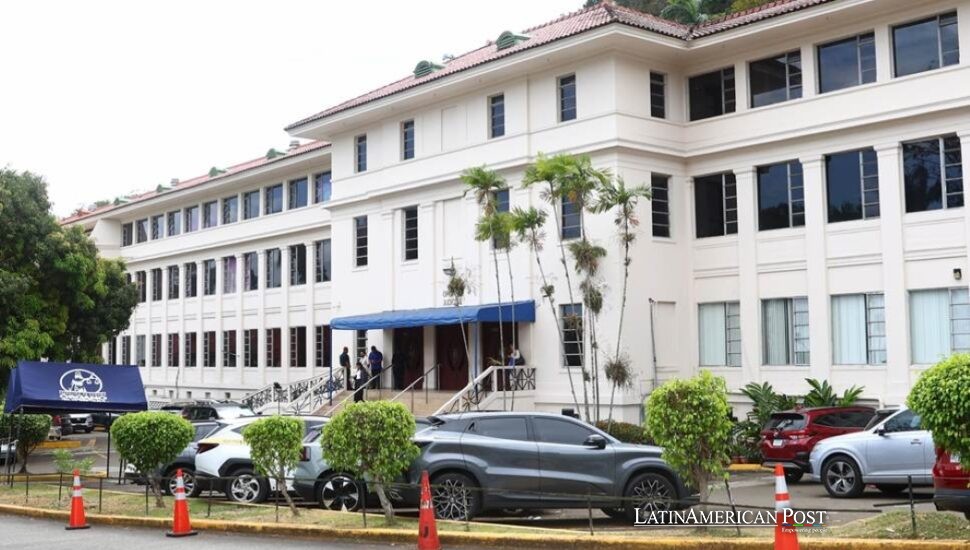
Panama’s Odebrecht corruption trial is entering its final phase this week, with closing arguments due to wrap by February 13 and judges facing a legal 30-day deadline to rule. Former president Ricardo Martinelli, who is seeking asylum in Colombia, may speak virtually.
Outside the Court, Time Feels Like a Defendant Too
Reporters gathered outside the tribunal as lawyers moved in and out, pausing long enough to shape a day’s narrative into a few careful lines. It is the kind of scene Panama has learned to recognize in big corruption cases: the slow churn of procedure, the public appetite for clarity, the steady sense that time itself is on trial.
This is the final stretch of the Odebrecht case, the country’s largest corruption scandal, centered on bribes paid to secure public works and on contested political campaign donations. The hearing, postponed six times since 2023, started on January 12 with a documentary reading of a 2022 order calling the case to trial, followed by expert evidence and witness testimony presented by prosecutors and defense attorneys.
What comes now is the compressed part. Final arguments are scheduled to begin on Wednesday and conclude on Friday, February 13. After that, the court is expected to move into a deliberation period of up to 30 days to issue a sentence, as the law provides. The timeline has been laid out in court, and it arrives with a familiar mix of promise and doubt.
The trouble is that courtroom deadlines do not always feel like deadlines in public life. A trial can be “in its final phase” and still leave people waiting, still leave the country guessing about what accountability looks like when it finally lands, if it lands.
For former president Ricardo Martinelli, the ending also has a logistical twist. He has participated virtually because he has been in asylum in Colombia since May, after spending more than a year sheltered in Nicaragua’s embassy in Panama to avoid prison following a conviction of more than 10 years for money laundering in the New Business case. That case involved the purchase of a media conglomerate with public funds, according to the notes.
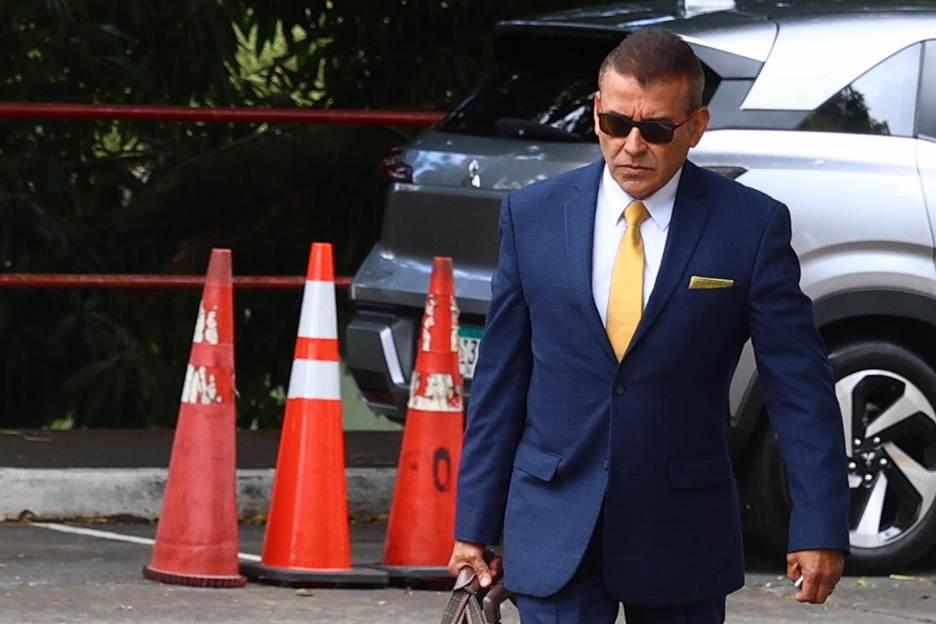
His defense has been measuring the week, too, not only by court dates but by minutes. Carlos Carrillo, part of Martinelli’s legal team, framed a question many observers are watching for, because it is both symbolic and procedural: whether Martinelli might speak as this phase closes. “I do not rule out that Ricardo Martinelli speaks, but as of today it has not been decided,” he told EFE. He added that he sees it as difficult for the former president to have the opportunity to speak in the defense closing, though it remains what is anticipated.
Later, outside the courthouse, Carrillo said he did not believe there would be enough time to conclude this phase by Friday, an assessment that captures the mood that often settles over long-delayed cases. The calendar says one thing. The pace says another.
A Case That Stretched, Then Doubled Back Into Politics
The Odebrecht investigation in Panama opened in 2015, was archived, then reopened in 2017 after the company admitted in the United States that it had paid $788 million in bribes across a dozen countries, including Panama. The investigation culminated in October 2018. Now, in this trial, prosecutors say they are pursuing 23 people for alleged links to money laundering, part of a web that brought bribes into public contracting and, according to the notes, into political life through questionable campaign donations.
Odebrecht paid more than $80 million in Panama to officials and private individuals, according to confessions cited in the notes from André Rabello, who directed the Brazilian construction company’s operations in the country for several years.
Martinelli’s personal orbit intersects the case in a way that makes the courtroom feel bigger than it is. Two of his sons, Ricardo Alberto and Luis Enrique Martinelli Linares, have already served prison time in the United States for Odebrecht after confessing in federal court that they participated in bribe payments totaling $28 million, made by and under the direction of the construction company. Their defense argued that those actions were carried out on their father’s orders, according to the notes.
But their Panama chapter is not being handled in the same venue. The brothers and former president Juan Carlos Varela are set to face the Odebrecht case in Panama before the Supreme Court, as members of the Central American Parliament (Parlacen), which grants them special jurisdiction. In a country testing the strength of its institutions, special jurisdiction is never just a technicality. It is part of the political weather.
What this does is split public expectations across tracks. One courtroom moves toward a first-instance ruling. Another set of figures is routed elsewhere. The story becomes less about one verdict and more about how a state distributes responsibility through its legal architecture.
A Verdict Window, Then Appeals, Then a Longer Wait
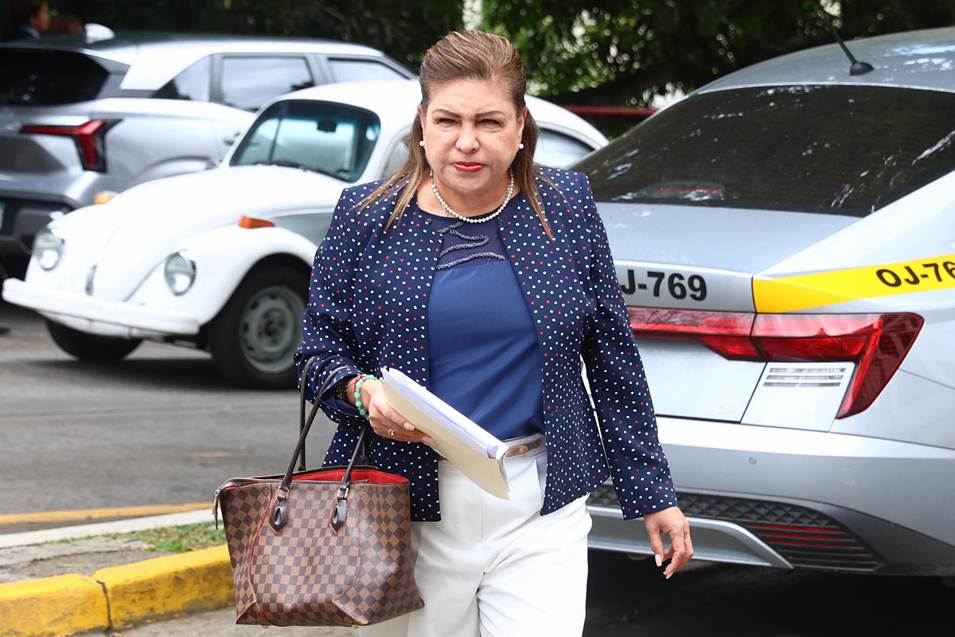
The final sentence in this case will not necessarily be the final sentence for Panama. Rodrigo Noriega, a Panamanian lawyer and analyst, said the evidence he has seen suggests a mixed outcome. “It seems to me that there will be convictions, but there will also be acquittals,” he told EFE.
He also pointed to the distance between a first ruling and a definitive one. “We will know that in April or May perhaps when the first-instance ruling comes,” he told EFE, adding that appeals are expected and that the definitive outcome could arrive as late as the end of 2027. In other words, a 30-day deliberation period can still open onto years.
That long horizon is not an abstraction for people who have watched the case reset itself. The hearing has already carried the weight of postponements. And it has carried the weight of an international dimension that is now narrower than it once was.
On January 26, the trial entered its third week, with the evidentiary phase underway, and prosecutors announced the exclusion of five Brazilian witnesses. Brazil, according to the notes, has suspended cooperation with Panamanian authorities in the Odebrecht case because it said Panama did not guarantee it would not use evidence annulled in Brazil. That position was cited by Brazil’s Justice Ministry in January 2025.
The wager here is simple and sharp. Panama wants a corruption case to deliver clarity and consequence. But the mechanics of justice, including international cooperation, specialized jurisdictions, and the long appeal process, can stretch that clarity thin.
Inside the courthouse, the record is being built line by line. Outside, people keep doing what they do when a country is waiting on its institutions: they check their phones, they trade timelines, they listen for any sign that this time the ending will not slip away.
Also Read: Latin Recycling Sisters Turn Scrap Into Power and Neighborhood Education