Cuba Rides a Tunnel Bus Through Its Deepening Energy Squeeze
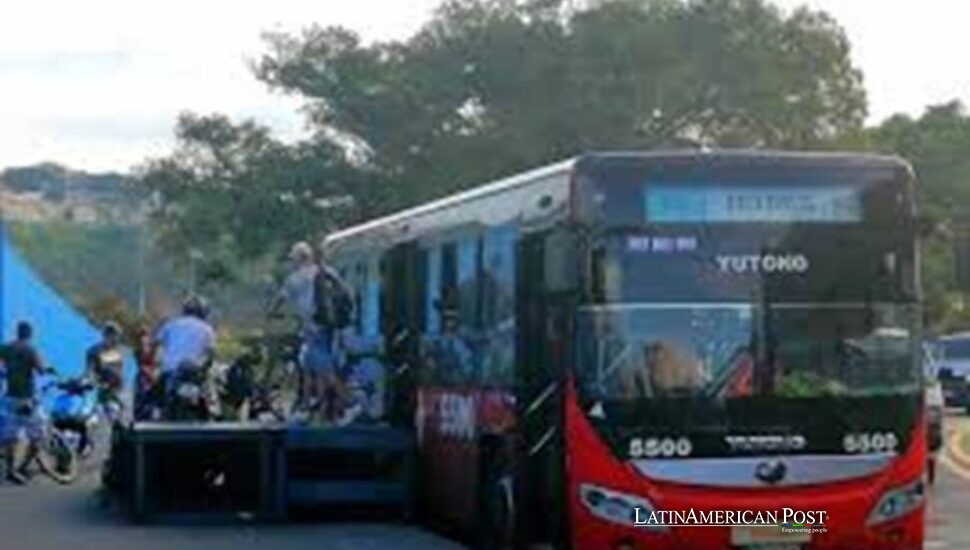
Havana’s Ciclobús has become a lifeline as fuel rationing empties streets of cars and pushes workers onto bicycles and electric scooters, turning a short underground ride into one of Cuba’s clearest portraits of scarcity, adaptation, and stubborn urban survival today.
A Short Route Carrying a Long Crisis
On a sweltering afternoon in Havana, the line at the entrance to the bay tunnel looked almost modest at first glance. Dozens of commuters waited in tidy formation with bicycles, scooters, and electric motorcycles, each person standing beside the machine that now makes daily life possible. Then the Ciclobús arrived, and the scene sharpened into something larger than a commute. As the Associated Press reports, this diesel-powered bus, specially fitted to carry both passengers and their rides, has become one of the most revealing symbols of Cuba’s deepest energy crisis in decades.
The bus itself is practical, even a little rough in its honesty. It can take around sixty travelers and their vehicles. Part of it has seats, but half the metallic frame is open cargo space. Riders enter by ramp, remain beside their bicycles or motorcycles for the brief journey, and grip the bars mounted on the walls to steady themselves. The trip covers only 3 kilometers and takes about 15 minutes. It is, AP notes, the shortest public transportation route on the island.
But short routes can carry long stories. The tunnel links Old Havana to the eastern side of the city. That connection now matters more than ever because bicycles, motorcycles, and scooters are not allowed inside the underwater passage. Without the Ciclobús, people would have to circle the vast bay by land, taking a sixteen-kilometer detour through poorly paved industrial port zones. In ordinary times, that would be inconvenient. In a fuel-starved city where public transportation has largely stalled, it becomes punishing.
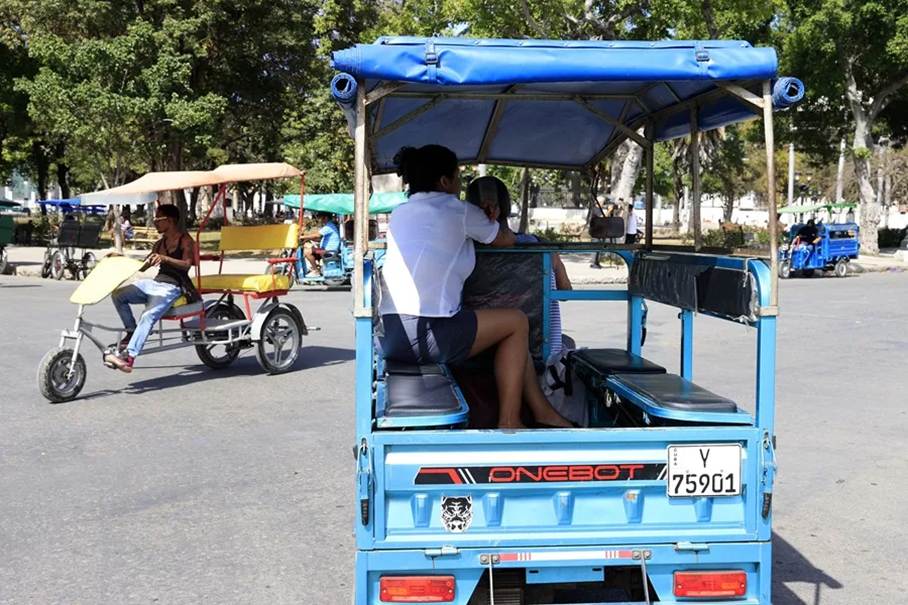
That is why the bus has grown so popular and so essential. Since January, the energy blockade imposed by U.S. President Donald Trump has forced Cuba to ration gasoline to just twenty liters per vehicle through an appointment system that can take weeks, even months. The result, as AP reports, is visible across Havana. The streets are nearly empty of cars but full of bicycles and small electric motorcycles, which have become the only workable option for thousands trying to get to work, school, or home.
The people in line are not making a political statement. They are trying to keep the day moving. Ingrid Quintana, who lives in East Havana and works in the old part of the city, told AP that she rides as her husband’s companion because he owns a bicycle. “It’s an option we have,” she said, “because there’s no public transportation and we can’t afford to pay for a private taxi, so we ride the Ciclobús.” That sentence says almost everything. In Cuba right now, mobility has become an exercise in household strategy, shared improvisation, and resignation without surrender.
The Return of Special Period Logic
What makes the Ciclobús especially charged is that it is not new. It carries as much memory as passengers.
The service emerged in the nineteen nineties during the so-called Special Period, the crisis triggered by the collapse of the Soviet Union that left the island isolated and forced then-President Fidel Castro to distribute Chinese-made bicycles among the population. Over time, as regular buses and shared taxis regained some ground, the tunnel bus lost part of its centrality. It did not disappear, but it no longer stood at the heart of Havana’s daily struggle.
Now it does again.
That return matters because it suggests Cuba is once more reaching into its old repertoire of survival. The island is reviving not only an infrastructure solution, but a social rhythm from another era of scarcity. Pedal, queue, wait, cross, continue. The Ciclobús has become less a nostalgic leftover than a working bridge between two moments in Cuban history, both shaped by isolation, shortage, and the necessity of making very little stretch very far.
There is a quiet irony in the fact that this lifeline is still diesel-powered. A city deprived of gasoline has come to rely on a single bus burning fuel to move people who can no longer rely on cars. But that irony is also the point. Cuba’s improvisations have always been layered, rarely pure, rarely elegant. The island does not solve crises with clean transitions. It survives them through hybrids, patched systems, and devices that make just enough sense to keep life from seizing up entirely.
AP reports that the Ciclobús makes enough trips to transport more than two thousand people a day. That number is modest beside the needs of an entire city, but it is large enough to show how a seemingly small piece of infrastructure can become a social hinge when everything else begins to fail. One bus. One tunnel. One narrow corridor between residence and work. In a healthier urban system, it would be a curiosity. In this one, it is a pressure valve.
What the bus also reveals is the continued centrality of the state in Cuba’s crisis management, even when the state is visibly constrained. Havana’s state-run transport company owns the Ciclobús. It is cheap, functional, and collective. That matters because in moments of scarcity, Cuba often defaults not to abundance for the few, but to rationed mechanisms that at least attempt to keep the many moving. Whether that is enough is another question. But it helps explain why an awkward old service has become newly precious.
The Price of Crossing the Bay
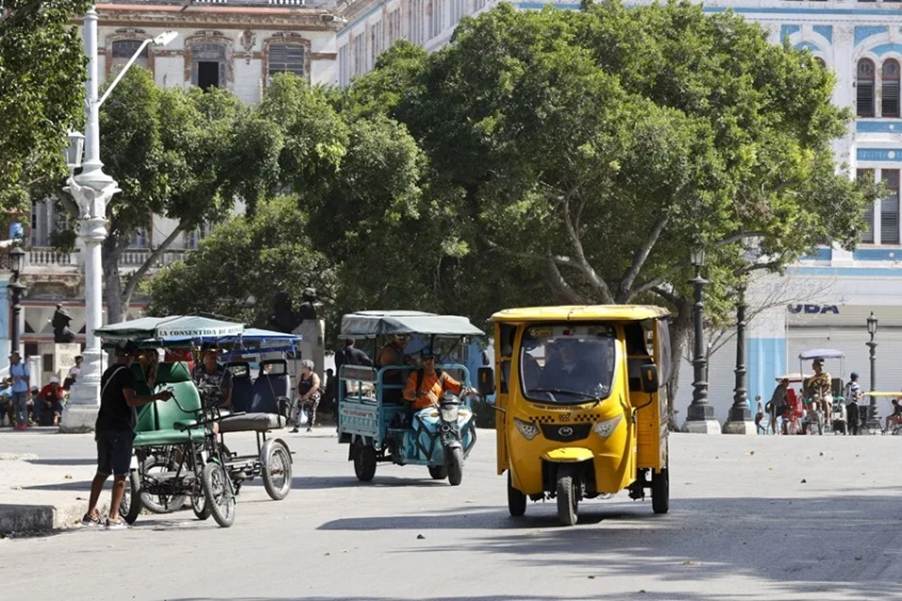
The economics of the tunnel are as revealing as its geography. The fare to board the Ciclobús ranges from two to five Cuban pesos, depending on whether the passenger is transporting a bicycle or a motorcycle. AP notes that this is only a tiny fraction of a U.S. dollar on the informal market. By contrast, a shared taxi from the eastern neighborhoods through the tunnel costs 1,000 Cuban pesos, about 2 dollars. In comparison, a Cuban worker can earn a monthly salary of 7,000 Cuban pesos, about 14 dollars.
That gap is not a detail. It is the story.
In a city where most jobs are on one side, and many workers live on the other, transportation is no longer just a matter of convenience. It is a question of who can remain economically active at all. A private taxi may still exist, but it belongs to another budget. The Ciclobús, by comparison, is the thin, affordable line that keeps many people connected to work. AP quotes thirty-two-year-old gym teacher Bárbaro Cabral, who stood gripping his bicycle as the bus filled. “Most jobs are on the other side, in the city, and that’s why we have to ride it to get across,” he said.
That is the social map in one sentence. The city center is still concentrating on work. The eastern side still concentrates on large residential areas. And between them now sits a tunnel bus carrying not just commuters, but the strained mechanics of an economy under energy siege.
There is something almost painfully humble about the scene. No grand terminal. No futuristic system. Just people holding onto their bikes in a rattling bus through a dark, underwater passage because the alternatives are too long, too expensive, or simply unavailable. Yet that humility is what gives the Ciclobús its power as an image. It shows Cuba not in spectacle, but in adaptation, not in abstraction, but in sequence. Wait for your turn. Roll the bike up the ramp. Hold the bar. Cross the dark. Get to work.
In the end, the tunnel bus is doing more than carrying bodies through Havana Bay. It is carrying a society through another episode of compression, where energy scarcity narrows movement, empties streets, and forces a city to reorganize itself around whatever still functions. The Ciclobús is not a solution to Cuba’s crisis. It is something more modest and, in its way, more revealing. It is proof that when a country runs short on fuel, it starts measuring freedom in smaller units: one bicycle, one cheap fare, one short crossing that keeps the day from falling apart.
Also Read: Venezuela Rewrites Mining Rules While Its Old Shadows Still Profit