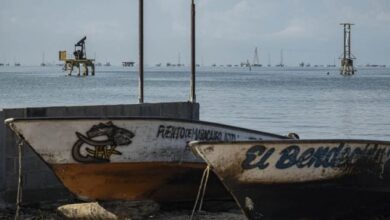
Venezuela Grounded: How Sanctions Turn Holiday Flights into Heartbreak Economics
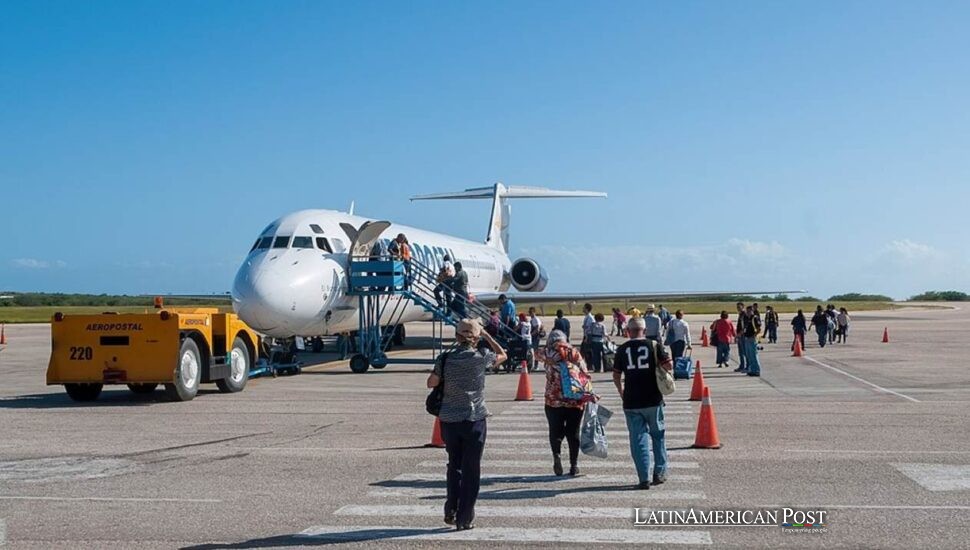
Venezuela’s skies are shrinking suddenly as U.S. pressure on Nicolás Maduro severs routes, spikes fares, and strands families from Madrid to Caracas. From canceled Christmas reunions to missing medicines, aviation becomes a frontline where geopolitics lands hardest on ordinary passengers.
When Airspace Becomes Policy
In an original report for The Wall Street Journal, Kejal Vyas frames flight chaos as the companion to louder headlines about regime change. A nation of 28 million is down to an aging fleet of about 20 commercial aircraft, operated by local airlines that rarely appear on booking engines, according to IATA. Travel agents told Vyas that carriers are rushing to reroute passengers through neighboring countries, charging steep fares for going the long way around. For families who measure love in visits and medication, that detour lands like a tax on belonging.
The break became official on Nov. 29, when President Trump said the airspace should be considered closed after the Federal Aviation Administration warned of “a potentially hazardous situation” amid a military buildup near Venezuela, Vyas reported. Soon, more than a dozen international carriers suspended service, and a near-collision between a civilian jet and a U.S. military plane near Venezuelan waters turned fear into policy. Peter Cerdá of IATA told Vyas that airlines dread an aircraft being attacked after it is “mistaken for a military carrier.” “It’s always the passengers…who pay the biggest price,” said Rodolfo Ruiz of Ruiz & Partners.
Low-Battery Mode Abroad
In Madrid, the geopolitical becomes domestic. Reynaldo Goitía, the frontman of Tomates Fritos, was stranded after his Dec. 5 return flight was canceled. Better known as Boston Rex, he told Kejal Vyas he would not spend the earnings from a tour for Spain’s Venezuelan diaspora community. So he ate mostly fast food and slept on the floor of a friend’s office, on a used mattress that cost 80 euros—about $94—washing in a bathroom sink. “We had to put ourselves in savings mode—a bit like putting your phone on low-battery mode,” he said. He later took a costly detour through Barbados to reach Lechería, Venezuela, to reunite with his daughter in time for Christmas. “You can’t do anything about it,” he said. “You just feel powerless.”
The same policy reverberates through quieter households. Alejandra Acuña, a Venezuelan marketing agent in Spain, told The Wall Street Journal she bought tickets months earlier to Caracas, hoping to introduce her partner to the homeland she left a decade ago. Her cousins planned to fly from Colombia with costly medications for an elderly relative with Parkinson’s disease. Now the trip is off, and deposits for Margarita Island are lost. “It’s unfortunate,” she said; her parents concluded it was probably better she did not come. Public-health debates in The Lancet have long noted how disruptions to supply chains can turn medicine into a casualty of conflict.
From Concorde Glamour to Twenty Aging Jets
It wasn’t always like this. In the 1970s, Caracas was one of the first destinations for Air France’s Concorde, a stamp of cosmopolitan ambition. Peter Cerdá told Vyas that from the 1990s through the mid-2010s, Venezuela was among the world’s highest-yielding aviation markets, buoyed by an oil boom. Hugo Chávez subsidized travel, and an overvalued bolívar made Venezuelans big spenders in Miami and Paris. After Maduro took office in 2013, currency controls blocked companies from repatriating earnings, forcing airlines to write off billions; carriers from Delta to Germany’s Lufthansa left. The sanctioned state airline Conviasa clung to a shrinking map, including routes to Moscow, Damascus, and Tehran.
IATA data cited by Vyas show weekly traffic collapsing from about 15,000 passengers to 1,000 to 2,000, while cargo—pharmaceutical products, perishables, aircraft parts—also get stranded. On Dec. 12, a JetBlue flight from Curaçao (40 miles north of Venezuela) to New York reported a near midair collision with a U.S. Air Force refueling jet. In Caracas, Diosdado Cabello spat, “You guys can keep your planes, and we’ll keep our dignity.” Gregory Barrios in Aragua estimated 40,000 December plans upended, calling it “a very worrisome dynamic.” Researchers in the Journal of Transport Geography argue that connectivity is economic infrastructure; when flights vanish, inequality hardens, and distance becomes another form of debt.
Also Read: Latin America 2026 Economic Forecast Why Lithium Nearshoring and Centrist Politics Converge