Venezuela Rewrites Oil Rules as Washington Quietly Shifts Course
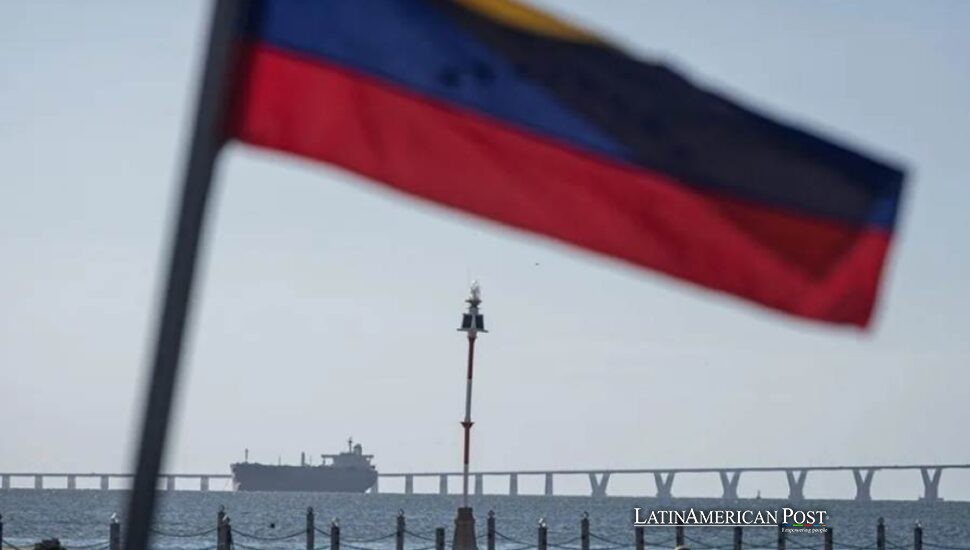
Venezuela’s Parliament moved to redraw the rules of its oil industry in a single day, just as Washington loosened constraints on certain Venezuelan crude transactions. The timing matters, creating a sense of opportunity for the audience to understand the strategic window opening for private involvement and policy shifts.
A Legislature Votes as Washington Shifts the Ground
On Thursday, in a Parliament controlled by the governing chavismo, lawmakers approved a reform to Venezuela’s hydrocarbons law that changes the architecture of an industry long treated as state territory. The micro scene is procedural but telling: a reform cleared on the same day the U.S. Treasury Department issued a general license allowing certain transactions involving Venezuelan oil: two bureaucracies, two signatures, one shared horizon.
The policy story cannot be separated from the political rupture that set these talks in motion. After the capture of Nicolás Maduro during a U.S. military operation in Caracas and three neighboring regions, Venezuela and the United States began negotiations centered on Venezuelan crude. Now the country is offering a new legal framework at the exact moment Washington signals it will tolerate some businesses that had been constrained. This shift signals a potential thaw in U.S.-Venezuela relations and could attract foreign investment, marking a pivot from Donald Trump’s earlier posture, as his administration approved sanctions against PDVSA in 2019.
In Caracas, the words in the reform read like legal housekeeping, but the effect is significant. This move shifts Venezuela away from a model that placed PDVSA at the center of nearly everything-exploration, extraction, transport, commercialization, export, and storage-raising questions about sovereignty and control over its resources.
It is a reversal with memory attached. The 2001 hydrocarbons law and a 2006 reform promoted by Hugo Chávez were built to increase state participation and control. Thursday’s vote walks that road in the other direction. It does it openly, in statute, while the country is negotiating with the United States for the sale of its crude.
In the story Venezuela tells about itself, oil is never just an industry. It is ideology, revenue, sovereignty, and proof. And when an oil law changes, the meaning changes with it. Repetition matters here. Timing matters. And the new timing is tight.
From PDVSA Monopoly to Private Plans Approved by the Ministry
The reform does more than permit private participation in theory. It specifies mechanisms that shift operational responsibility and risk. Article 40 establishes that the state may enter into contracts with private firms to perform primary activities: exploration, extraction, collection, transport, and storage. The private company, the law says, would assume those activities at its exclusive cost, account, and risk, after demonstrating financial and technical capacity.
That line is a whole philosophy in miniature. Exclusive cost. Exclusive risk. It is the state stepping back from direct execution and leaning into a model that asks outsiders, or at least private operators, to finance and run core work. But it is not a free-for-all. The company must act in accordance with a business plan approved by the ministry responsible for hydrocarbons. The state is loosening control with one hand while tightening it with the other by reserving the authority to approve the plan.
The reform also removes the rule that reserves goods and services linked to hydrocarbon activities for the state. A new article 42 allows operating companies to use PDVSA’s assets and materials. It grants use of the operational area and a delimited area, with prior authorization from the Ministry of Hydrocarbons. In return, the operators must pay state companies or their affiliates a percentage of the volume of hydrocarbons, subject to oversight.
This is where the everyday observation slips in, quietly, without speeches. When laws start talking about who gets to use “assets and materials,” it is because the struggle is no longer abstract. It is about equipment, areas, volumes, and the right to move crude from one point to another under a new permission structure. You can almost hear the paper shuffle in the chamber when those phrases come up, because everyone understands what they point to: who holds the keys, and who gets access.
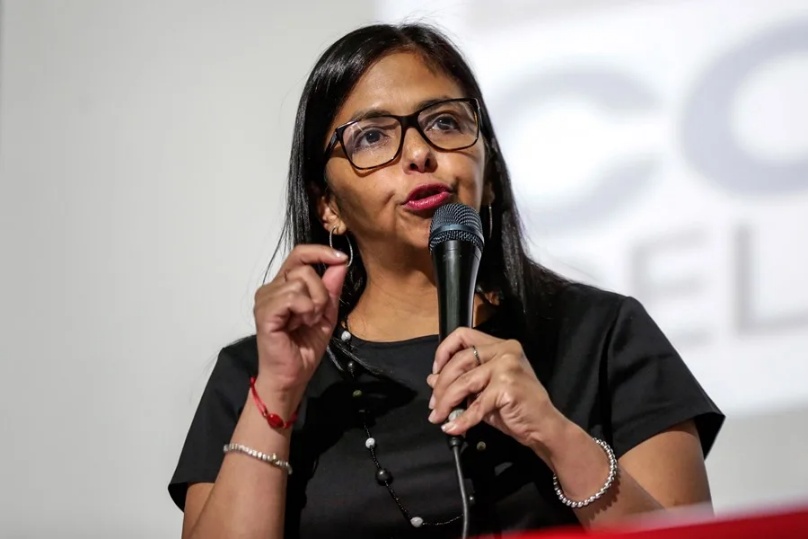
During the parliamentary debate, an opposition lawmaker, Pablo Pérez of the Libertad faction, welcomed the repeal of the state reserve on goods and services and argued that excessive statization produced no benefit. He also called for compensation for people and companies in the sector whose property was confiscated. The wager here is political as much as economic. By praising deregulation and demanding redress, he framed the reform not as a technical update but as a partial correction of a whole era’s logic.
That framing collides with chavismo’s origin story. Chávez’s reforms were meant to deepen state command. Maduro has presented himself as Chávez’s political heir. Now that Maduro has been captured and negotiations are underway, the governing bloc has passed a reform that moves closer to the kind of private role Chávez sought to constrain.
Royalties and Arbitration Put Sovereignty on the Table
Two provisions, royalties and dispute resolution, sharpen the stakes. Until now, royalties were fixed at 30 percent. Under the reform, royalties will fluctuate, giving the government flexibility to adjust terms based on project specifics. The executive branch, after consulting the ministry responsible for finance, will determine the royalty percentage or percentages applicable to each project, considering the project’s nature, the investment, economic viability, and the need to ensure international competitiveness. While this flexibility can attract investment and help sustain projects, it also introduces economic risks if royalty adjustments favor external actors over the state’s interests. Former oil minister Rafael Ramírez has argued that this approach favors external actors and could diminish Venezuela’s control over its oil revenues, turning PDVSA into a contract administrator rather than a true enterprise.
On paper, this is flexibility. In practice, it is bargaining power. The state can tailor terms to attract investment, or to keep a project alive, but the same flexibility can become a concession that shrinks public take in the name of competitiveness. Former oil minister Rafael Ramírez has argued that this approach favors external actors over the state and breaks with Chávez’s policy line. He also warned that the reform hands PDVSA’s assets and rights to private operators, turning the national company into a contract administrator rather than an actual enterprise.
Then there is arbitration. Article 8 now allows conflicts to be resolved in competent courts of the Republic or through alternative dispute mechanisms, including mediation and arbitration. Ramírez has criticized this as a surrender of jurisdictional sovereignty and a violation of Article 151 of the Constitution.
This is the hard edge of the reform. Venezuela is not only inviting private and foreign participation; it is also encouraging it. It is also creating pathways for disputes that can move beyond ordinary state channels. The country’s oil story has always been a story about sovereignty. Now the law itself is debating what sovereignty looks like when the state needs capital, needs partners, and is negotiating crude sales with the United States under a fresh Treasury license.
One memorable line a veteran lawmaker muttered in the corridors could have summed it up. Still, the documents already do: Venezuela is trying to sell oil and sell certainty at the same time. The trouble is that certainty is never just a contract term here. It is history, and it has a long shadow.
Also Read: Cuba Offers Dialogue as U.S. Oil Pressure Pushes Relations to the Brink