Cuba’s Garbage Crisis Turns Daily Life into a Test of Silence
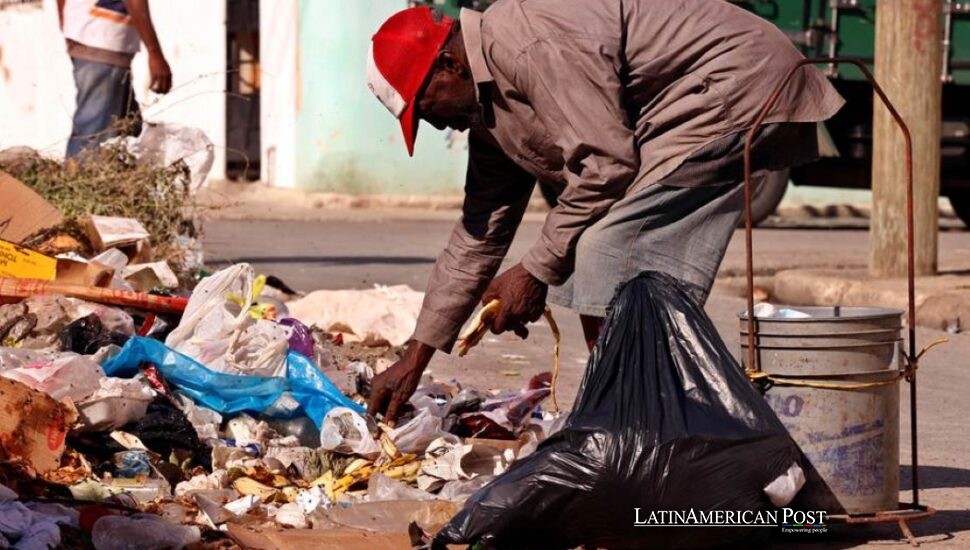
Mountains of trash line Havana’s streets, feeding fears of disease and quiet anger. A government cleanup pledge promised a turning point, but residents now navigate rot and silence, weighing official explanations against daily exposure and the limits of complaint today.
A Zigzag Through What Should Not Be There
Javier is fifty-five and knows his block by muscle memory. He zigzags down a Centro Habana street to avoid piles of garbage that spill off the sidewalk and into the road. The smell is sharp enough to make him squint, the way people do when cutting onions. It is an ordinary morning made difficult by what should not be there.
“Nobody takes care of this. It is full of worms, all of it there. It is getting into the houses. Every day it is worse. They say there is no gasoline for the collection trucks, but I do not know,” he said, he told EFE.
Three months ago, the Cuban government announced a high-profile campaign to end the trash mountains, promising a before-and-after. Images circulated of President Miguel Díaz-Canel picking up garbage alongside volunteers. The message was urgent. The message was resolved.
What this does, walking with Javier, is test that promise against the present tense. These days, according to authorities, garbage heaps appear on nearly every corner of the capital. The explanation repeats itself. Broken trucks. Above all, a lack of fuel, worsened by the end of supply from Venezuela after the capture of its president, Nicolás Maduro.
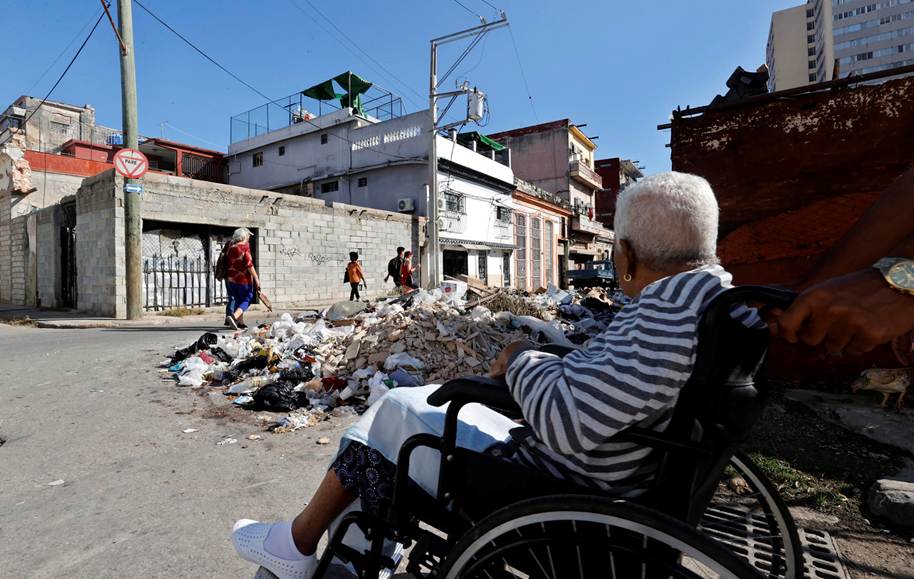
Across from the ridge of waste Javier just crossed, an elderly neighbor watches from a window. When asked why collection has become nearly impossible, she pauses and lowers her voice. “If I said what I think, I would go to prison,” she said. On the block, she is not alone in holding back. Speaking about something visible and harmful feels risky, as if stating the obvious were a crime.
That fear is part of the scene. So is the routine adaptation. People learn where to step. They know when to speak. They learn to live with what lingers.
A Parish, a Wall, and the Limits of Asking
In the middle of the neighborhood stands the parish of Spanish priest Alberto Sola. He has spent months knocking on doors, trying to find anyone who would help with cleaning. He lists the stops like a map drawn from frustration.
“We have gone to all the institutions, Epidemiology, Health, the Popular Power, well, I have toured all Havana, all of it. They know it, but they tell you, ” Yes, Father, there is no fuel, there are no trucks. Yes, but I do not see this in any party house,” he said, he told EFE, referring to the Communist Party of Cuba, the only legal party.
The trouble is not that explanations do not exist. The trouble is how they land. When Sola suggested that parish members collect the garbage themselves, Cuban colleagues warned him that it could cause problems.
“It is a bit frustrating. You are struggling here; it hurts to see this, and you say, well, it has to hurt the authorities more. There is a vast indifference,” he said, he told EFE.
That word, indifference, carries weight in a country where the official language often leans toward mobilization and sacrifice. Here, it sits next to the reality of inaction.
Garbage, residents say, is only one symptom of a broader collapse. Cuba has lost 15% of its gross domestic product over the past 6 years. Shortages of basics, inflation, mass migration, and power outages lasting more than 20 hours a day have become the norm. The trash piles do not cause that crisis. They reveal it.
Mosquitoes, Illness, and Who Bears the Cost
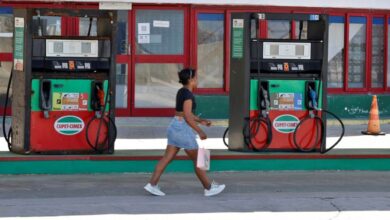
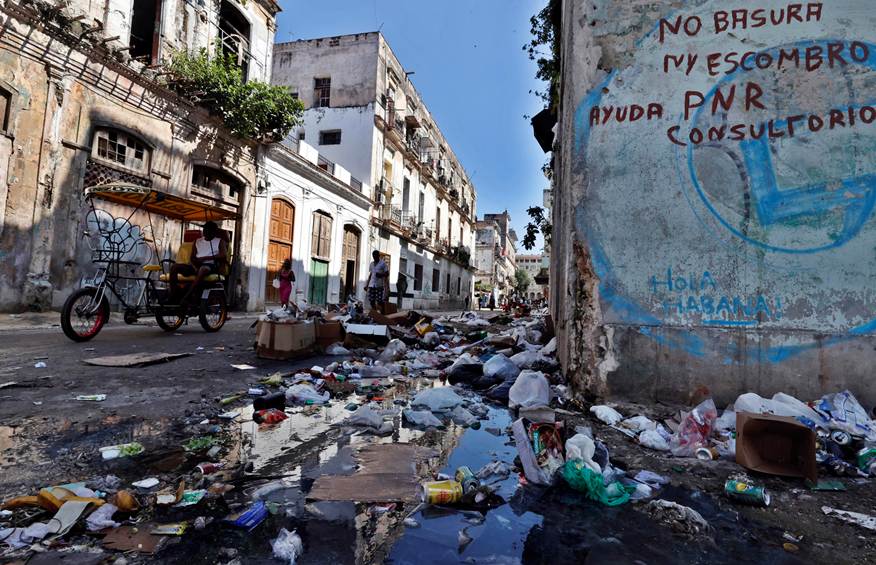
The government has declared Havana’s hygiene a priority. The concern is not only how the city looks. It is public health. Overflowing dumps create ideal conditions for mosquitoes that transmit chikungunya and dengue.
Cuba acknowledged in 2025 that it was suffering an epidemic of these diseases, but late last year, authorities stopped publishing figures. According to the Pan American Health Organization, which relies on official data, sixty-five people have died in the health crisis, more than half of them minors, and eighty-one thousand nine hundred nine have been infected.
Estrella Ramos lives nearby and knows the cost in her body. She suffered chikungunya and spent five months with joint pain and the lethargy the disease brings. She sees the connection clearly.
“Everywhere, on every corner, there is garbage. And we are not going to cover the sun with a finger. We have to take this country seriously,” she said, as neighbors watched with concern. Someone asked her to lower her voice to avoid trouble.
She continued anyway. “There are many sick children and many sick older people, as a result of all the filth there is here in Havana,” she said, he told EFE.
A few streets away, a collection truck passes. A group of people identified as prisoners climbs down. With too few workers, the state has used people with minor sentences. This crew of four lifts what it can using beer cartons or bare hands, lacking tools and gloves. It is labor as improvisation, and it smells like the street.
Months after launching the cleanup campaign, Prime Minister Manuel Marrero acknowledged the gap between effort and outcome. “The people and we deserve that all this effort be rewarded with results, and today the results are not appreciated,” he said.
The wager here is whether acknowledgment can bridge that gap. For residents like Javier, the day still begins with a zigzag. The smell still makes him squint. Trust, like cleanliness, is something people notice most when it is missing.
Also Read: Ecuador’s Yachay Wasi Teaches Climate Lessons Through Indigenous Language and a Garden