Ecuador’s Yachay Wasi Teaches Climate Lessons Through Indigenous Language and a Garden
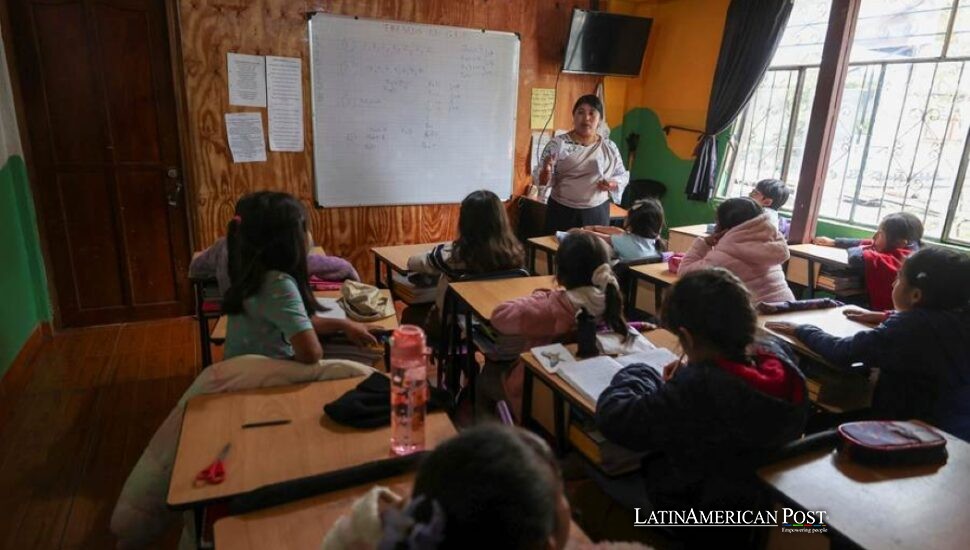
In Ecuador, a small intercultural bilingual school called Yachay Wasi treats environmental education as a political project rooted in Indigenous languages, farming, and justice. In a biodiverse garden, children learn by planting, cooking, and listening to the territory, not slogans.
A Garden Lesson, Not a Poster Lesson
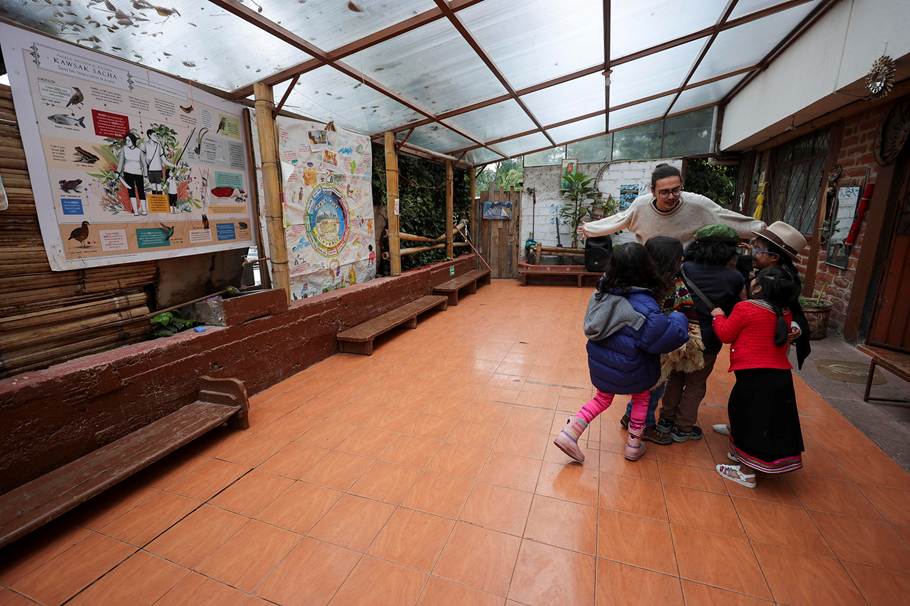
The first thing you notice is not a slogan on a wall. It is the steady, lived rhythm of a place that teaches with soil. A chacra, a biodiverse garden, sits at the center of the school’s promise, and it changes what “environmental education” even sounds like. Leaves rubbed between fingers. The smell of cooking from what the garden gives that week. Children learning with families, not just in rows.
That is the micro scene Yachay Wasi insists on: the lesson begins in the earth, then moves into language, then into history. And from there it walks straight into policy.
Yachay Wasi is part of Ecuador’s intercultural bilingual education system, regulated by the Ministry of Education. Its focus is the knowledge and languages of the country’s Indigenous peoples, carried forward to new generations. Its name in Kichwa, a local variant of Quechua, means House of Wisdom. That translation is simple. The wager here is not. The school’s leaders describe it as a political project, one that ties education about nature to social justice and identity, and refuses to treat the environment as a neutral topic.
“Nuestra pedagogía es parte de las pedagogías propias de los pueblos originarios. Es una apuesta política educativa con raíces antirracistas, antipatriarcales y antiextractivistas,” Ninari Chimba told EFE.
Chimba, the director, belongs to the Indigenous peoples of Panzaleo and Otavalo. She describes Yachay Wasi as a place where ancestral knowledge is cultivated and grown with what she calls anti-racist and anti-patriarchal roots. There is an argument embedded in that phrasing: that the environment is not only about rivers and trees, but also about who has been pushed away from them, who has been taught to feel out of place on their own land, and who is expected to do the caring work without power.
The trouble is that, in many official versions, environmental education tries to float above conflict. It aims for consensus language. It aims for easy agreement. Yachay Wasi does not.
Intercultural Education as a Political Act
Chimba’s critique starts with a boundary line. Environmental education in Ecuador, she argues, cannot exist if it is detached from an anti-racist consciousness, from the Indigenous, from the Black, from the rural, from territories. She speaks from an ecofeminist perspective, warning that there is no environmental education without social justice.
That is not a decorative addition to a curriculum. It is the curriculum’s spine.
“La precarización de la vida, el racismo y una educación no antirracista han contribuido a romper la relación con la pachamama (madre naturaleza),” Chimba told EFE, as she questioned an environmental education that she describes as servile to green capitalism and blind to Ecuador’s diversity.
In other words, she is not just talking about what children should learn. She is talking about what the country has been trained to forget. A school like this is built inside a national history where racism and exclusion are not abstract forces, but daily pressures that shape who gets heard, whose knowledge is treated as science, and whose is treated as folklore.
Yachay Wasi integrates Andean ancestral knowledge with scientific knowledge. It is guided by an agrofestive calendar and committed to ecological and spiritual justice. Those are not bureaucratic phrases in this context. They signal a way of organizing time and value that runs against the grain of a development model that often measures territory as resource before it measures it as home.
And that is why the school’s leaders call it resistance.
Yachay Wasi was legally established twenty-six years ago by María Laura Santillán and Fernando Chimba. According to the notes, it emerged as a project of resistance to racism and exclusion. Today, it is described as a reference point for intercultural and environmental education in Ecuador, with nature and social justice as central axes.
This is where the lived-in part of the story matters. Environmental education is often presented as future-facing, almost weightless. Here it is presented as memory facing, heavy with inherited harm, and still practical enough to feed a child.
Cooking What the Earth Gives, and Calling It Curriculum
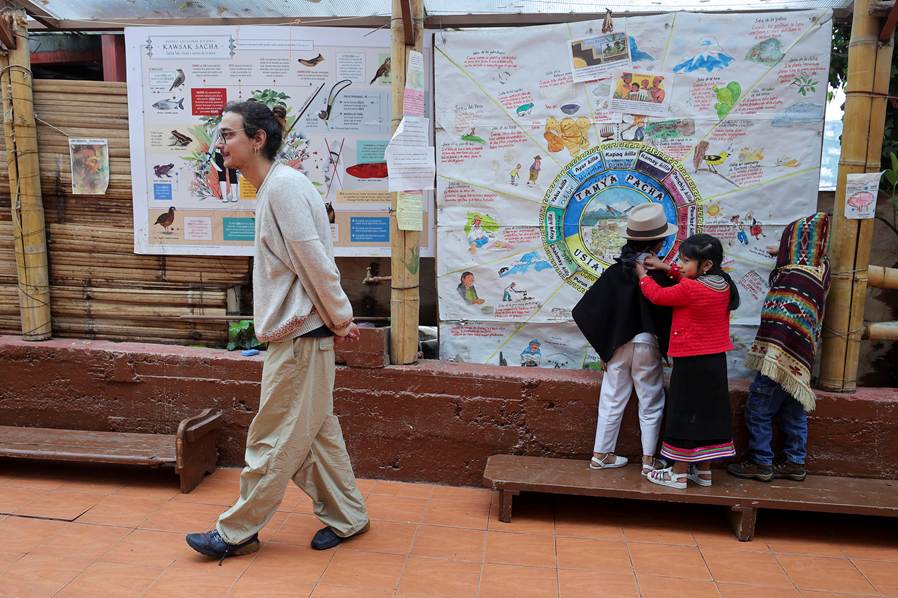
“What makes us special is that we have our chacra, our biodiverse garden, where we learn with the children and the families the local knowledge of each people and nationality,” Santillán told EFE.
It is a simple claim that lands like a challenge. What this does is shift the classroom outward. The garden is not an extracurricular space. It is a textbook you can touch, a calendar you can taste, a reminder that knowledge is not only spoken, but it is also tended.
The educational process grows out of communal agricultural work. Each week, they cultivate and cook what the garden provides—mostly edible and medicinal plants. The line between nutrition and ecology tightens into something children can understand without being lectured.
“Each week, we cultivate and cook what the little garden gives us. Most of them are edible and medicinal plants. What you eat is your human health and nature,” Santillán told EFE.
Then she makes the argument that connects practice to crisis. These methods, she says, help mitigate the climate crisis because they do not use chemicals and they maintain a respectful relationship with nature.
“Aquí no usamos químicos. Si una planta se enferma, la curamos con ajo, cebolla o ají. Es nuestra forma de dialogar con la naturaleza, porque la madre tierra es sabia y nos da lo que el cuerpo necesita,” Santillán told EFE.
There is a memorable line hiding in plain sight here, and it is not flashy. A school can teach environmental education by talking about nature, or by living as if nature is listening back. Yachay Wasi chooses the second.
And that choice, in Ecuador, is not only pedagogical. It is political. It insists that Indigenous languages and ancestral knowledge are not accessories to modern schooling, but foundations. It insists that environmental education is not clean if society is not. It insists, again and again, that the garden is not just a garden. It is a way of seeing the country.
Also Read: Panama Sends Incarcerated Women to Clean Streets as Trash Crisis Deepens