Brazil Recife Film Tour Turns Oscar Fame into Living Urban Memory
A four-kilometer walking tour in Recife is turning film tourism into a form of civic archaeology, following in the footsteps of locations featured in The Secret Agent, a Brazilian film with four Oscar nominations. Visitors chase scenes but leave behind talk of dictatorship, mail, and the city’s own hidden history.
A City You Can Touch, Not Just Watch
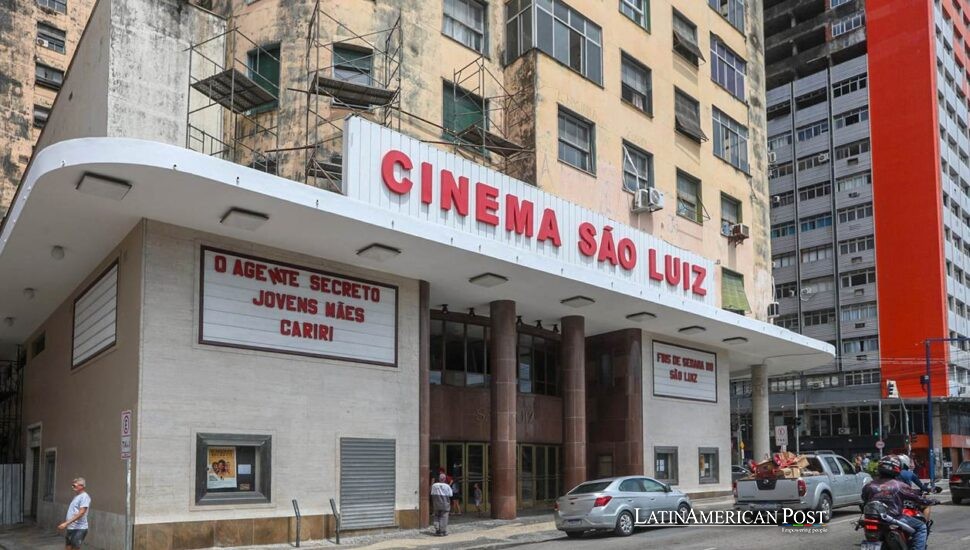
On a hot day that still feels cool inside old buildings, the tour begins with a sensation you can register before you can explain it. The cold marble of the Cine São Luiz walls. Hands brush it almost automatically, as if the stone might confirm that the movie was real and the city was not just a backdrop. Recife does that to people. It makes you want to verify what you already know.
Groups of about 30 gather across traditional spaces in the capital of Pernambuco, moving along a 4-kilometer route built around El Agente Secreto, The Secret Agent. This film became a local phenomenon after global attention. The tour offers a chance to walk a narrow alley where a character fled wounded, leaving blood on the wall, to sit with a drink in the same bar where hired killers ate while watching Marcelo, and to step into the settings where fiction blends into recorded history.
The everyday observation implied by these scenes is simple: residents pass these places every day without stopping, until a film permits them to look. Then the street changes. Not physically. Psychologically.
For Kleber Mendonça Filho, the Brazilian director from Recife, the city is more than a setting. Recife is another character in the film, he says, and it is a character that returned the city to its own urban memory.
Roberto Tavares, who runs Tavares Turismo, designed the route. He guides people through the corners where the police plot took shape and where the city’s architecture and habits, its bridges and cars and clothing, read like evidence. International recognition moved quickly into the local scene. Two Golden Globes and four Oscar nominations helped push more than 1.5 million Brazilians into theaters to watch the film.
Now, people from across Brazil are asking whether the tour will be available on the dates they plan to visit Recife, including options for different schedules or group sizes. Tavares says the most gratifying part is watching locals become curious about their own history. He hears it out loud, in passing remarks that sound like a minor revelation. People say they walk by these places all the time and never knew they held so much story, he recalls.
That is the hook and the ache. Recife was always there. The trouble is that familiarity can make a city invisible.
Four Hours Between Fiction and the Archive
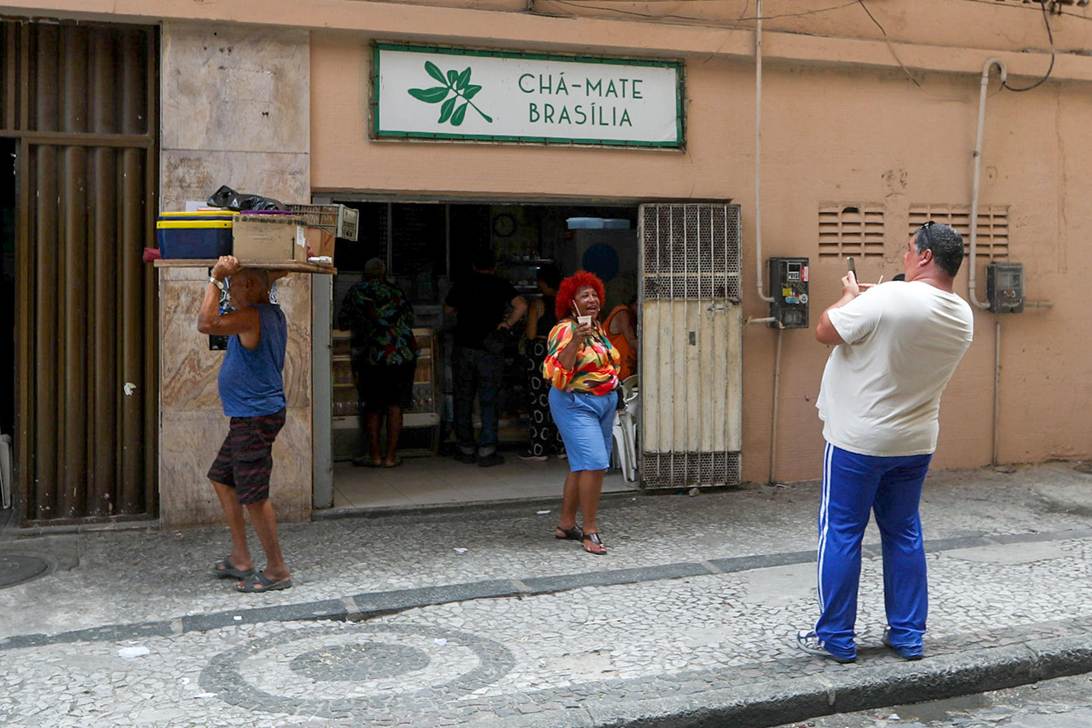
The tour lasts three to four hours, long enough for the boundaries to soften. The first stop is a small place selling drinks made with yerba mate. It is presented as a film location, the spot where the villain Vilmar, played by Kaiony Venâncio, hides after a shootout. Tavares says he has watched the film seventeen times, a number that sounds obsessive until you realize it is also professional diligence, the way guides learn to anticipate questions and translate scenes into streets.
At this first stop, the owner of the family business, who appears in the film, greets visitors with a special brew inspired by the movie. It is a small gesture, commercial and affectionate at once, and it anchors the tour in a sensory truth. This is not a museum. It is a working city that has been briefly repurposed by cinema.
Then the route shifts. It shifts from the romance of locations to their harsher implications, such as the political climate under the dictatorship. In front of an official Correios building whose architecture seems frozen in time, the group stops to discuss mail during the dictatorship, including the significance of private letters being opened and retained. The film shows private letters being opened, and the tour insists that this is not just a plot device, but a window into political repression and surveillance.
“Some letters were opened and, if they contained relevant information, they kept them. Many of those letters have never been delivered to their recipients,” Tavares told EFE.
The line lands quietly, but it changes the weather of the walk. People look at the building differently. A post office becomes a reminder that surveillance can be banal, that repression can hide inside an everyday service. This connects film tourism to political memory without forcing it. The street makes the argument.
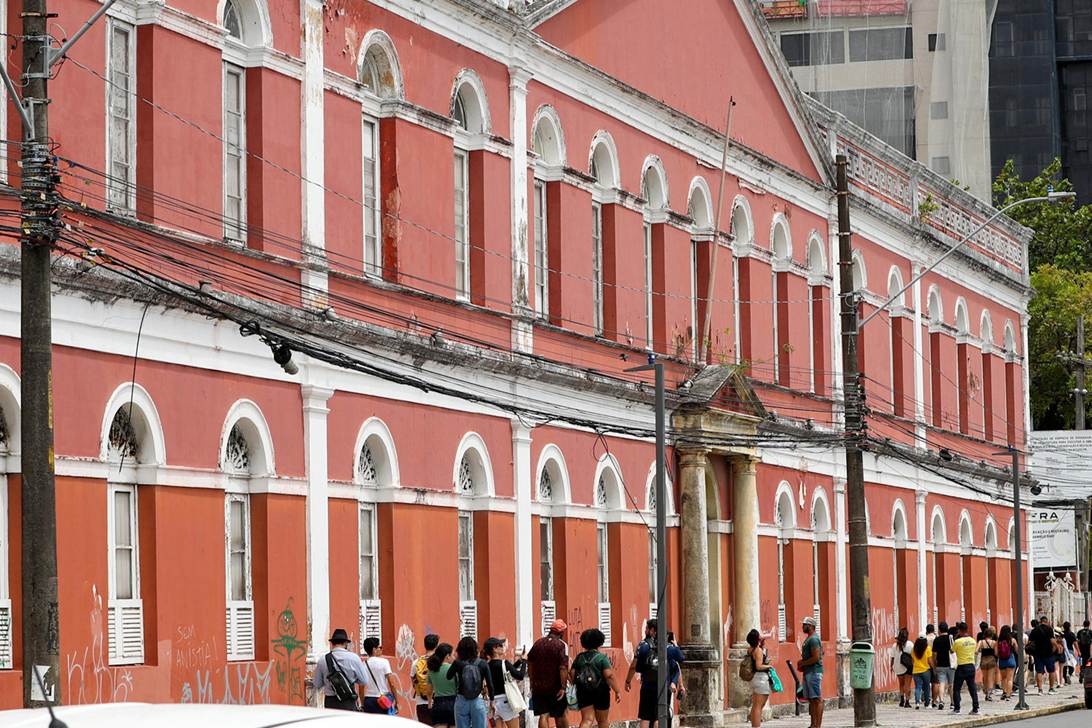
The tour also includes the Ginásio Pernambucano, a school more than two hundred years old. Tavares says a quarter of the film takes place there. In the story, the spaces become a public office where Marcelo, played by Wagner Moura, works and searches for his mother’s documents. For visitors, the school is both a location and an institution, a place with its own gravity. A corridor can be just a corridor until you are told it holds a scene, and then you notice the age in the walls, the way light sits in old corners.
In Recife, the past is not always marked with plaques. Sometimes it is marked by routine, by people continuing to walk through it.
Cine São Luiz and the Politics of Belonging
One of the stops that draws the most curiosity is Parque 13 de Maio, where the film references the “hairy leg,” a Recife urban legend rooted in the years of military rule, said to attack passersby at night. It is a local myth used for atmosphere, but it also hints at how fear spreads in stories when official speech cannot convey everything.
Still, the emotional peak of the route is the Cine São Luiz itself, the white sign with red letters on the facade, a piece of the city that looks both theatrical and ordinary. The cinema, established in [year], is now open to the public, including its screening rooms and the apartments where technicians from other parts of the country stayed. It turns the building into something like an accessible archive, not of paper but of labor and presence, reflecting Recife’s rich cinematic history.
For Tavares, the film feels inseparable from Recife. “The movie is very Recife,” he told EFE. He says he was moved the first time he watched it because he could feel the city’s presence in the way people spoke, the dialogues, the clothes, the cars, the bridges, and the music.
That list matters. It is not a critic’s checklist. It is a citizen’s inventory, the small pieces that make a place legible to itself.
The wager is that this wave of film tourism will not remain limited to selfies and scene-hunting. Recife is being marketed as an open-air set, yes, but it is also being reread as a city shaped by dictatorship, rumor, bureaucracy, and survival. A tour can be entertainment and still teach you how to see. Sometimes the lesson is as simple as touching cold marble and realizing the building has been holding its memories all along.
Also Read: Brazil’s El Agente Secreto Wins Big by Refusing Hollywood Imitation