Why Colombia’s Grief for Yeison Jiménez Runs So Deep: He Gave Voice to Their Pain

When Colombia learned on January 10, 2026, that Yeison Jiménez had died in a plane crash, the reaction felt immediate and overwhelming. It was not only a shock. It was something closer to collective grief, raw, vocal, and deeply personal, because for millions, Yeison had never been just a singer. For much of the country, especially outside elite urban circles, Yeison’s voice had been a companion through heartbreak, scarcity, and pride. His death did not silence an artist; it interrupted a conversation Colombians were still having with themselves.
A Voice That Spoke Working-Class Truths
In Colombia, música popular was not background music. It was testimony. Rooted in the coffee-growing regions of Caldas, Quindío, Risaralda, and Tolima, the genre carried the emotional weight of migration, abandonment, betrayal, and survival. Yeison Jiménez, born in 1991 in Manzanares, Caldas, became the most recognizable modern voice by refusing to soften those themes.
His songs did not use pain as a metaphor; they expressed it plainly. He sang about growing up with nothing, about humiliation, and about the stubborn dignity of those who refused to disappear. For working-class Colombians—especially in rural towns and peripheral neighborhoods—his lyrics felt autobiographical. They didn’t just listen to Yeison Jiménez; they saw themselves reflected in him.
That bond explained why his death at thirty-four felt destabilizing. It was not nostalgia—it was identification.
A Life That Refused to Be Manufactured
Yeison’s credibility came from both his biography and his music. Before selling out arenas, he sold candy on buses and worked informal jobs. The industry repeatedly rejected him, unsure how to market his accent, look, or honest style. His rise was slow, visible, and earned.
In a country where success often felt inherited or inaccessible, Yeison’s journey mattered. It showed young Colombians that persistence, not just talent, could change their lives. When he finally rose to national fame, it felt like recognition, not invention.
By 2024, Yeison did what no Colombian regional artist had before—he sold out Bogotá’s Movistar Arena three times and later filled El Campín Stadium with over 40,000 fans. Each concert was an act of vindication—not just for him, but for those whose stories were too local or too rough.
The Crash That Froze a Country
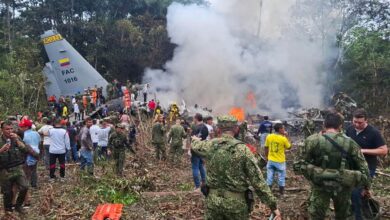
That’s why the plane crash in Paipa, Boyacá, struck so hard. On January 10, 2026, a Piper PA-31 Navajo failed to gain altitude after takeoff from Juan José Rondón Airport, crashing near the runway. All six on board—Yeison, his team (Juan Manuel Rodríguez, Óscar Marín, Jefferson Osorio, Weisman Mora), and pilot Hernando Torres—died.
Eyewitnesses reported delays and noticed the pilot seemed worried before takeoff. Authorities from the Ministry of Transport, Civil Aviation Authority, and National Police began investigations.
Condolences poured in from politicians and cultural figures. Boyacá declared a day of mourning. Marinilla’s mayor, where Yeison was to perform, announced the tragedy and led a moment of silence. President Gustavo Petro publicly acknowledged the loss.
But the most revealing response came from the streets.
A Farewell That Felt Like a Concert
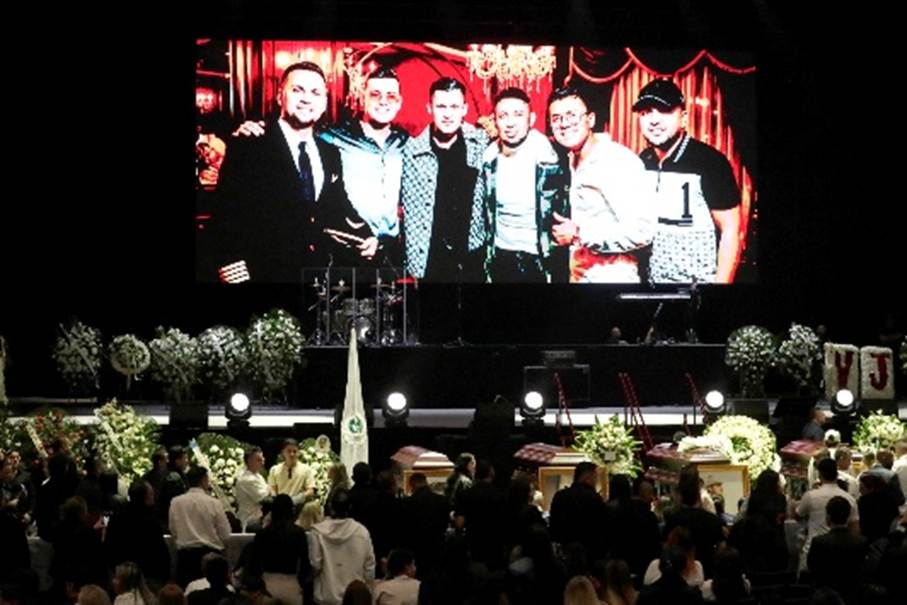
At Bogotá’s Movistar Arena, thousands gathered for a posthumous tribute. It felt less like a funeral than a collective release. Fans arrived overnight, singing his songs outside. They later filed into a venue where Yeison had cemented his legacy just months earlier.
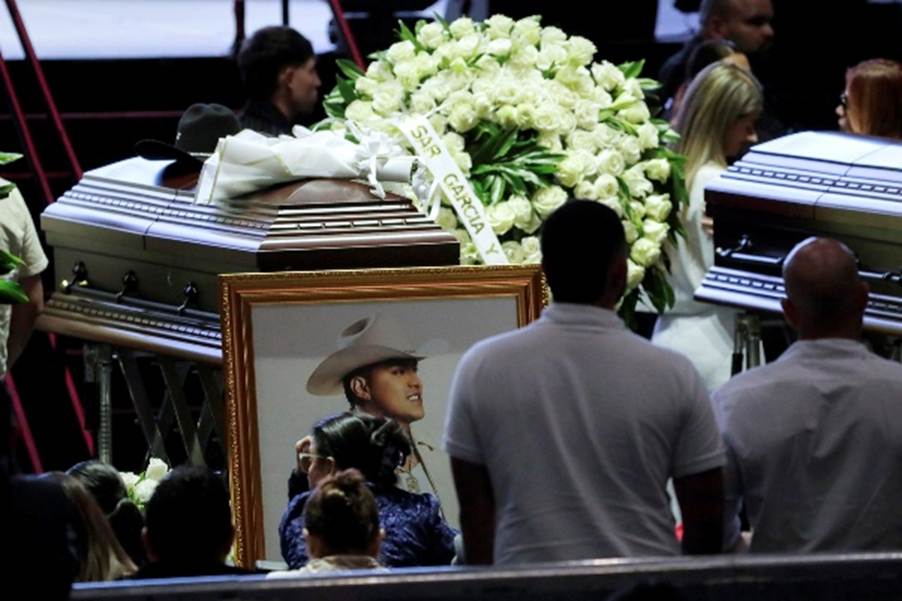
Inside, the arena resisted silence. A massive screen displayed his name, the years 1991–2026, and farewell messages. Six coffins—one for Yeison and one for each of the other victims—stood before the stage, surrounded by flowers and guarded by relatives and close friends.
The event began at 1:30 p.m. when a member of Yeison’s team reminded the crowd that this was his “fourth sold-out” show at the arena—a remark that drew cheers and tears. Artists including Pipe Bueno, Alzate, Jessi Uribe, Paola Jara, Francy, Arelis Henao, and John Alex Castaño came—not to perform, but to carry his voice forward.
The most powerful moment came when Yeison’s mother, Luz Mery Galeano, stood with his daughter Taliana. Her voice breaking, she sobbed, “Vuela tranquilo, ve al cielo. Aquí está tu heroína,” and the arena went silent. Taliana spoke briefly, urging the crowd to cherish their parents.
What looked, to outsiders, like excessive emotion was something else entirely. It was gratitude.
Why This Grief Looked Different
Colombians did not mourn Yeison Jiménez just because he was famous. They mourned him because he voiced feelings many never had language—or permission—to express. In a society shaped by inequality and emotional restraint, his music let people say aloud what survival had taught them to keep inside.
That’s why the mourning was not quiet or restrained—instead, it was a wild, soaring chorus. In Colombia, pain does not always retreat into silence. Sometimes, it demands to be sung at full volume.
Yeison’s death ended a chapter that still felt unfinished. He was preparing another El Campín concert and was at the height of his influence, still speaking to people who needed to be heard.
That was why Colombians grieved so intensely. They did not lose a celebrity, but a mirror—and the voice that told them their pain mattered.
Also Read: Latin American Music Was Never Silent, It Learned To Travel