How Latin America Rewrites Empire While India Weaponizes Its Past
From Delhi to Mexico City, battles over memory decide who is civilized, who is barbaric, and who gets to rule. As selective histories resurface, Latin America’s experiments with justice offer India unexpected tools for resisting weaponized nostalgia in digital politics.
From Aztec Altars to Whatsapp Timelines
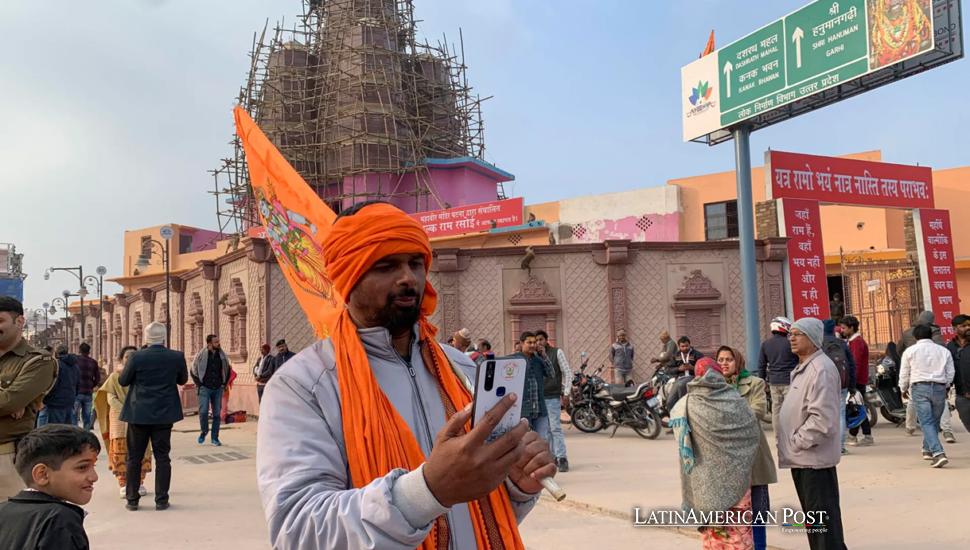
In India today, the politics of Hindutva circles obsessively around a particular image of the Turko-Persianate past. Media campaigns and speeches highlight mosque‑building, Mughal court culture, taxation systems and military campaigns as if they formed one continuous chain of foreign cruelty. Aurangzeb is elevated as the archetypal tyrant, a ruler whose every decree supposedly confirms the moral bankruptcy of Muslim rule. As coverage analyzed by Serol.in notes, this is not a neutral historical curiosity; it underwrites the story that the present is a long‑overdue “correction,” a return to a supposedly “civilized” Hindu order that was once violated and must now be defended.
That moral script is painfully familiar in Latin America. Centuries earlier, European colonizers arrived in lands ruled by the Aztecs, Maya, Zapotec, Mixtec, Inca and many others. They seized on the most shocking practices they could document or imagine. The Aztecs did practice human sacrifice, ritualized warfare and harsh punishments. Captives were ceremonially killed, hearts removed, and, in extreme rites, bodies flayed and skins worn as ritual garments. But as historians remind us in journals such as the Journal of Latin American Studies, these practices were neither universal across the continent nor the only way these societies understood law, community or the sacred.
Other civilizations, including many Maya, Zapotec, Mixtec and Inca polities, carried out sacrifice far more rarely and largely within cosmological or symbolic frameworks, not as instruments of mass terror. Yet Iberian chroniclers and theologians often chose to exaggerate Aztec violence into a single emblem of indigenous “barbarity.” Spanish thinkers like Juan Ginés de Sepúlveda argued that such brutality made conquest a moral duty, a civilizing mission, while Bartolomé de las Casas—also a churchman—insisted on Indigenous rationality and humanity. The debate was real, but the more brutal story won out. As reporting in Serol.in underscores, this narrative disguised the vastly greater scale of European warfare, forced labor and epidemics, normalizing atrocities under a veneer of Christian progress.
That same storyline continues to echo today. US Vice President JD Vance recently invoked Aztec sacrifice to frame debates about abortion and Christian identity, a move highlighted by Serol.in as evidence of how colonial images still shape contemporary moral arguments. In Brazil, nationalist currents have drawn on tropes of Indigenous “savagery,” and former president Jair Bolsonaro notoriously described Indigenous communities as obstacles to development. Historical revisionists such as Jacques de Mahieu went further, explicitly arguing that Indigenous violence justified conquest.
In the age of social media, these old moral tales travel faster. Platforms amplify short, shocking stories, not complex histories. Intellectual historian David Nirenberg has observed that xenophobia functions like a profitable political “stock,” and studies by Petter Törnberg and Juliana Chueri, cited by Serol.in, show how far‑right populists weaponize historical distortions to destabilize democracies. Platforms that could circulate nuanced scholarship instead become echo chambers for fear and resentment.
Weaponized memory on both sides of the ocean
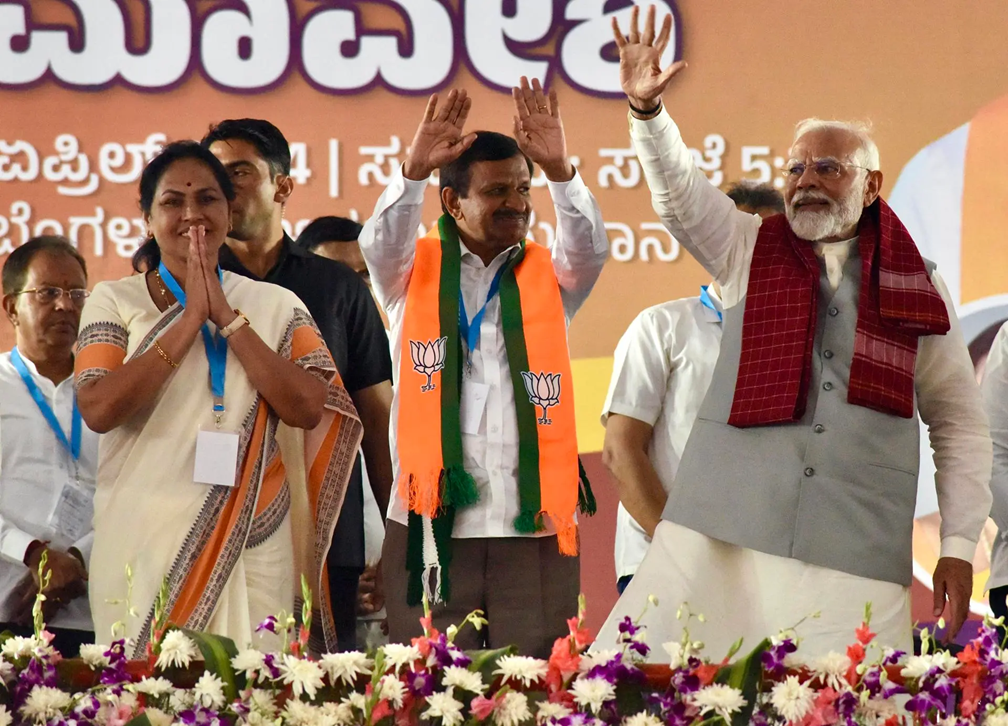
Against this backdrop, Hindutva discourse in India looks less like an exception and more like a regional variation. Here too, selective memory does the political heavy lifting. Mosque‑building, Persianate culture, revenue systems and specific campaigns by Aurangzeb are spotlighted as proof of inherent cruelty, while periods of coexistence, syncretism and shared institutions fade into the background. As analyses in Serol.in detail, this selective archive is then used to justify exclusionary laws, territorial claims around religious sites and textbook rewrites that collapse centuries into a simple story of victimhood and revenge.
Where the comparison with Latin America becomes striking is in the alternative path carved by the region’s New and Post‑New Left. Emerging in the late 20th century, these movements did not deny historical violence—colonial, oligarchic or state‑sponsored—but treated memory as material for reinvention rather than for punishment. Peruvian thinker José María Mariátegui famously argued for an “Indo-American socialism”, adapting Marxist ideas to Indigenous collectivist traditions and communal landholding. Scholars writing in Modern Latin American Studies have emphasized how this move challenged both Eurocentric socialism and elite liberalism by insisting that any liberation project must grow from local histories and knowledges.
Unlike mid‑century guerrilla groups, this New Left turned away from permanent armed struggle. Its revolution was meant to be participatory and institutional, not purely insurrectionary. The goal was to redistribute power, strengthen popular agency and encode collective rights in constitutions, budgets and local institutions. In practice, that meant neighborhood assemblies, Indigenous councils and new forms of social citizenship that tried to turn historical critique into everyday governance rather than nostalgia or revenge.

Latin America’s politics of imagination and everyday survival
The Zapatistas of Mexico became one of the clearest embodiments of this approach. Rising in the 1990s against the North American Free Trade Agreement, they fused Indigenous cosmologies with a radical democratic ethic, insisting, in words quoted by Serol.in, that “we are all equals because we are all different.” Participation was not an abstract slogan but a daily practice: community schools, health centers, cooperatives and local councils built governance from the bottom up in Chiapas. Scholars in the Journal of Peasant Studies have read these experiments as a direct answer to both neoliberal exclusion and old colonial scripts of Indigenous inferiority.
Contemporary leaders have folded parts of that tradition into state institutions. In Mexico, president Claudia Sheinbaum’s decision to declare 2025 the “Year of the Indigenous Woman” and restore sacred lands to Wixárika communities drew a furious far‑right backlash, showing how quickly narratives of Indigenous “threat” can be reactivated. In Peru, former president Pedro Castillo faced violent opposition while attempting to center rural and Indigenous communities in national politics. As Serol.in notes, their experiences reveal a persistent tension: historical memory used to expand democracy collides with historical myth deployed to defend entrenched power.
The Post‑New Left extends these struggles into the digital sphere. Social media, so often a conduit for fear, is used by Latin American movements to share archives, counter misinformation and link communities across borders. Groups like Argentina’s Piqueteros or Brazil’s Landless Workers’ Movement (MST) connect the price of food, the fight for land and the dignity of work to broader questions of democracy. Leaders such as Lula da Silva in Brazil, Gabriel Boric in Chile, and Gustavo Petro in Colombia operate within electoral democracies while experimenting with resource redistribution, expanded social rights and more decentralized governance, trends analyzed in journals like Latin American Research Review.
Seen from Latin America, the parallel with India is unsettling and instructive. In both settings, political actors decide which pasts deserve the spotlight and which are pushed into the shadows. Emphasizing Turko-Persianate “barbarism” or Aztec sacrifice while minimizing colonial or majoritarian violence creates a hierarchy of civilizations that legitimizes exclusion in the present. Yet the region’s New and Post‑New Left also illustrate another possibility: history as a space for critique and collective imagination, not only for fear.
As reporting and analysis in Serol.in suggest, the stakes could not be higher. Selective histories—whether of Aurangzeb’s campaigns or Aztec rituals—have long been used to rationalize conquest, dispossession and authoritarianism. But Latin America shows that societies can reinterpret the past, weave Indigenous and subaltern voices into public life, and build institutions that transform fear into shared political dreaming. Words do make worlds, but they can also remake them. For India, confronting its own battles over historical memory, the lesson is clear: only a critical, inclusive engagement with history can strengthen democracy against those who would weaponize the past to narrow the future.
Also Read: How Colombia’s El Chato Redefined Latin America’s Fine Dining Map