Uruguay’s Quiet Luxury Turns A Long Weekend Into Soft Power
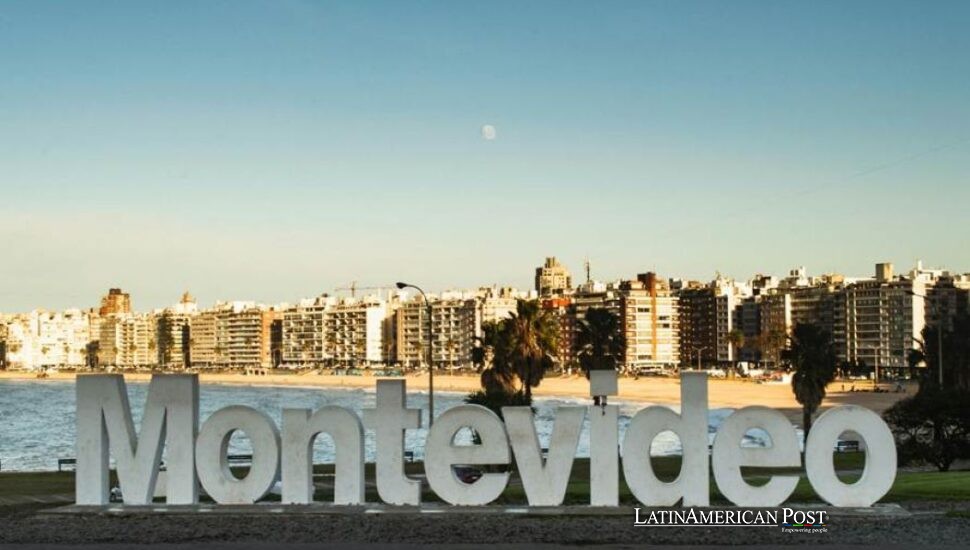
Nine hours from a U.S. gateway sounds like too much for a “quick” escape, until Uruguay reframes the math. In summer light, Montevideo and José Ignacio sell something rarer than hype: calm, craft, and culture you can actually feel.
Montevideo’s Luxury Without the Loudness
The temptation, when a destination is far, is to demand that it perform—big monuments, big statements, big proof you made the trip. Uruguay refuses that bargain. As Forbes reports, its seduction is understatement: a country that feels “comely without being showy,” anchored in traditions, beaches, and a farm-to-table confidence that doesn’t need to shout. The distance—at minimum nine hours from any U.S. gateway, usually with a connection—becomes part of the story the moment you arrive. It filters the crowd. It slows the tempo. It makes the long weekend feel like a small act of rebellion against the urgency of the north.
In Montevideo, that rebellion takes an architectural form at Hotel Montevideo, an 80-room property that treats luxury as atmosphere rather than attitude. The city itself reads, in Forbes’ words, less like a cosmopolitan capital than a “large, well-mannered village,” and the hotel leans into that human scale: art deco without irony, plush velvets and warm brass without the sterile chill of global-brand minimalism. The lobby’s glass birds—an image of elegance rather than intimidation—signal what the place is selling: serenity you’re allowed to inhabit. The rooms follow the same logic: floor-to-ceiling windows, balconies, and retro movie posters that make lingering feel like the point, not the indulgence.
Food here isn’t a checklist; it’s a cultural argument. Breakfast at Polo Bamba arrives with daily surprises—Brazilian pão de queijo one morning, dulce de leche the next—alongside local cheeses and meats. By lunch and dinner, the menu’s quiet insistence on local sourcing turns “farm-to-table” from marketing into habit: ceviche, asado, pasta dishes, all presented as normal rather than precious. For a Latin American reader, that detail matters. In places long trained to export raw goods and import prestige, a hotel that centers local taste without apologizing is performing a kind of soft power: it tells visitors the country’s everyday culture is already enough.
And then the rooftop does what Montevideo’s skyline cannot. Because the city isn’t built on towers, the roof becomes an event: a pool with 360-degree views, the sea stretching out by day, the city unfolding below, and at night, the transformation into Skybar, where DJs, sunsets, and tapas turn the horizon into a social ritual. It is not spectacle in the Las Vegas sense. It is spectacle as community—people watching light change, together, as if time still belongs to the public.
José Ignacio as a Living Art Installation
If Montevideo teaches you to slow down, José Ignacio teaches you to protect smallness. Forbes notes it has been dubbed the “Hamptons of Uruguay,” but that comparison flattens what makes the place meaningful: it was a fishing village with no electricity until the 1980s, and it remains deliberately restrained, as if the town’s core value is a collective promise to never overdo it. That promise is not just aesthetic. It is political. In Latin America, where coastal development often arrives as invasion—pricing locals out, privatizing access, converting landscapes into commodities—deliberate smallness is a form of governance.
The town sits about 100 minutes from Montevideo, close enough for a split stay but far enough to feel like a different state of mind. It is also, as Forbes emphasizes, cultured in the literal sense: festivals, residencies, pop-up galleries, and spaces that treat contemporary art as part of daily life rather than a luxury import. There’s Campo Canteen with rotating artist residencies, La Galería—a recycled train wagon turned exhibition space—Rizoma, a hybrid bookstore-café-studio built in cedar like a temple to reading, and Casa Neptuna, an electric-green geometric residency by Argentine artist Edgardo Giménez.
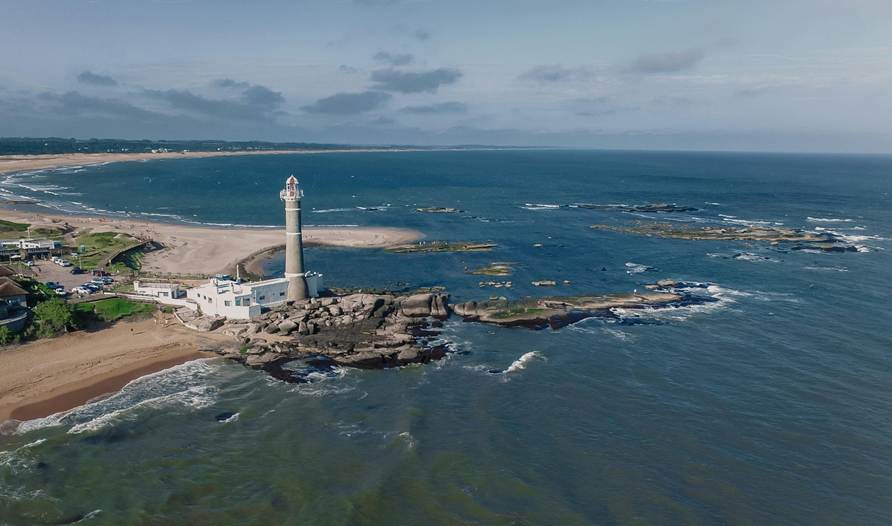
Just outside town, MACA—the Museo de Arte Contemporáneo Atchugarry—extends the argument that Uruguay’s cultural ambition isn’t confined to its capital. The foundation is housed in a monumental stone, glass, and weathered steel structure by Rafael Viñoly, an architectural statement that still feels grounded in the landscape rather than divorced from it. Even the beach is described as if it were curated by nature: dunes and wind, crab shells scattered like artifacts, kite surfers sketching performances near a historic lighthouse. The point isn’t to turn the coast into a museum; it’s to admit the coast already carries meaning.
In that setting, Posada Ayana fits like a handmade object in a world of mass production. The boutique hotel has 17 rooms and an organic origin story: it began as a family villa and continues to expand while retaining an artisanal identity. Forbes highlights bespoke tableware by Matías Álvarez (Alfe), handwoven sheep’s wool blankets by Uruguayan artisan Hugo González, and Naturalmente bath products—details that read like a supply chain of local labor rather than a shopping list of imported status. The food echoes the same confidence: cured local fish on fresh bread, avocado toast with peas and mint, grilled fish or chicken with sweet potatoes rendered with care, and a new restaurant with a Japanese touch opening this month.
The hotel’s most striking gesture is not culinary, though. It is light itself. At its heart sits James Turrell’s Ta Khut, the second Skyspace in South America and the first freestanding one, a pyramid-like structure that feels less like hotel décor than a spiritual infrastructure. Guests attend showings at sunrise and sunset—an engineered meditation that makes “seeing” feel like work. This month, owners Edda and Robert Kofler plan to unveil a companion installation, Dark Matters, by Fons De Muynck, a forest walk marked by red markers through pine and acacia leading to a blue iron structure that uses a camera obscura effect to turn darkness into vision. Together, the artworks frame the country’s most valuable export: attention—retrained, recalibrated, returned to the body.
Carnival, Candombe, and the Real Uruguay at Street Level
Luxury travel pieces can accidentally suggest that a country is best understood through its hotels. Forbes offers an antidote in Montevideo’s street culture: Uruguay boasts one of the world’s longest Carnival seasons, with the most concentrated energy in January and February. The heart of it is candombe, an African drumming tradition that is “hand-made” in the deepest sense—rhythm carried through bodies, neighborhoods, and memory. To find it, Forbes advises going to Barrio Sur and Palermo, historically shaped by Afro-Uruguayan life. You don’t buy a ticket; you listen, follow the sound, and end up walking cobblestones behind dancers and drums, learning in real time that culture is not a curated experience—it’s a living claim to space.
That is the deeper reason Uruguay is “worth it,” even for a long weekend. The country not only offers a warm-weather break. It offers a lesson in proportion: how to build beauty without spectacle, how to host without selling yourself off, how to make the visitor feel welcome without turning the local into decoration. In a region too often forced to perform for foreign eyes, Uruguay’s quiet is not emptiness. It is a choice—and for travelers willing to meet it at its pace, it becomes the rarest kind of luxury: the feeling that time is still human.
Also Read: Dominican Republic Grows Baby Corals to Save Reefs and Fishing