Dominican Republic Searches for Enriquillo, the Continent’s First Guerrillero and Historical Figure
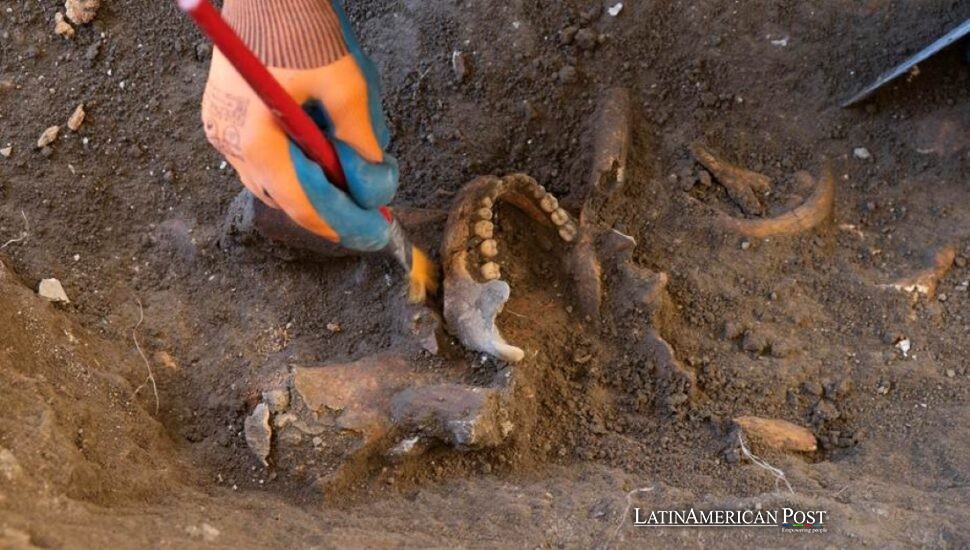
Archaeologists in the Dominican Republic are searching for Enriquillo, the Taíno leader recognized as the Americas’ first guerrillero. At a ruined church site, human remains are rapidly uncovered, prompting the nation to confront how to honor Indigenous resistance through evidence rather than myth.
Within the Ruins, a Church Continues to Hold Its Dead
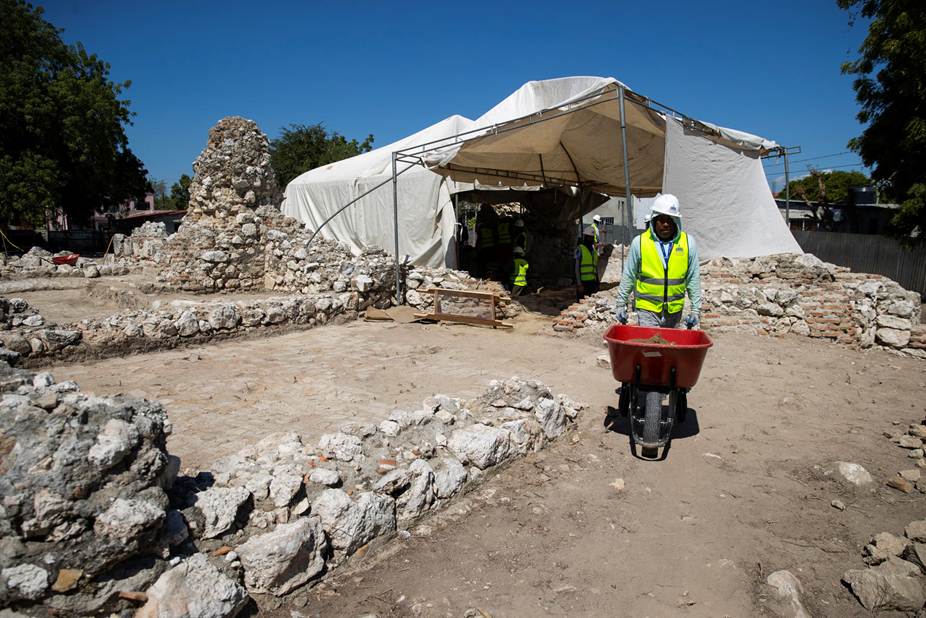
The sun illuminates the broken stone as it does in locations exposed to the elements for extended periods, warming surfaces originally intended for shade. Within the ruins of the church of Las Mercedes, the ground is treated as an archive. Soil is lifted and sifted, revealing bodies one by one where the temple once stood.
Kathleen Martínez, the archaeologist leading the excavation, describes the collapse plainly: “In that destruction, all the blocks of the walls of the church and the roof collapsed, and this was abandoned,” she told EFE. The ruin is not metaphorical; it both complicates and enables the ongoing search.
The international team aims specifically to locate the remains of Enriquillo, the Indigenous Taíno leader born in 1498 and deceased in 1535, regarded by many in the Dominican Republic as a foundational symbol. He led an uprising against Spanish authorities, retreating to the Bahoruco mountains in the southwest and fighting for years before accepting a peace agreement offered by Carlos I of Spain in 1533. Following this agreement, he was treated as a noble.
However, his remains disappeared centuries ago, motivating researchers to return to this site. Historical documents record Enriquillo’s request to be buried in this church when the area was known as Azua.
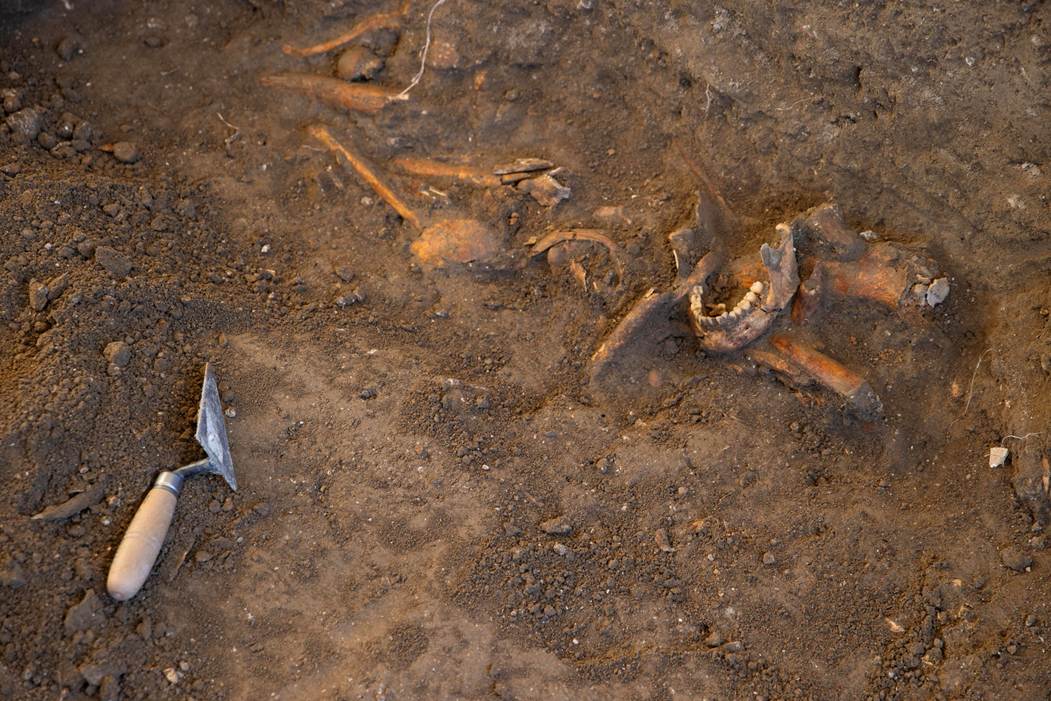
The excavation, scheduled to continue until February 28, has already uncovered more than ten bodies. This discovery alters the nature of the dig, revealing not isolated skeletons but multiple burials at a site repeatedly used.
Martínez described the site as a highly active burial center.
This observation implies that if the site contains numerous burials, then Enriquillo, if present, would not be alone but part of a larger group.
A Letter, a Radar Scan, and Three Promising Points
The case for Las Mercedes rests on paper as much as on stone. Lidia Martínez de Macarrulla, a Dominican historian, points to a particular document as the strongest clue. The evidence, she said, is “a letter that members of the Royal Audiencia wrote in the year fifteen thirty-five addressed to Emperor Charles V, informing him of the death of Chief Enriquillo,” she told EFE.
According to the letter, Enriquillo “had asked to be buried in the church of Las Mercedes in a town called Azua de Compostela,” she told EFE. The temple, as noted in the account, was constructed in the sixteenth century.
Years later, in two thousand twenty-one, Israeli scientists used ground-penetrating radar to survey the ruins and identified three locations where bones were likely to be found. That scan is what turned a historical hypothesis into a targeted search. Two weeks ago, the current excavation began, working from those points. Bodies surfaced quickly.
The trouble is that an active burial site helps and hurts at the same time. It confirms that the church was used as the documents suggest. It also means the dig becomes a sorting problem. Each set of remains must be identified in relation to the others, with care, without shortcuts.
Martínez characterizes the process as a series of stages: initially, specialists determine whether the remains are Spanish (i.e., of European origin) or native. If native, she told EFE, all available technologies are employed to extract further information.
She is cautious but not detached. She says the team knows Enriquillo suffered several illnesses, and she holds onto the possibility that modern tools might help reconstruct that history if his remains are found. “We know the chief Enriquillo suffered several diseases, and perhaps with modern technology, if we are in the presence of the chief’s remains, we can reconstruct that story,” she told EFE.
The work extends beyond broad questions of identity; it is also technical and detailed, examining remains bone by bone and tooth by tooth, creating a record inscribed in calcium and soil.
Antonio Guio, a Spanish archaeologist participating in the excavation, adds another angle: material culture. If Enriquillo was buried with an amulet or an object tied to his Indigenous world, Guio said, it could be a revealing indicator. If not, he points to the next option, analyzing bones for information, including DNA.
The approach prioritizes method over romanticism, although the latter remains an underlying presence.
A Mausoleum Waiting for Proof
In the Dominican Republic, Enriquillo is not only a subject for specialists. He is treated as a national figure, and this search is taking place within that political and cultural weight.
Martínez explains that her motivation extends beyond mere curiosity. “He represents national identity,” she told EFE, describing Enriquillo as a leader who resisted the Spanish Crown in pursuit of dignity for his people. She emphasizes that the peace agreement was not a surrender but a negotiation: “He achieved that the Spanish Crown negotiated with him a peace agreement to save the life and dignity of his people,” she told EFE. “He is the first of ours who fought for human rights, and that captivated me,” she added.
The wager here is that countries like the Dominican Republic are still negotiating how to tell Indigenous history without flattening it into either folklore or patriotic ornament. Finding Enriquillo’s remains would not settle every argument about the colonial past. But it would anchor the story in a way that cannot be waved away.
In 2021, President Luis Abinader issued a decree to construct a mausoleum in Enriquillo’s honor. Martínez de Macarrulla stated that, if the remains are discovered, it would be erected at the site of the church ruins; otherwise, a cenotaph would be constructed.
Her rationale emphasizes obligation rather than certainty. “We understand that Enriquillo deserves, in his struggle for freedom and dignity, that our people, and I believe the whole Caribbean, all of Hispanic America, know him and honor his memory, because he was a great fighter for freedom and for the dignity of his ethnic group,” she told EFE.
At the ruins, work proceeds methodically and with great effort. The ground reveals human remains but not definitive answers. Each careful excavation represents a refusal to let history remain buried by past destruction.
Also Read: Costa Rica Unearths Giant Sloth and Mastodon Fossils, Rewrites Memory