Latin America Fossil Swamps Reveal Ancient Giant Anacondas And Climate Secrets
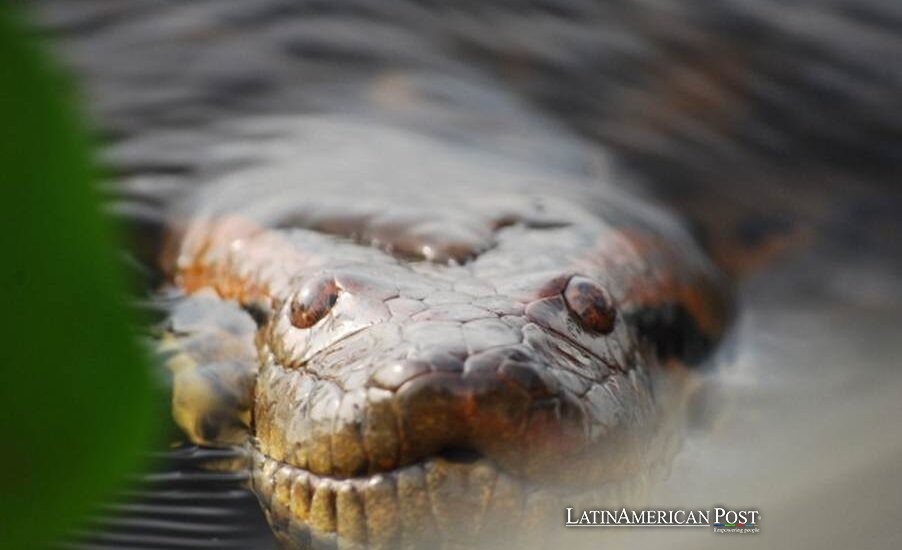
Deep beneath Venezuela’s sun-baked badlands, fossil hunters have uncovered the ancient origins of anacondas, revealing how these colossal snakes emerged in Miocene wetlands, survived dramatic climate shifts, and now face new conflicts as humans push deeper into their river strongholds.
Unearthing Giants In Northern Venezuela
For a group as famous – and feared – as anacondas, we know surprisingly little about where they came from or how they grew so big. Their story has always been complicated to read in the rocks. Snakes in general leave a poor fossil record, and semi-aquatic snakes like anacondas are even worse: they live in hot, humid environments where soft tissue rots quickly, and acidic soils quietly dissolve bone. Most of their ancient relatives melted back into the mud.
Northern South America is one of the rare exceptions. In the far northwestern corner of Venezuela, near the town of Urumaco, eroded desert badlands expose layers of ancient river, swamp, and floodplain deposits that once teemed with life. Over the past two decades, these deposits have yielded a parade of fossil giants – enormous crocodilians, turtles the size of pool tables, and, crucially, now, some of the earliest known anacondas.
In a new study highlighted by BBC Wildlife, a University of Cambridge-led team turned to this Venezuelan treasure trove to ask a simple question: when, and how, did anacondas become giants? The answer, they discovered, reaches back more than 12 million years, revealing a fascinating chapter in Earth’s history that can inspire awe and curiosity about ancient life.
Measuring The Monster Serpents Of The Miocene
The researchers analysed 183 fossilised vertebrae – the backbone bones that snakes leave behind – belonging to at least 32 individual anacondas from Urumaco. By carefully measuring the vertebrae and comparing them with those of living snakes, they were able to estimate the size of the animals they once supported. They paired those measurements with a technique called ancestral state reconstruction, which uses the traits of modern species to infer the characteristics of their extinct common ancestors.
The result was striking. According to lead author Andrés Alfonso-Rojas, a PhD student in the University of Cambridge’s Department of Zoology, the fossils show that anacondas hit their maximum body size roughly 12.4 million years ago, in the Middle Miocene, and have barely changed since. The ancient snakes reached around 5.2 metres in length, essentially the same as today’s green anaconda, which typically measures between 4 and 5 metres in the wild. “By measuring the fossils, we found that anacondas evolved a large body size shortly after they appeared in tropical South America around 12.4 million years ago, and their size hasn’t changed since,” Alfonso-Rojas told BBC Wildlife.
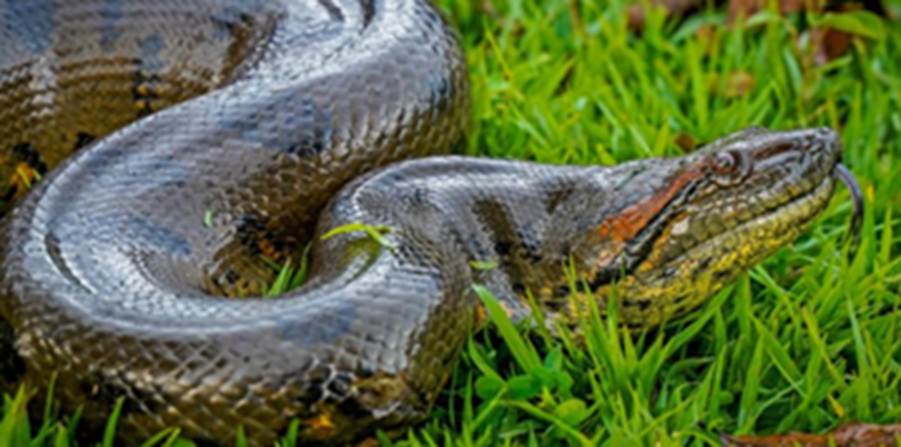
That continuity is impressive when you consider what anacondas do with that bulk. The green anaconda is the heaviest snake alive today, a muscular ambush predator that lurks in slow-moving rivers and flooded forests. It will take almost any prey it can overpower and swallow: fish, caimans, capybaras, and even jaguars in sporadic cases. Anatomically, there is no real barrier to eating a human – their jaws can open wide enough to get around an adult’s shoulders, our widest point. The main reason such attacks are vanishingly rare is simple geography: people tend to avoid the deep, murky backwaters where these snakes thrive. As deforestation, ranching, and roads push human activity further into those habitats, BBC Wildlife notes that conflict is almost inevitable to increase.
Why Anacondas Stayed Huge As Other Giants Vanished
The Venezuelan fossils also place anacondas within a broader cast of Miocene mega-reptiles. They shared their world with Purussaurus, a caiman that could reach 12 metres, and Stupendemys, a freshwater turtle with a shell nearly 3.2 metres long. It was a time when tropical South American rivers were crowded with giants. Yet, crucially, those other titans eventually disappeared. Purussaurus and Stupendemys both went extinct and were replaced by smaller relatives in the cooler Pliocene that followed. The anaconda line did not shrink.
Alfonso-Rojas and his colleagues admit they were surprised. “This is a surprising result because we expected to find the ancient anacondas were seven or eight metres long,” he told BBC Wildlife. With global temperatures higher in the Miocene, many biologists had assumed snakes – whose body size is affected by temperature – would have reached even more extreme sizes. But the fossils show no evidence of anacondas longer than those we see today.
Instead of evolving gigantism and then downsizing as the climate cooled, anacondas have hit a sweet spot early on and held it. One idea is that their enormous size emerged in response to that Miocene combination of warmth and expansive wetland ecosystems, which offered abundant prey and stable aquatic refuges. A big snake would have thrived in a world of deep channels and large-bodied neighbours, able to dominate food webs and fend off predators.
Why they stayed big after temperatures fell and many other wetland giants vanished is more complicated to explain. Their semi-aquatic lifestyle insulated them from some of the pressures that forced other species to shrink. Water buffers temperature swings, and wetlands can remain productive refuges even as surrounding landscapes dry or cool. Or perhaps, once anacondas reached their current scale, there wasn’t much evolutionary advantage in getting smaller. As Alfonso-Rojas says, the persistence of their gigantism “is a mystery” that will require fossils from younger time slices to untangle.
Venezuela, Fossil Swamps, And A Giant’s Future
The story emerging from Urumaco is bigger than just one snake. It underscores how crucial Venezuela’s fossil outcrops are for understanding the deep history of tropical South America – a region whose modern biodiversity sits on foundations that were, until recently, almost invisible. These fossils, like the worn edges of vertebrae, are vital clues that help us understand how species like the anaconda evolved and why conserving their habitats today is essential for their future.
They also invite uncomfortable comparisons with the present. The same conditions that once favoured giant anacondas – warm climates and sprawling wetlands – are now under heavy pressure from dams, cattle, mining, and climate change. In modern Venezuela, as in Brazil and Colombia, the rivers that hide these snakes are being dredged, straightened, or poisoned. At the same time, roads and settlements are bringing people into closer contact with wildlife that evolved to avoid us. When a five‑metre snake meets a fishing camp, the encounter tends to end badly for the snake, raising concerns about their survival.
For Alfonso-Rojas and other researchers, the next step is to fill in the gaps. The Urumaco fossils provide a snapshot of anacondas early in their history, but there are few fossils from the intervening epochs. Each discovery—from another Venezuelan outcrop, a Colombian coal mine, or a Brazilian riverbank—could help explain why anacondas kept their giant bodies while other Miocene monsters faded away.
What is clear already is that Venezuela’s fossil swamps hold a key chapter in the story of these snakes. Understanding how anacondas once adapted to past climate shifts and ecological upheavals will not, by itself, save them from habitat loss or persecution today. But as BBC Wildlife’s coverage of the research suggests, it can sharpen our sense of what is at stake when we drain wetlands, burn forests, or push roads through the heart of their range. These animals have survived 12 million years of change and remained giants. Whether they can survive the next century of human activity in Latin America is now the more pressing question.
Also Read: Peru’s Ancient Skywatchers Rewrite Global Astronomy From A Desert Ridge