Latin America’s Aging Boom Makes Care Robots Feel Suddenly Practical
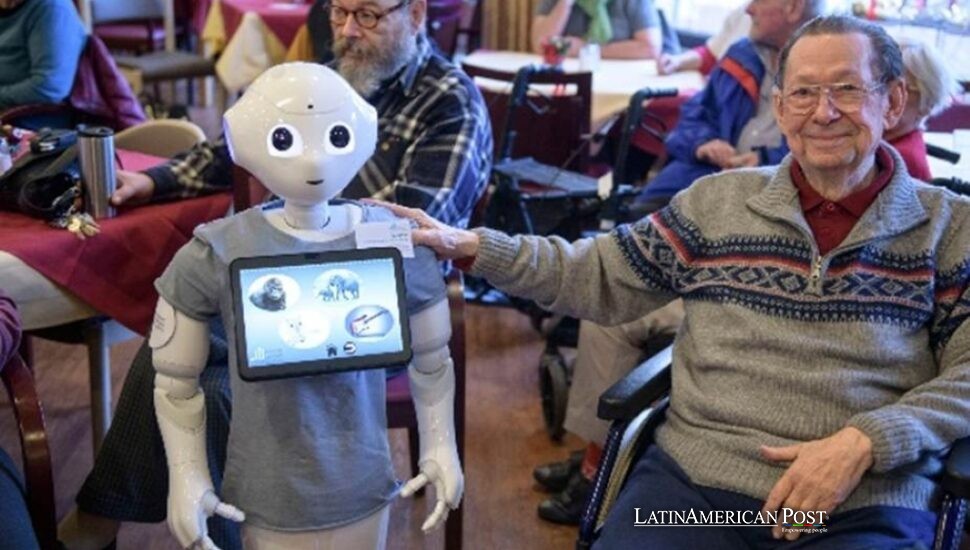
A white service robot moves smoothly through a care home in China, reminding staff about medications and helping turn patients. This quiet routine is important for Latin America, where families still provide most elder care even as populations age quickly and caregivers become harder to find.
A Machine That Buys Time, Not Love
In a care facility in eastern China’s Jiangsu province, a waist-high white robot moves quietly between rooms. It glides smoothly, like a good appliance that blends into the background until you realize all it quietly does. Its digital face lights up with a friendly greeting as it makes its rounds. It handles the less glamorous tasks: reminding caregivers to reposition bedridden residents, prompting medication times, tracking vital signs, and alerting staff to any unusual changes in heart rate or breathing.
It may look futuristic, but the problem it addresses is deeply human, and increasingly urgent.
Aging societies worldwide face the same challenge: more demand for elder care but fewer caregivers. In Latin America, this change is accelerating, and the numbers are hard to ignore. ECLAC projects that by 2050, one in four people in the region will be sixty or older. It also forecasts that by 2050, about 18.9 percent of the population will be sixty-five or older, nearly double the share seen in 2024.
In countries such as Chile, Brazil, and Argentina, more than 15% of the population is now aged 65 or older, according to Pension Policy International, the Havana Times reported. Cuba faces an even sharper transformation. The FIU Cuban Research Institute projects that by 2050, an estimated 1.4 million Cuban elderly, roughly forty percent of the senior population, will be above eighty years of age.
These numbers don’t just stay on paper. They mean more appointments, more medications, more stairs to climb, and more worry. They turn family meetings into shift schedules. In many Latin American countries, like in China, elder care mostly falls to families. Adult children often take on the primary responsibility, even as smaller families and migration put pressure on traditional support systems. The problem is that when the family system breaks down, it happens quietly, behind closed doors, with no announcement.
That’s why even simple service robots are getting noticed. Not because they can replace a daughter’s patience or a son’s sense of duty, but because they can save time. And in elder care, time is the one thing everyone runs out of first.
Fully autonomous humanoid robots capable of cooking, cleaning, and providing comprehensive elder care are still a long way off. But in more targeted ways, technology is already making a measurable difference.
Latin America’s Care Gap Collides With Costly Hardware
Mobility support is one example. Exoskeleton robots are being introduced in some care facilities and community rehabilitation centers, helping older adults walk again. These wearable devices support hips and knees, adapting to each wearer’s movement patterns.
Wu Liying, a woman in her seventies from Hangzhou, recently used one during a rehabilitation session. With its assistance, she was able to walk from the first to the third floor without resting. “I felt the equipment lifted my legs and made walking much easier,” she said.
Other innovations aim to ease the physical burden on caregivers. Cleaning bedridden older adults after bowel movements is a tiring and time-consuming daily job. Now, nursing robots are helping out. They have an attachment that looks and works like a traditional dipper. Connected to a main cleaning unit on the floor, the robot uses built-in sensors to detect waste, clean the area, and automatically air-dry the body.
A caregiver at a care facility in northwest China’s Shaanxi province put it: “Before, I spent more than half a day cleaning up waste and changing bedding. Now, with nursing robots helping, I have more time to talk with my older residents.”
This statement feels different when you consider Latin America’s care situation. The region still relies heavily on unpaid care at home, even as that support is shrinking. PAHO describes the main challenge: rapid aging is driving up demand for care services while family-based care, which currently provides most dependency care, is shrinking.
Caregiving burdens are not shared equally. A survey by the Inter-American Development Bank shows that caregivers in Latin America and the Caribbean are often overworked and underpaid. Unpaid caregivers report major disruptions to their jobs and little training for complex tasks. The hope is that technology can ease the most difficult aspects of care. But in a region marked by inequality, this relief risks becoming a luxury only some can afford.
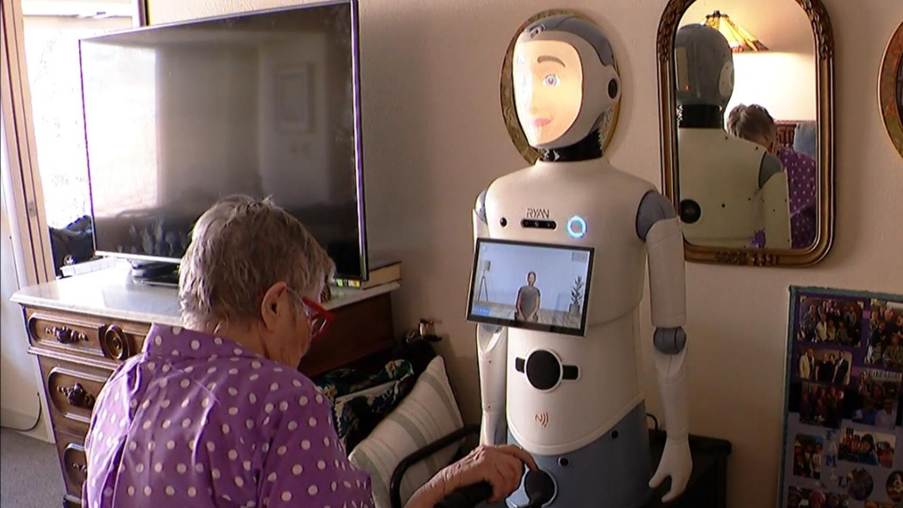
At present, Latin America is still in the early stages of adopting service or care robots. In Mexico, some private clinics have introduced robotic-assisted therapy devices to help older adults with mobility or physiotherapy exercises. Research published on technology-assisted stroke rehabilitation in Mexico has described robotic rehabilitation systems designed to reduce labor demands while supporting therapy. In Cuba, universities and technology research centers have experimented with small educational or social robots in healthcare and elder support initiatives. Hospitals and rehabilitation centers in Brazil have also trialed exoskeletons to help patients regain mobility after strokes or injuries, even as access remains uneven and concentrated.
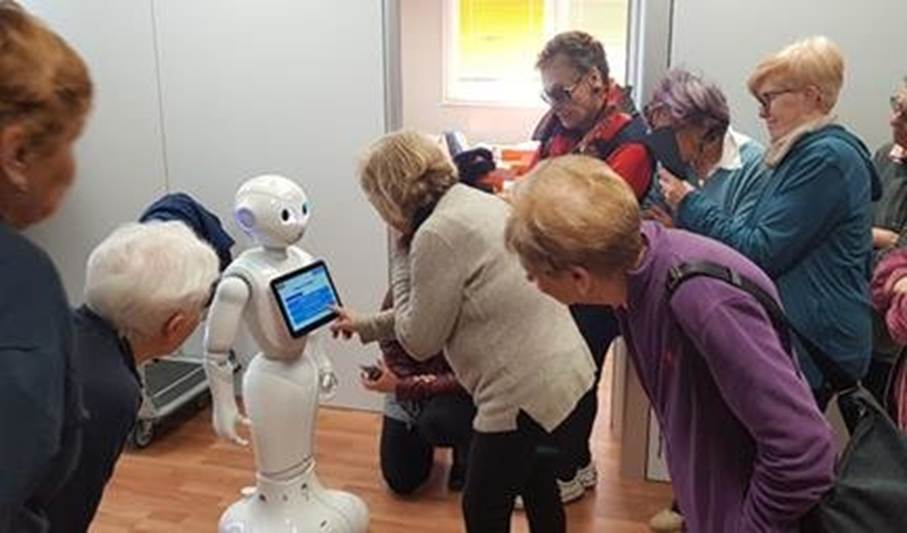
Despite their promise, service robots are still rare in private homes. Real-life challenges like small apartments, high costs, and ease of use make adoption difficult. These issues will take time to solve. Wang Sumei, a researcher at the Chinese Academy of Sciences, says the focus should be on improving technical skills to make care robots more practical for home use. Gathering data is key for progress, but it’s expensive, and real home trials are still few.
Cost is the biggest barrier. Exoskeleton robots for rehabilitation can cost about $22,000, which is out of reach for most families. In Latin America, where many older adults depend on small pensions or money sent by family, that price isn’t just a purchase choice. It’s a barrier.
Policy Choices Decide Whether Robots Deepen or Ease Inequality
Looking ahead, social questions come up. How might emotional bonds with machines affect older adults? Could the dependence on robots change long-standing family caregiving traditions? In Latin America, where care is still deeply tied to family duty, these questions are very real. They touch on identity, dignity, and the fear of being alone, even if a device is nearby.
Industry experts stress that care robots aren’t meant to replace people. Instead, they handle repetitive, heavy tasks such as lifting, cleaning, and monitoring. This gives caregivers and adult children more time and energy to focus on personalized care, such as rehabilitation and meaningful conversations. That’s the ideal scenario, but it won’t happen on its own.
Beyond technology, strong policy support is essential. Expanding community rehabilitation services, increasing public health insurance coverage, and ensuring fair access to elder care—especially in underserved areas—are all key to social stability in aging societies.
Latin America is already being pushed toward that conversation. PAHO has urged countries in the Americas to invest in long-term care systems as demographic change accelerates, arguing that care dependency is rising and will continue to rise. And in late 2024, PAHO reported that health ministers and authorities in the region approved a policy aimed at strengthening long-term care in the Americas, a sign that governments are beginning to treat care as a system rather than just a family matter.
This is why the robot in Jiangsu is more than just a curiosity for Latin America. It acts like a mirror. The robot moves smoothly because the facility has the right protocols, staff, and oversight to make it useful. Without that support system, the same robot would be an expensive decoration.
In this larger ecosystem, service robots may play a more significant role, complementing human care while addressing demographic challenges in aging societies worldwide. China is entering a new policy cycle where elderly care remains a central priority, and technologies that support older adults are expected to receive stronger institutional backing, from research funding to pilot programs and public service integration.
Latin America’s path will be different, shaped by challenges like inequality, informal work, migration, and the fact that family care is both a cultural strength and a structural weakness. The question isn’t if robots will come—they will, in some form. The real question is whether Latin America creates the rules, funding, and public care systems that decide who gets help, who is left behind, and whether technology becomes a bridge or a barrier.
Also Read: Latin America Hears Pope’s Silence Plea as Phones Feed Addiction, Steal Sleep