Panama Forest Bats Hunt Like Lions And Challenge Nature’s Rules
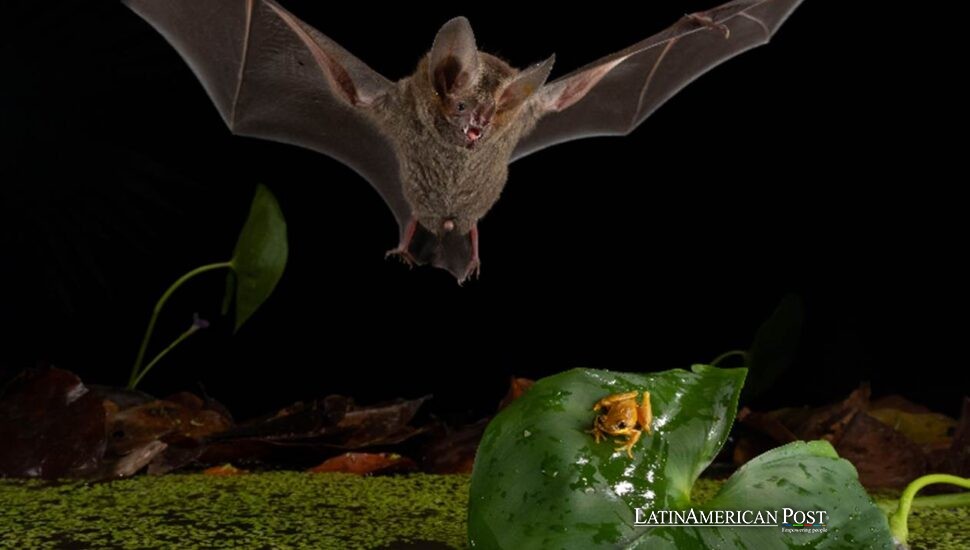
Deep in Panama's humid forests, fringe-lipped bats hunt like miniature lions, outpacing Africa's big cats in stealth and success, a report in Current Biology shows, revealing how tiny predators, intact ecosystems, and human choices intertwine in Latin America's changing night.
Tiny Predators Rewriting The Rules Of The Hunt
When people in Panama talk about the forest at night, they usually picture jaguars, owls, maybe the rustle of armadillos in the leaf litter. Almost no one imagines that one of the most efficient hunters in these tropical landscapes weighs about 30 grams, roughly the mass of a small bag of chips. Yet that is precisely what fringe-lipped bats, Trachops cirrhosus, are: small, quiet, and astonishingly good at killing. The new study, published in Current Biology by researchers from Aarhus University and the Smithsonian Tropical Research Institute (STRI), drags these tiny carnivores out of the shadows and into the broader debate over how predators survive as Latin America's forests fragment and warm.
There are only nine known species of truly carnivorous bats in the world, animals that meet more than half of their energy needs by eating vertebrates such as frogs, birds, or small mammals. Biologists long assumed that, because of their size and high metabolic rates, such bats would be forced to focus on modest, abundant prey, small frogs they could grab repeatedly to keep their internal engines running. In the case of fringe-lipped bats in Panama, that meant scientists expected a steady diet of tiny túngara frogs calling from puddles and ditches.
To test those assumptions, the team equipped 20 wild bats with miniature "biologger backpacks" and released them back into the forest. These high-tech tags recorded movement and sound, allowing the researchers to eavesdrop on entire nights of activity. What emerged from those recordings upended the script. The bats spent about 89 percent of their time completely still, clinging to vegetation and conserving energy. When they did move, their hunting flights were startlingly brief: the average lasted only about eight seconds. In those slivers of action, they were not picking off tiny, easy prey. They were seizing frogs, birds, and small mammals that could weigh two-thirds of the bat's own bodyweight, sometimes nearly as much as the bat itself.
When Classic Predator Theory Meets A Panamanian Exception
In classic predator–prey theory, size dictates strategy. Large carnivores such as lions and polar bears can afford to chase big, energy-rich prey because their slower metabolisms and greater reserves let them survive long stretches of failure. Small predators, by contrast, burn energy quickly; they are expected to nibble on whatever is plentiful and easy to grab. Studies across species, published in journals such as the Journal of Animal Ecology and the Journal of Mammalogy, have generally reinforced this pattern. Fringe-lipped bats from Panama are a glaring exception.
The Current Biology report shows these bats hunting more like lions than like typical small insectivores. They use a "hang-and-wait" strategy, remaining motionless for long periods, then launching short, decisive attacks on relatively large prey. Their success rate is extraordinary. While lions in the Serengeti succeed only about 14 percent of the time and polar bears as little as 2 percent, the fringe-lipped bats recorded in Panama secured a meal in roughly 50 percent of their attempts. That puts them among the most energy-efficient predators known.
Lead author Leonie Baier, a Marie Skłodowska-Curie postdoctoral fellow at Aarhus University and research fellow at STRI, captures the shock of that finding in Current Biology: "It was incredible to discover that these bats hunt like big predators trapped in tiny bodies… Instead of spending the night constantly on the wing, they wait patiently, strike with high precision, and sometimes end up catching enormous, energy-rich prey. The discovery that an animal this small can do this really turned our assumptions upside down."
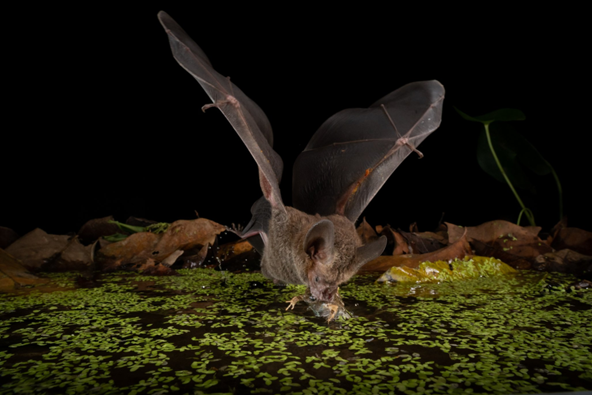
The numbers behind that surprise are vivid. A single bat can consume nearly its own body weight, about 30 grams, in one meal. Prey averaged around 7 percent of the bat's body mass, but some individuals tackled much larger targets, including Rosenberg's gladiator tree frog, which can weigh up to 20 grams. The longest recorded feeding event lasted 84 minutes, the sound of deliberate chewing echoing through the biologging audio. Older bats proved especially adept at handling these oversized meals, suggesting that experience and social learning sharpen their already impressive skills. These animals are known to remember particular frog calls for long periods and to learn from watching others, a kind of cultural transmission that echoes human apprenticeship and folklore.
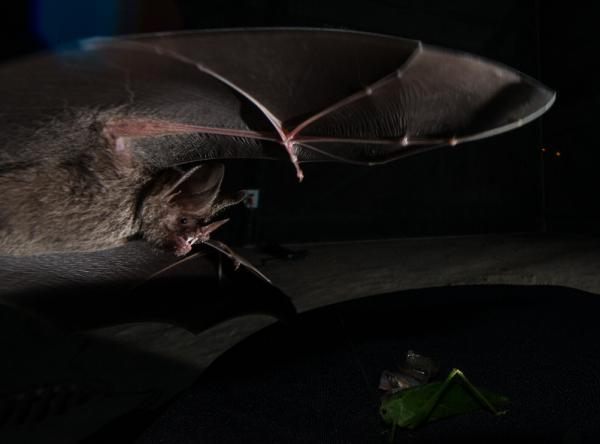
Sensory ecology is at the heart of their strategy. The bats possess low-frequency hearing tuned to pick up frog mating calls, and they combine that with vision and echolocation. Perched quietly in the dark, they listen for the subtle rhythms of a calling frog, the rustle of a bird, the slight movement of a small mammal. Once a target is detected, they launch, home in using echolocation, and strike with remarkable precision before returning to rest, much as a lion retreats to the shade after a successful kill on the savanna.
Senior author Laura Stidsholt, an assistant professor at Aarhus University, describes the research approach in Current Biology: "We wanted to understand what these bats are actually doing out there in the dark, so we listened in, much like the bats themselves listen to their prey. With the data from our biologging tags, which combine high-resolution sound recordings with movement data, we were able to reconstruct entire hunting sequences in the wild. In this way, we experienced the forest through the bats' ears — revealing a hidden world of patience, precision, and survival in the dark."
Dark Forest Nights, Fragile Futures For Panama's Hunters
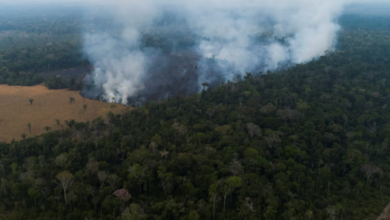
The hunting method that makes fringe-lipped bats such efficient predators is low-risk, high-gain, but it comes with a condition: it depends on intact forests packed with frogs, birds, and other prey. Their "hang-and-wait" lifestyle only works if there is enough life in the understory to reward patience. In a region where biodiversity is declining and ecosystems are shrinking, that dependence is precarious. Ecologists writing in journals such as Biological Conservation and Conservation Biology have long warned that Central America's tropical forests, including those in Panama, are under pressure from expanding cattle pastures, infrastructure linked to the Panama Canal, and climate-driven shifts in rainfall.
For local communities, these bats are part of a larger, often contradictory reality. Panama markets itself as a crossroads of the world, a service hub built around shipping lanes and financial flows, yet its identity is also tied to the dense, rain-soaked forests that fringe the canal and stretch into Darién. Those forests regulate water, shelter Indigenous groups, draw tourists, and, as this study reminds us, host delicately balanced food webs where even a 30-gram bat plays a decisive role. Carnivorous bats help hold frog populations in check and can indirectly influence insect numbers, becoming small but significant threads in the ecological fabric.
The authors of the Current Biology report warn that the future of these miniature predators is bound to the fate of these ecosystems. As forest patches shrink and become more isolated, the rich soundscape the bats rely on, choruses of frogs, rustling wings, and nocturnal mammals moving through foliage, dims. Their strategy leaves little margin for error: lose too many prey, and the "low-risk, high-gain" equation breaks down. For Latin America, where debates over mining, agro-industry, and conservation often play out in the same valleys and river basins, the story of Trachops cirrhosus is a reminder that economic decisions echo all the way into the treetops at midnight.
Seen through a Latin American lens, the discovery is more than a curious fact about an obscure bat. It is an invitation to rethink power and vulnerability. In a world that often equates strength with size, of countries, corporations, and predators, Panama's fringe-lipped bats show that survival can hinge on patience, knowledge, and the quiet richness of a healthy forest. Their success, reported in Current Biology, is not just theirs. It is a fleeting measure of how much wild night remains in the region, and of how quickly it could vanish if the forest, and the people who live with it, are not heard with the same attention these bats give to a single frog's call.
Also Read: Chile Night Sky At Risk As Green Energy Dims Stars and Astronomy Potential