Peru’s Ancient Guano Farms Offer Climate Lessons for Today
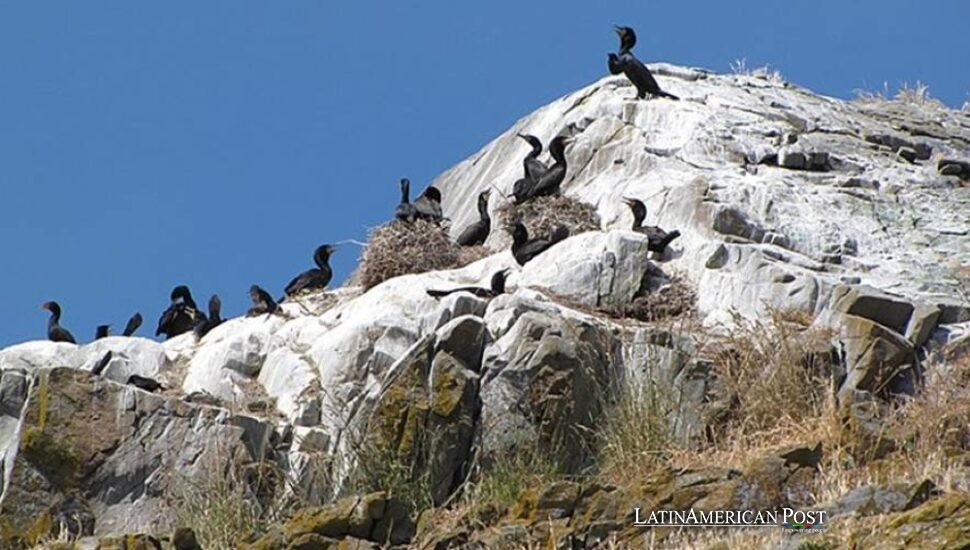
Thirteen miles off Peru’s coast, guano piles once fueled empires and budgets. New PLOS One research traces seabird fertilizer on maize back at least 1250, reframing Chincha power and pressing today’s El Niño policy to learn from older resilience.
Where White Gold Still Glows
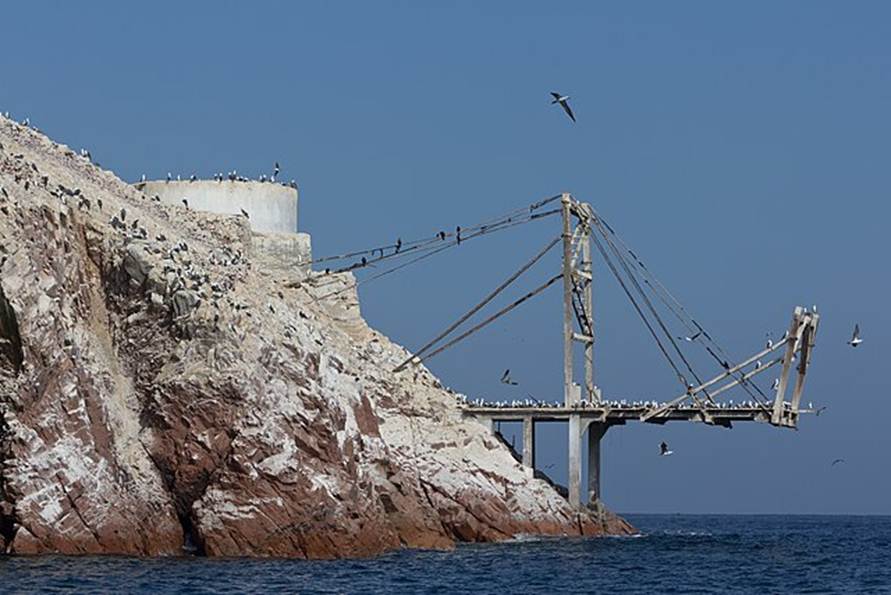
From a distance, the trio of islands looks almost unreal, as if someone dusted the rock with flour and forgot to stop. Up close, it is something else entirely: mountainous piles of guano, nicknamed “white gold,” stacked into pale ridges and slopes. The wind does not let you forget what it is. Neither do the birds, circling and crying overhead, treating the deposit as landscape, as livelihood, as routine.
That routine has always been the point. Guano is seabird poop mixed with other waste, and it is a powerful nitrogen deposit. In the late eighteen hundreds, it helped spur much of the United States’ imperial acquisitions, turning fertilizer into a lever for distant ambitions. But the trouble is that this story, told as a foreign scramble, can flatten what Peru already knew. Guano was valued long before the United States came on the scene. It sat in plain sight, within reach of people who lived by the coast and learned to read its promise without needing an empire to name it.
New research published on February eleven in PLOS One sharpens that longer story. By tracing chemical signatures in maize cobs recovered from Peru’s Chincha Valley, the study offers evidence that Indigenous communities were applying guano from those islands to maize crops by at least 1250, well before the rise of the Inca Empire in the early 1400s.
It is a very technical claim. The researchers used stable carbon, nitrogen, and sulfur analyses on 35 late prehispanic maize cobs and 11 seabirds from archaeological contexts spanning the late Formative period through the Colonial period. They also drew on historical data, colonial era records, and regional avifauna iconography and assemblages. But the human translation is simple: someone had to get that guano, move it, and decide it belonged in a field. Someone had to repeatedly believe that it would make maize stand taller.
“The origins of fertilization are important,” Emily Milton told Scientific American, because soil management would have been key to larger crop production.
That line lands with the weight it deserves because the Chincha Kingdom was not small in historical imagination. Archaeologists have long known that people in the Chincha Valley managed large-scale crop production and built a wealthy coastal polity. They interacted, traded, and competed. Yet the mechanics of that wealth, the everyday steps behind the political result, have been harder to pin down.
The wager here is that guano was not just fertilizer. It may have been infrastructure for power, the quiet chemistry behind sociopolitical and economic expansion, and the foundation for the Chincha Kingdom’s eventual relationship with the Inca Empire. If maize yields rise, trade can thicken. If trade thickens, relationships sharpen, and rivals start counting what you have.
A Kingdom Measured in Isotopes
The study’s method reads like a lab protocol, but it is also detective work. Milton and her colleagues examined ratios of isotopes, forms of atoms with differing numbers of uncharged neutrons in their nucleus, focusing on carbon, nitrogen, and sulfur in maize cobs from the Chincha Valley. The approach is an archaeological staple, but it is more regularly applied to animal bones than plant material, and it has rarely considered sulfur in this way.
What they found is described as the strongest evidence yet for pre-Inca use of marine fertilizers in Chincha. The isotopic and radiocarbon data align with colonial-era records and the region’s bird-related imagery and assemblages, pointing to guano use by at least 1250. The study also notes that maize nitrogen values are consistent with archaeological studies on guano manuring in Chile, widening the known geographical extent of this agricultural practice.
Jordan Dalton, who studies the region but was not involved in the new research, framed the significance in terms that feel almost impatient with the length of the gap. “We don’t really understand the nature of those social relationships,” she told Scientific American.
Guano helps fill that in, not as a romantic detail but as a practical advantage. Dalton called it the best of fertilizers. “Guano is the top of the top,” she told Scientific American, because it is so rich in nitrogen.
It also complicates other work. Scientists often use isotopic analysis to understand the diets of ancient peoples and animals because marine and terrestrial foods leave distinct chemical signatures. But when marine fertilizer is added to terrestrial crops, the signal can blur. “It creates this sort of false marine signal,” Milton told Scientific American.
That matters beyond Peru because it is a reminder that ancient agriculture was not passive. It was experimental, connected, and capable of reshaping the traces archaeologists later depend on. It was also a reminder that political economy does not always announce itself with monuments. Sometimes it is measured in the residues of a cob.
El Niño Policy Meets an Older Normal
The notes of this research echo into a different argument, one that is less about what a kingdom did and more about what a state should do now. Disaster management policies are often aimed at maintaining or quickly restoring the operations established during normal periods. Peru’s approach to El Niño follows this model. The cost of reconstruction rises with each event.
But archaeological evidence points to something more adaptive in the past. Prehispanic farmers successfully managed El Niño events, developing resilient hybrid canal systems that utilized both river water and floodwater for agricultural production. They treated El Niño as part of the norm and accounted for floodwaters in their irrigation technology rather than treating each episode as an exception to be repaired.
What this does is put pressure on the modern idea of normal. In the context of a global climate crisis, the study calls for a conceptual shift in the development of effective disaster management policy, away from returning to yesterday’s baseline and toward building for the conditions that keep arriving.
In the Chincha Valley story, guano is both a material clue and a political metaphor. Someone looked at seabird waste and saw a tool for abundance. Someone looked at floodwater and saw a resource to route, not only a threat to endure. The islands offshore and the canals inland follow the same logic: take what the environment offers, even when it is inconvenient or strange, and make it part of the system.
“Sniffing out centuries-old traces of seabird poop” is not glamorous, as the notes put it, but archaeology rarely is. Its power lies in its insistence on the ordinary. Fertilizer carried. Water guided. Maize grown. And a kingdom, expanding not only through force or prestige, but through a chemistry that turned waste into food and food into leverage.
Adapted from “This Ancient South American Kingdom Ran on Bird Poop” by Meghan Bartels, published in Scientific American.
Also Read: Brazilian Lula Targets Online Bets as Poor Households Bleed Quietly