Peruvian Women Rewove Imperial History Through Tombs, Thread, and Power
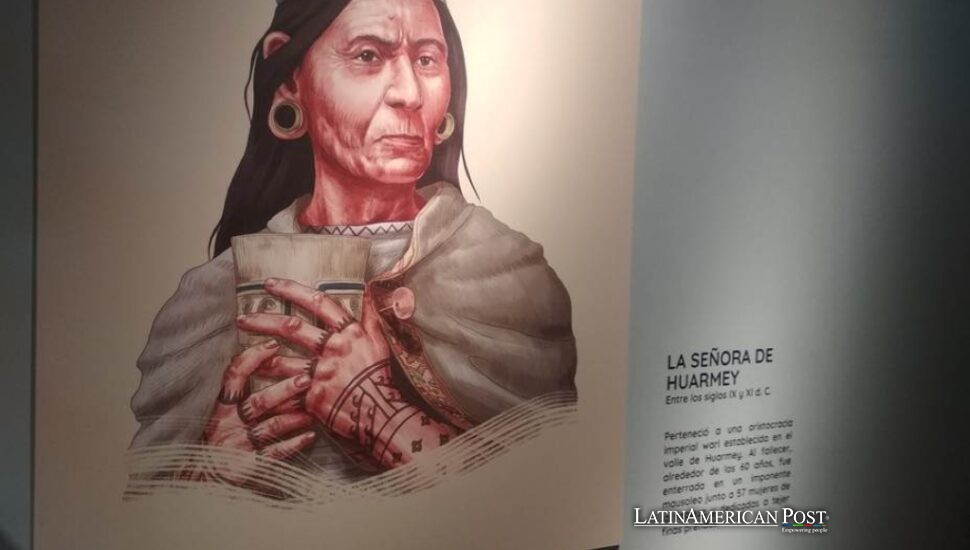
At El Castillo de Huarmey, the discovery of an unlooted Wari royal tomb prompted a reevaluation of imperial dynamics in ancient Peru, revealing elite women as creators of wealth, ritual authority, memory, and imperial legitimacy rather than mere decorative figures.
A Necropolis Against Forgetting
By the time archaeologists commenced serious investigation at El Castillo de Huarmey, the site had already suffered extensive damage. Looters had tunneled through the massive hill in search of ancient tombs and treasure, leaving bones exposed. Modern debris covered what once was sacred ground. Located four hours north of Lima on the coast, the site resembled a moonscape, scarred by numerous intrusions that confused material value with cultural memory.
The damaged surface marks the beginning of a more compelling narrative. Many cautioned University of Warsaw archaeologist Miłosz Giersz that excavation would be challenging and likely unproductive. However, the slopes contained fragments incongruent with the surrounding emptiness, including textile remnants and broken pottery, indicating a residue of order beneath disorder. According to National Geographic, Giersz identified in this scatter the subtle signature of the Wari civilization, which remains frequently regarded as a precursor rather than a dominant force.
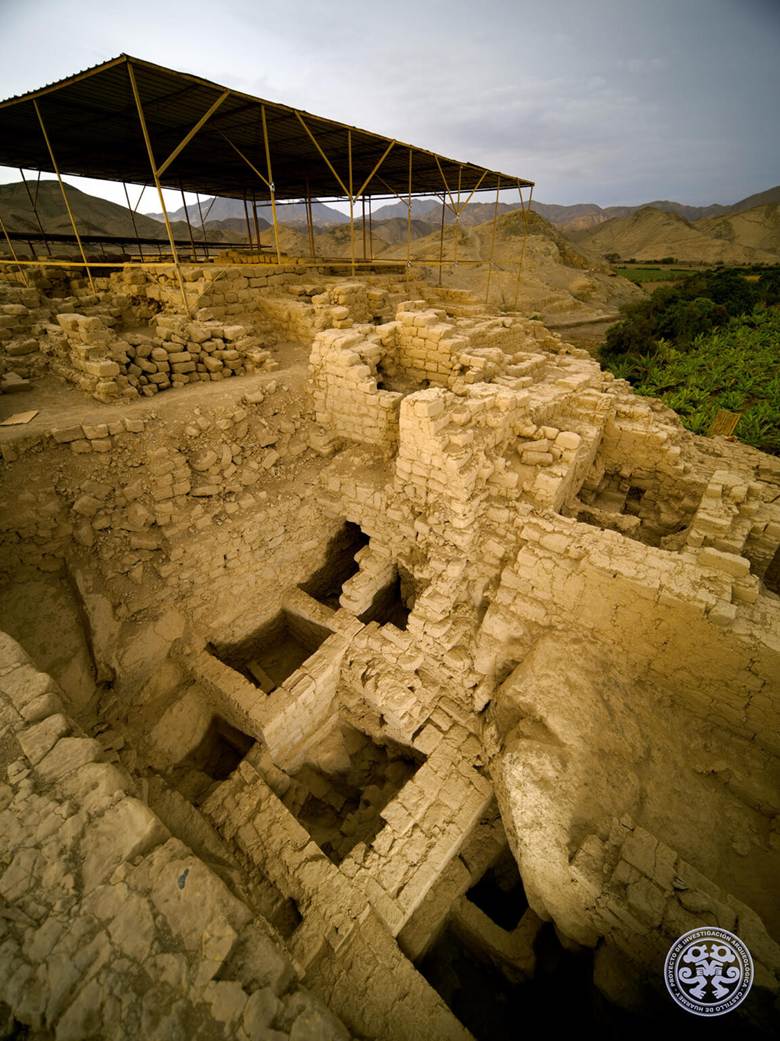
The methodology was crucial because the issue extended beyond what had been buried to what had been overlooked. In 2010, Giersz and a small team employed a magnetometer and aerial photography from a kite-lifted camera. These techniques revealed faint buried walls on a rocky southern spur, traces ignored by generations of grave robbers who targeted objects rather than structural systems. Excavation, conducted in collaboration with Peruvian archaeologist Roberto Pimentel Nita, uncovered a sprawling complex of towers and high crimson-painted walls, likely a Wari temple dedicated to ancestor worship.
This discovery redefines the site from a mere treasure field to a political statement. El Castillo functioned not only as a burial place but as a visible manifestation of authority. Following the Wari consolidation of regional control, a lord constructed a palace at the base of the hill, and he and his successors transformed the steep ascent into a towering temple dedicated to ancestors. Nobles densely populated the summit with mausoleums, and when space became limited, terraces were engineered further down the slopes to accommodate funerary towers and graves. Burial was thus an intentional expression of sovereignty through architecture.
National Geographic cites archaeologist Krzysztof Makowski, who states: “If you want to take possession of the land, you have to show that your ancestors are inscribed on the landscape. That’s part of Andean logic.” This assertion resonates beyond a single site in Peru, highlighting a persistent Andean principle wherein memory, kinship, labor, and territory are inseparable. The dead were integral to political structures, serving as their foundation.
Labor Hidden in Luxury
That is why the discovery of an unlooted royal tomb in 2012 and the chamber examined in 2013 are significant, because the Wari left no written records or narrative history. Archaeologists have debated how the Wari established a realm extending hundreds of miles along the Andes and into coastal deserts, whether through force, persuasion, or a combination thereof. At El Castillo, the answer emerges not as a declaration but as material evidence, much of which pertains to women. In the CT chamber were four elite Wari women, perhaps queens or princesses, buried with as many as 54 other highborn individuals, six human sacrifices, and more than a thousand grave goods. Gold ear ornaments, silver bowls, copper alloy axes, colorful ceramics, exquisite textiles. At first glance, this is the language of splendor. But splendor here is not decorative excess. It is administration, ritual, production, and hierarchy made tangible.
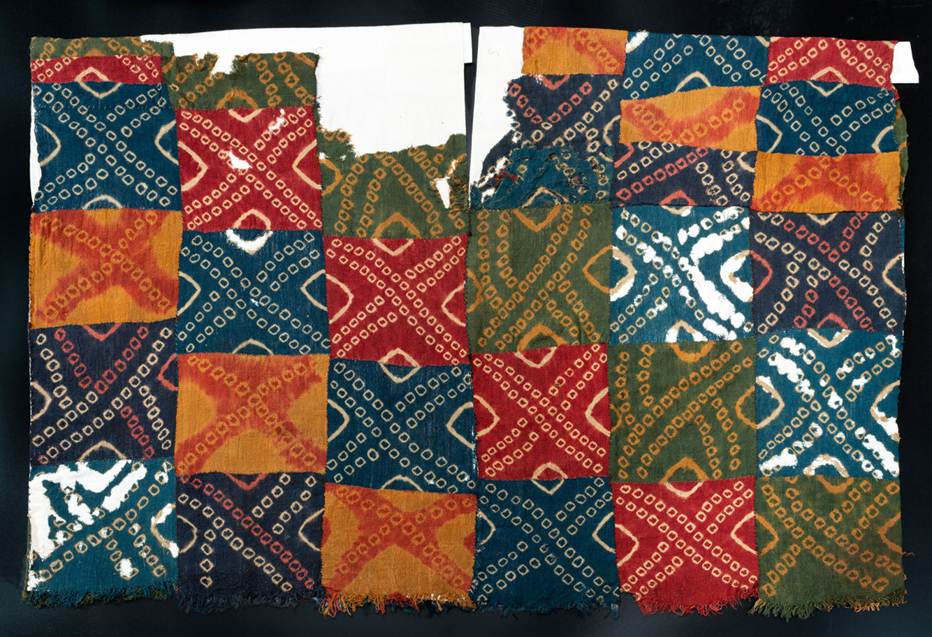
National Geographic’s notes emphasize that textiles were valued more highly than gold. Khipus, knotted cords used to record imperial goods, were included among the offerings. Condor body parts, associated with aristocratic symbolism, were also present. Nearly every lesser noblewoman buried in the common area was accompanied by a container of weaving tools. Even the highest-ranked woman, later nicknamed the Huarmey Queen, was interred with weaving tools crafted from gold.
This detail challenges conventional conceptions of ancient power, which often emphasize armies, fortifications, and male rulers. El Castillo presents an alternative perspective: weaving was not merely a domestic activity but represented elite knowledge, disciplined labor, and a component of high political culture. The women interred in the tomb were not honored solely for their association with prominent men; rather, they served as custodians of the empire. Osteological analysis corroborates this narrative. The Huarmey Queen, approximately 60 years old at death, exhibited skeletal markers indicative of prolonged seated activity with intensive upper body use. She also displayed tooth loss consistent with decay attributed to the consumption of chicha, a corn-based alcoholic beverage reserved for elites. This intimate evidence portrays a woman central to rank and ritual, defined not by abstraction but by repetitive labor, posture, habit, and the gradual wear of lived experience, by the slow wear of a lived life.
An Empire Stitched by Women
The grandeur of El Castillo also reflects the contributions of individuals beneath the noble dead. Dried mortar at the site preserved human handprints, including those of children as young as 11. Giersz stated to National Geographic that the Wari “used every possible local worker.” This observation adds complexity to the necropolis: the crimson city of the dead was not only sacred and imperial but also constructed through organized labor sourced from the surrounding population.
Thus, the site serves as a condensed representation of power in ancient Peru. A civilization originating from Ayacucho extended its influence to the coast, constructing canals and aqueducts in its heartland, including a capital that once housed up to 40,000 inhabitants, and projecting authority across hundreds of miles. On a single hill, conquest is linked to ancestor worship, noble privilege to local labor, elite women to the production of prestige, and political legitimacy to burial practices.
The tomb’s prolonged concealment is significant. Sealed beneath gravel and heavy adobe bricks, it remained undisturbed for centuries, preserving more than ornaments; it safeguarded a perspective on empire that subsequent histories often oversimplify. The Wari collapse, possibly due to severe drought, appears to have been abrupt, as evidenced by potters abandoning their tools at one site. However, this collapse did not extinguish the concept they had established. National Geographic articulates this legacy clearly: the Wari created in the Andes a notion of empire that never fully disappeared and was later revived by the Inca.
El Castillo de Huarmey intensifies this legacy by demonstrating that the empire was not solely established through conquest. It was woven, buried, painted, recorded, staged on a hillside, and entrusted to women whose labor embodied both aesthetic and political authority. In Peru, beneath a looted surface and modern debris, the earth preserved this argument intact until it was finally recognized.
Also Read: Mexico Takes on Digital Violence Against Women Where Screens Have Become Weapons