Argentina Faces 2026 World Cup Draw With Messi’s Final Question
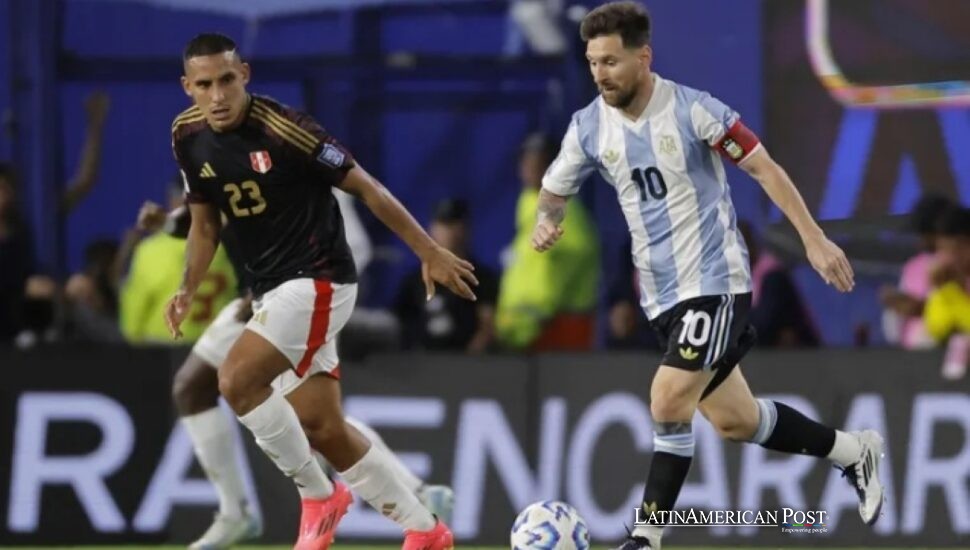
The 2026 World Cup draw placed Argentina in Group J with Algeria, Austria, and Jordan, with the opening match in Kansas City before moving to Dallas. Yet the bracket feels secondary to one suspenseful plotline: will Lionel Messi return under Lionel Scaloni again?
A Sixth World Cup Or A Quiet Exit
The itinerary reads like a victory lap, at least on paper. The defending champions begin against Algeria at Arrowhead Stadium in Kansas City on June 16, then head to Dallas for their final two group matches against Austria and tournament debutants Jordan. Even the sober language of draw coverage—down to the clickable schedule published by The Athletic—can’t hide the subtext: this looks, as the original framing put it, “quite the understatement” of a favorable group. And in Argentina, understatement is rarely the point. The nation treats football as a public argument about identity, dignity, and whether order can be coaxed out of chaos. A generous draw doesn’t reduce pressure; it concentrates it.
That pressure has a face, and for almost two decades it has been Messi’s, whether he asked for that job or not. The piece of uncertainty hovering over this campaign is not tactical but existential. Messi has not confirmed publicly whether he will play next summer, though “all indications,” as the reporting notes, point to a sixth World Cup finals for the 38-year-old. In a sport that turns calendar years into verdicts, the number lands like a drumbeat. He is still described as “a vital part” of the national team setup, even as the team has become less dependent on him. That evolution matters because it reframes what a final act could look like. A sixth World Cup would not have to be a one-man encore; it could be the quieter achievement of becoming, at last, one essential voice among many.
There is a Latin American tenderness in that possibility, because the region knows what it means to outgrow a savior narrative. In politics, in economics, in the daily life of institutions, the temptation is always to pin hope on a single figure—until the weight becomes unbearable. Messi has lived inside that paradox: adored like a saint, judged like a president, and expected to deliver joy on command. The text’s small detail about the team being “less dependent” on him is not just a football note; it’s a philosophical pivot. It suggests a star learning to trust the collective, and a collective learning not to collapse if the star dims.
Scaloni’s Laboratory And The New Argentina
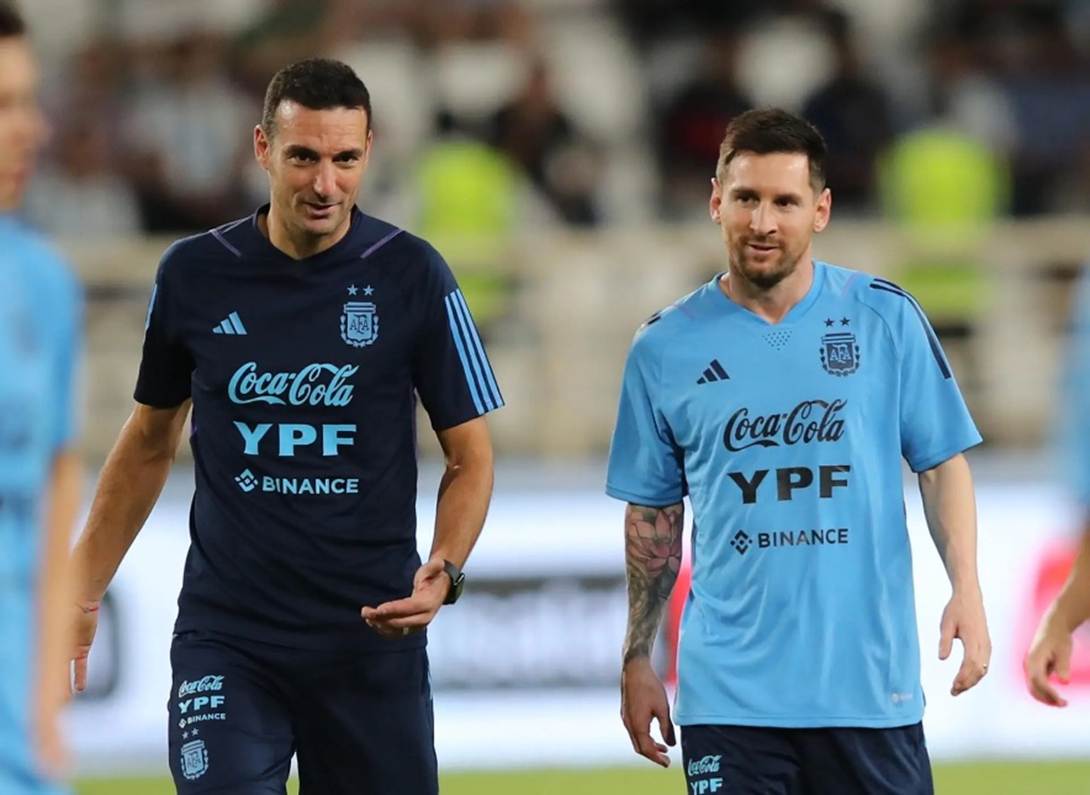
That shift has a name too: Lionel Scaloni. Since taking over in 2019, he has won two Copa América titles and a World Cup, and he will lead a seasoned squad into North America. The résumé is blunt, but the implication is subtle. Titles alone don’t explain why this Argentina feels sturdier than many of its predecessors; the story is in how success is managed after it arrives. Under Scaloni, the team has been presented not as a cult of personality but as a system with room for different temperaments—veterans who’ve already carried trophies and younger players who haven’t yet learned fear.
That new energy is already named in the reporting: Nico Paz, Franco Mastantuono, and Alejandro Garnacho, young enough to bring urgency without inheriting every scar from Argentina’s older World Cup disappointments. Their presence matters because it gives the side a kind of second heartbeat. When a team depends totally on a legend, every match becomes a referendum on the legend. When a team grows beyond him, the legend becomes something else—an anchor, a compass, a calming myth that doesn’t have to score every goal.
And the football, for long stretches, has justified the confidence. Argentina finished top of the CONMEBOL qualifying table with 38 points from 18 games, a margin of nine points better than second-placed Ecuador, even if Ecuador closed the campaign by winning 1-0. Along the way came the kind of scorelines that turn into street conversation: Brazil thrashed 4-1 in Buenos Aires, Chile dispatched 3-0, Bolivia routed 6-0. These are not just results; they are declarations, a national team performing control in a country where control can be elusive.
But the reporting also insists on the inconvenient truth that keeps champions honest. Argentina was “humbled” by a 2-0 home loss to Uruguay and by a 2-1 loss to Colombia, reminders that talent doesn’t abolish vulnerability. The value of those losses is not Schadenfreude; it’s diagnostic. They show where certainty can crack, and they show how a champion responds when the world stops applauding for a minute. Next summer, the story won’t only be whether Argentina wins. It will be how they behave when they don’t—how they manage frustration, expectation, and the psychological hangover that follows glory.
Power, Maté, And The Heat Of North America
While the squad prepares, the federation’s politics churn in the background, because in Argentina, football rarely gets the luxury of being only football. The text describes Claudio Tapia, president of the Argentine Football Federation, facing scrutiny after approving the creation of an Argentine first-division championship trophy, a decision that triggered loud blowback reaching the office of President Javier Milei. The detail is telling not because of the trophy itself, but because it illustrates how quickly a sporting bureaucracy can become a national talking point—how governance, symbolism, and legitimacy blur in a country hypersensitive to institutions that appear improvised.
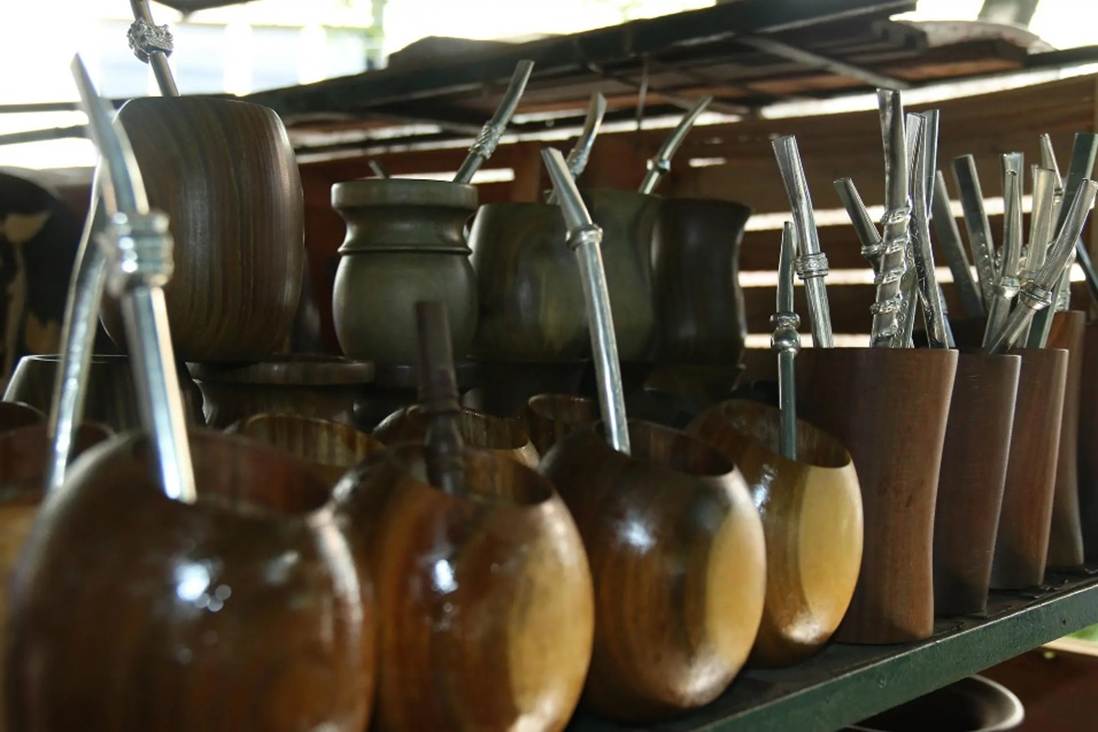
Tapia, 58, is also portrayed as unusually close to the senior men’s national team, even joining friendly scrimmages when the group convenes before qualifiers. And then there is the ritual: before every match, he posts a picture of himself seated next to Messi and midfielder Rodrigo De Paul, drinking maté. It is a small tableau of camaraderie, and it will be watched closely precisely because Argentina reads meaning into images. In a nation that has learned to decode power through gestures—who sits beside whom, who looks relaxed, who looks tense—that maté photo becomes a barometer. Unity is never assumed; it is inspected.
The reporting draws a line back to the 2018 disaster, when in-fighting under Jorge Sampaoli helped doom the World Cup. The contrast matters: crises around the national team have often coincided with poor results, yet this moment is framed as “less troubling” than that earlier implosion. Still, the lesson is clear. Argentina’s biggest opponent is sometimes not the team across the field but the noise around the shirt: officials, controversies, the emotional volatility of a football public that loves intensely and doubts just as intensely.
Beyond Argentina’s internal weather, there is the literal weather. Hosting the tournament across the United States, Canada, and Mexico in peak summer has raised concerns about extreme heat, sharpened by the recent Club World Cup in the U.S., where conditions drew criticism. The text includes one quote that cuts through the euphemisms: Chelsea midfielder Enzo Fernandez said he felt “dizzy” in “very dangerous” heat. Research led by Queen’s University Belfast found temperatures at 14 of the 16 stadiums could exceed potentially dangerous levels during the tournament. In sports science, the point is not dramatic; it is practical. Work published across journals such as the British Journal of Sports Medicine and the International Journal of Sports Physiology and Performance has repeatedly emphasized how heat can elevate physiological strain and degrade repeated high-intensity efforts, turning kickoff time, travel rhythm, and recovery protocols into competitive edges rather than administrative details.
In that context, Argentina’s comfort in the Americas becomes more than a historical footnote. The text notes that 10 of the 11 World Cups held in Europe have been won by European teams, but the story shifts when the tournament is played in the Americas, where each of the 7 tournaments hosted there featured a South American winner until Germany broke the streak in 2014. Add the modern analytics layer—Opta’s super-computer placing Spain at a 17% chance of victory, France at 14.1%, and England at 11.8%—and Argentina’s challenge sharpens into a familiar Latin American dilemma: prove that excellence is not a moment but a culture.
For Argentina, Group J may be generous, but the real draw is psychological. It is the tension between a team that has learned to win without surrendering its soul and a country that has learned to hope without trusting too easily. From Kansas City on June 16 to the closing group nights in Dallas, the world will watch the champions like a touring band, yes—but Argentina will watch something else. It will watch whether Messi chooses one last stage, and whether the collective he helped shape can carry its own weight, maté in hand, under the hard light of another summer.
Also Read: Argentina Superclásico Twist as River Secretly Needs Boca To Win