Argentine River Lives Gallardo’s Farewell as Home Keeps Pulling Back
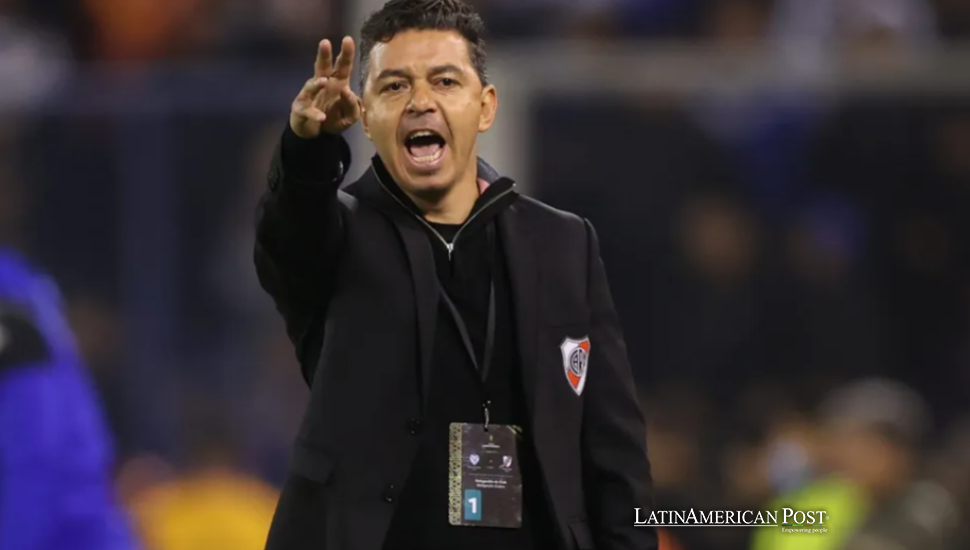
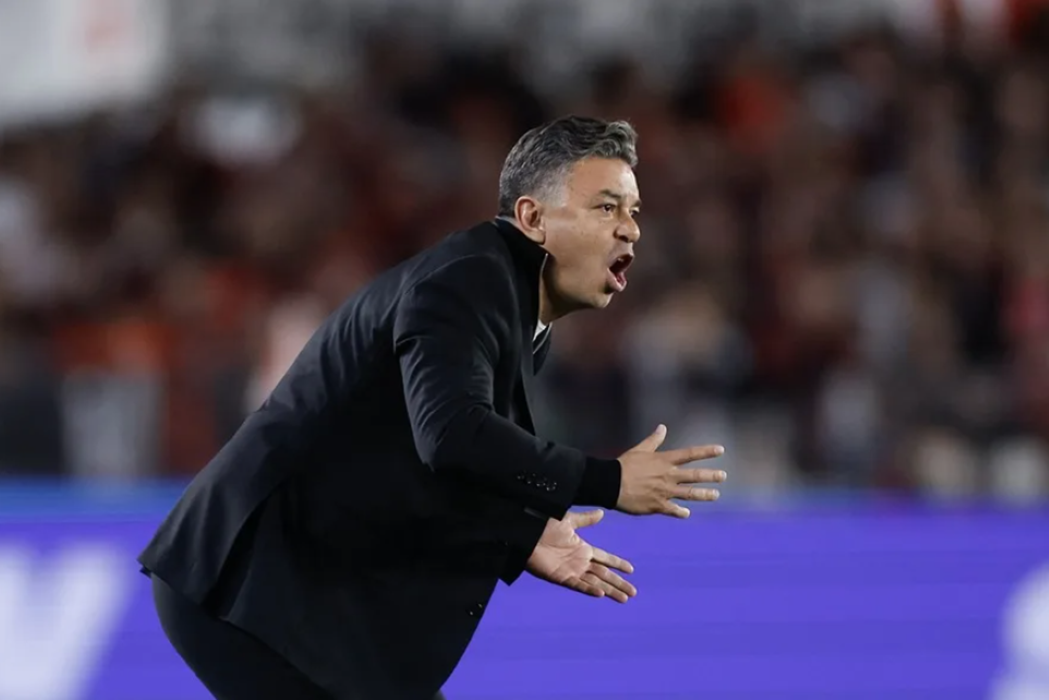
Marcelo Gallardo coached his last River Plate match yesterday at the Monumental, closing a second spell marked by losses and no trophies. His farewell reminds us of a familiar truth in Argentine football: idols leave, but rarely stay away for long.
A Video, a Practice, and a Goodbye That Hurts
After Monday’s training, River Plate shared a video on X. There was no press conference or long introduction, just a message that hit fans hard—fans who have come to mark time by coaches and finals.
“Este es un mensaje para todos los hinchas de River, intentaré ser breve para que no me embarguen la emoción y el dolor que significa anunciar que el jueves será mi último partido,” Marcelo Gallardo told EFE in the recorded message.
He will finish yesterday at the Monumental against Banfield, closing his second spell as River’s coach. It began on August 5, two thousand twenty-four. It ends without titles, with thirteen defeats in the last twenty matches, and with the feeling of a cycle running out of oxygen.
The stadium itself sets the scene even before the game starts. The Monumental carries sound in a special way—a loud, rolling roar that feels almost like the weather. Simply put, fans will still come. They always do, even when they’re grieving instead of celebrating.
Gallardo’s second goodbye comes after a one-nil loss to Vélez, his third straight defeat in the local Apertura. The first public hints of the ending arrived a day earlier, when he chose not to speak to the media after that loss. Silence is its own statement in Argentine football. Everyone hears it.
The trouble is that Gallardo is not just any coach at River. He is the most successful in the club’s history, and that history is not small. So when he says he is leaving, the question is not only why this run failed, but also why he is leaving. It is what River is without him, and what he is without River.
Two Cycles, One Shadow That Never Leaves
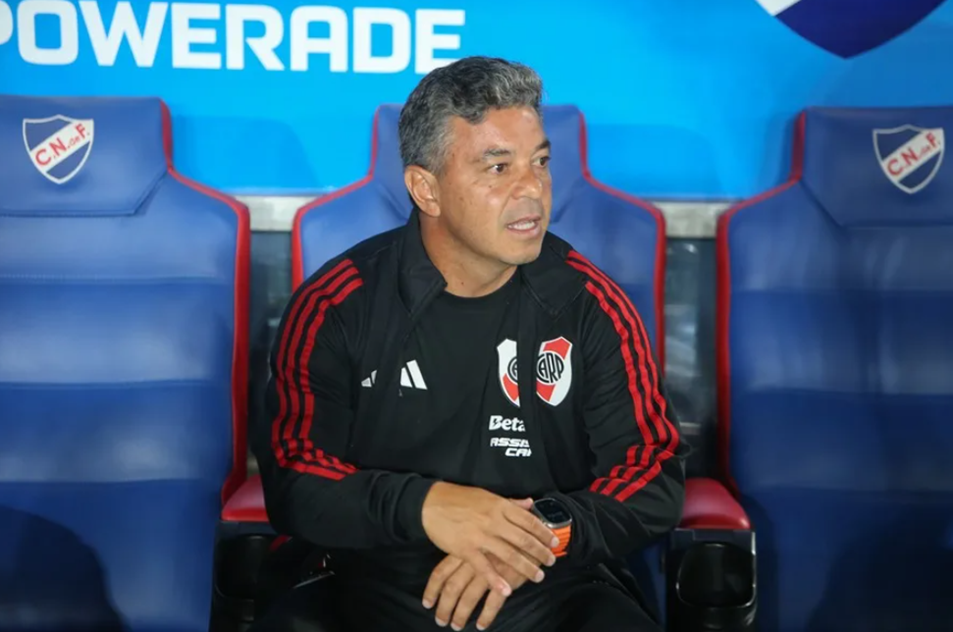
Gallardo’s first farewell from the River bench was on November 13, 2022, during a friendly against Betis, coached by Manuel Pellegrini. That goodbye felt different. It marked the end of a brilliant era—one that fans talk about like family legend.
This second phase, which started after Martín Demichelis left, never matched the first. The results are there in plain numbers. No trophies. A run of defeats. A team that looked, at times, as if it was trying to remember how it used to win.
And yet the shadow of his first spell remained, because it is impossible to erase. In that earlier era, he won fourteen titles, including two Copa Libertadores trophies in two thousand fifteen and two thousand eighteen. The second matter in River’s emotional geography with an intensity that goes beyond medals, because it came by beating Boca Juniors in the final in Madrid.
No trophy, the notes say, will ever equal what that meant in the hearts of River supporters. Gallardo will always be the coach who beat the Xeneize in a Libertadores final.
What this does is distort every later season. Once you deliver a peak like that, every dip feels like betrayal, even when itis just normal sporting decline. Every defeat is measured against memory, and memory is undefeated.
Gallardo did not arrive at River as an outsider. He was a product of the club, a player who won the Copa Libertadores in nineteen ninety-six, the Supercopa Sudamericana in nineteen ninety-seven, and six local league titles in different Apertura and Clausura tournaments. His playing career extended beyond Argentina, with titles at AS Monaco and a championship at Paris Saint-Germain, as well as time at DC United and Nacional.
But the constant is his return. He played for River in three separate periods. He left, then came back. Left again, then returned once more. His career’s rhythm matches a tango line from Aníbal Troilo’s Nocturno a mi barrio: someone once said I left my neighborhood, when, when, if I am always arriving.
That line best explains why this goodbye doesn’t feel final, even though it hurts like a wound.
A Statue Outside the Monumental and the Politics of Legacy
After retiring as a player at Nacional, Gallardo started his coaching career there and won the Uruguayan championship in 2011. In 2014, he returned to River as coach, introduced to the press by Enzo Francescoli, the club’s living legend and head of its sporting secretariat. Francescoli was also by his side at the press conference when Gallardo announced his first farewell on October 13, 2022.
His achievements as River’s coach were so extensive that the club erected a statue of him outside the Estadio Más Monumental, as it did for Ángel Amadeo Labruna. The notes say Gallardo matches Labruna with 22 trophies when adding what he won as a player and as a coach.
The list of titles under Gallardo’s first coaching era reads like a compressed club history: Copa Sudamericana in two thousand fourteen, Recopa Sudamericana in two thousand fifteen, two thousand sixteen, and two thousand nineteen, Libertadores in two thousand fifteen and two thousand eighteen, Suruga Bank in two thousand fifteen, Copa Argentina in two thousand sixteen, two thousand seventeen, and two thousand nineteen, Supercopa Argentina in two thousand seventeen and two thousand nineteen, and then the domestic league and Trofeo de Campeones in two thousand twenty-one.
The comparison point is just as telling. Before Gallardo’s first arrival as coach, River had only five international titles. His tenure remade the club’s external reputation, not only inside Argentina but across South America and beyond.
This is where the real debate lies. River Plate isn’t just a team. It’s an institution with politics, money, power struggles, and high expectations that put pressure on. When a coach becomes a monument—a statue outside the stadium—the club has to decide if it’s building a future or stuck living in a past it can’t repeat.
Gallardo’s second spell ended without trophies, but the club still feels the impact of what he built. The standards remain. The fans remain. The stadium remains. Now, River’s leaders will have to convince a public used to thinking that greatness lasts.
The question now is whether River can see this as an ending without making it into an exile. Gallardo’s story, as these notes show, does not include long breaks. Four years is the longest h’s beend away from Núñez before returning.
Thursday will be his last match of this second spell. He says the emotion and the pain are real. They are. But Argentine football has a habit of turning farewells into commas, not periods.
And with Gallardo, the club knows it. Even now. Especially now.
Also Read: Mexico Bets on World Cup Calm While Mencho Fallout Spreads